

• Home
  • Agric
  • Sci & Tech
  • Health
  • Environment
  • Hausa News
  • More
    • Business/Banking & Finance
    • POLITICS
    • Entertainments & Sports
    • International
    • Investigation
    • Law & Human Rights
    • Africa
    • ACCOUNTABILITY/CORRUPTION
    • Hassan Gimba
    • Column
    • Prof. Jibrin Ibrahim
    • Prof. M.K. Othman
    • Defense/Security
    • Education
    • Energy/Electricity
    • Entertainment/Arts & Sports
    • Society and Lifestyle
    • Food & Agriculture
    • Health & Healthy Living
    • International News
    • Interviews
    • Investigation/Fact-Check
    • LAW & HUMAN RIGHTS
    • Oil & Gas/Mineral Resources
    • PRESS FREEDOM/JOURNALISM/PR
    • General News
    • Presidency
  • About Us
    • Contact Us
    • Board Of Advisory
    • Privacy Policy
    • Ethics Policy
    • Teamwork And Collaboration Policy
    • Fact-Checking Policy
    • Advertising
  • Media OutReach Newswire
    • Wire News
  • The Stories
Facebook Twitter Instagram
Trending
  • New Sokoto traditional title holder urges Northern states to implement Almajiri education reforms
  • Why 90% of Nigerian politicians would not hold office – Rochas Okorocha
  • D-8 Secretary-General seeks stronger global health cooperation, resilient healthcare systems
  • The rule of law, Nigeria’s only hope for survival [III], by Hassan Gimba
  • Nigeria needs more rehabilitation facilities, Experts say
  • Guarantee legal protection, stop systemic intimidation, unlawful arrests and physical assaults against journalists – NUJ
  • Meat, Fish price hikes force Lagosians to cut back
  • MURIC condemns law school from banning hijab-wearing students from exam halls, calls for probe
Facebook Twitter Instagram YouTube
AsheNewsAsheNews
  • Home
  • Agric

    Meat, Fish price hikes force Lagosians to cut back

    November 1, 2026

    Cross River sets 30m-seedling coffee target

    October 31, 2026

    LIFE-ND transfers rice mill to CADA

    October 31, 2026

    Ogun supports farmers with cashew seedlings

    October 31, 2026

    Delta stakeholders call for investment in jobs, agriculture

    October 31, 2026
  • Sci & Tech

    Data gaps limit Nigeria’s AI growth — Smartcomply CEO

    October 31, 2026

    ESDIAC launches affordable international calling platform

    October 31, 2026

    FUST Kabo secures accreditation for 20 courses, including medical programmes

    October 30, 2026

    Analyst applauds Adenuga’s contributions to society

    October 30, 2026

    Researchers tout biofertilisers, AI to advance Nigerian agriculture, energy

    October 30, 2026
  • Health

    D-8 Secretary-General seeks stronger global health cooperation, resilient healthcare systems

    November 1, 2026

    Nigeria needs more rehabilitation facilities, Experts say

    November 1, 2026

    NBSA, Journalists unite to boost blood donations

    October 31, 2026

    Northwest records highest childhood malaria prevalence in Nigeria

    October 31, 2026

    Sokoto ranks among states with lowest skilled antenatal care coverage

    October 31, 2026
  • Environment

    Lagos residents seek tighter sanitation enforcement

    October 31, 2026

    Nigeria’s menstrual health policy needs prompt implementation, WaterAid says

    October 30, 2026

    NiMet issues Friday-to-Sunday weather forecast

    October 30, 2026

    UN report: 252m hectares under restoration worldwide

    October 29, 2026

    Nigeria’s extreme heat exposes deepening inequality, by Abiemwense Moru

    October 29, 2026
  • Hausa News

    UNA signs MoU to launch air Bissau in Guinea-Bissau

    June 15, 2026

    Otti plans 250-room 5-star hotel in Umuahia

    April 11, 2026

    Anti-quackery task force seals 4 fake hospitals in Rivers

    August 29, 2025

    [BIDIYO] Yadda na lashe gasa ta duniya a fannin Ingilishi – Rukayya ‘yar shekara 17

    August 6, 2025

    A Saka Baki, A Sasanta Saɓani Tsakanin ‘Yanjarida Da Liman, Daga Muhammad Sajo

    May 21, 2025
  • More
    1. Business/Banking & Finance
    2. POLITICS
    3. Entertainments & Sports
    4. International
    5. Investigation
    6. Law & Human Rights
    7. Africa
    8. ACCOUNTABILITY/CORRUPTION
    9. Hassan Gimba
    10. Column
    11. Prof. Jibrin Ibrahim
    12. Prof. M.K. Othman
    13. Defense/Security
    14. Education
    15. Energy/Electricity
    16. Entertainment/Arts & Sports
    17. Society and Lifestyle
    18. Food & Agriculture
    19. Health & Healthy Living
    20. International News
    21. Interviews
    22. Investigation/Fact-Check
    23. LAW & HUMAN RIGHTS
    24. Oil & Gas/Mineral Resources
    25. PRESS FREEDOM/JOURNALISM/PR
    26. General News
    27. Presidency
    Featured
    Recent

    New Sokoto traditional title holder urges Northern states to implement Almajiri education reforms

    November 1, 2026

    Why 90% of Nigerian politicians would not hold office – Rochas Okorocha

    November 1, 2026

    D-8 Secretary-General seeks stronger global health cooperation, resilient healthcare systems

    November 1, 2026
  • About Us
    1. Contact Us
    2. Board Of Advisory
    3. Privacy Policy
    4. Ethics Policy
    5. Teamwork And Collaboration Policy
    6. Fact-Checking Policy
    7. Advertising
    Featured
    Recent

    New Sokoto traditional title holder urges Northern states to implement Almajiri education reforms

    November 1, 2026

    Why 90% of Nigerian politicians would not hold office – Rochas Okorocha

    November 1, 2026

    D-8 Secretary-General seeks stronger global health cooperation, resilient healthcare systems

    November 1, 2026
  • Media OutReach Newswire
    • Wire News
  • The Stories
AsheNewsAsheNews
Home»Food & Agriculture»Iran war: Fertilizer traders see profit, as farmers pay the price
Food & Agriculture

Iran war: Fertilizer traders see profit, as farmers pay the price

NewsdeskBy NewsdeskApril 4, 2026Updated:April 4, 2026No Comments4 Mins Read
Fertilizer
Share
Facebook Twitter LinkedIn Pinterest Email

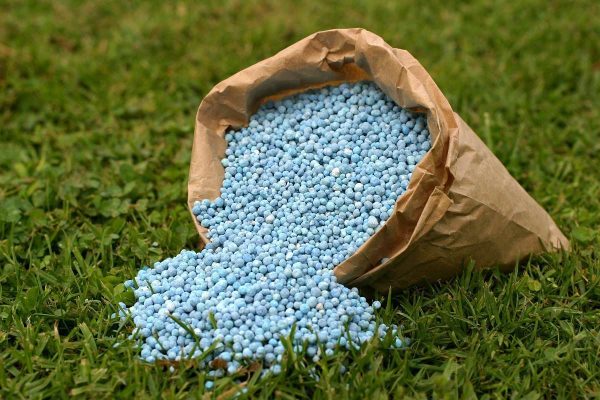
American fertilizer traders have seized on a lucrative opportunity overseas because of the war in Iran, showing how U.S. farmers have been caught again on the wrong side of moves in global markets. 

Domestic prices for phosphate fertilizers have lagged that of the international market, as American farmers struggling with high production costs pare back their use of the key crop nutrient applied widely to both corn and soy fields. That has prompted some traders to move the product abroad to nations willing to pay up as the conflict in the Middle East ensnares global supply chains.

“U.S. phosphate prices have not kept pace with the strength seen in other global markets,” creating an arbitrage opportunity out of New Orleans, said Taylor Eastman, a fertilizer trader at The Andersons Inc. Since late February, traders have bought more than 100,000 short tons of phosphate fertilizer to be re-exported, he said.

The country had managed to import over half a million metric tons of diammonium phosphate — the most common type of phosphate fertilizer — from January through March, making up for months of depressed shipments and elevated prices due to the Trump administration’s reciprocal tariffs. Now part of that quantity is set to flow abroad, adding stress to an already-tight domestic market. The U.S., while it makes most of its phosphate, does require some imports to meet demand.

The reversed trade flow comes as the price for re-exports of diammonium phosphate on March 13 climbed to the highest premium over New Orleans prices since June 2023, according to data from Bloomberg Green Markets. 

While the U.S. spot market, at around $700 a short ton as of March 27, has since reclaimed its premium, offers at those levels have still struggled to attract bids in the domestic market, said Chris Vlachopoulos, who covers phosphate markets for commodity pricing platform ICIS. That suggests buyers are either done for the spring planting season or waiting for direction, and any April purchases are likely either for fall or the possibility of exports, he added. 

Domestic demand has waned as farmers are expected to plant fewer fertilizer-intensive crops like corn this spring. Corn accounts for more than half of U.S. phosphate fertilizer use, with soy accounting for roughly another quarter. 

Other countries that are more dependent on imports have been offering higher premiums to attract supplies from a tightening global market. China, the world’s biggest producer, had already been curbing shipments to protect its farmers, and disruptions to the Middle East are now threatening a significant share of global supplies for both phosphate and the sulfur needed to produce the fertilizer. 

U.S. shipments so far have gone to Latin America and to India, according to Guillermo Fernandez, a fertilizer price analyst at Bloomberg Green Markets. Two vessels totaling about 60,000 metric tons, largely of diammonium phosphate, were likely sent to Latin America, he said. Some traders are also holding onto large amounts of monoammonium phosphate, another form of phosphate fertilizer, also for potential re-export, he added.

Prices for diammonium phosphate have surged 21% in India since the war began, flipping from a discount to a premium over U.S. prices, according to data from Bloomberg Green Markets. Prices in Brazil for monoammonium phosphate are also outpacing the U.S. market.

Even as phosphate is largely in place for the spring, the exports increase the risk of even higher costs for farmers ahead of the next planting season, said Hunter Swisher, chief executive officer of fertilizer technology company Phospholutions.

The U.S. agriculture industry has continually urged the Trump administration to help with elevated fertilizer costs. It last year sought an exemption from tariffs that was granted in November and is now pushing for the suspension of separate Commerce Department duties on supplies from Morocco and Russia, which are currently under review.

“Sending product abroad in a tight market only adds upward pressure on prices in an already high-cost input environment,” Swisher said. “Phosphate prices have been elevated for several years, and farmers can only reduce or delay applications for so long before yields are impacted.”

Credit: farmprogress.com

American fertilizer Iran
Share. Facebook Twitter Pinterest LinkedIn WhatsApp Reddit Tumblr Email
Newsdesk
  • Website

Related Posts

Meat, Fish price hikes force Lagosians to cut back

November 1, 2026

Cross River sets 30m-seedling coffee target

October 31, 2026

LIFE-ND transfers rice mill to CADA

October 31, 2026

Leave A Reply Cancel Reply

New Sokoto traditional title holder urges Northern states to implement Almajiri education reforms

November 1, 2026

Why 90% of Nigerian politicians would not hold office – Rochas Okorocha

November 1, 2026

D-8 Secretary-General seeks stronger global health cooperation, resilient healthcare systems

November 1, 2026

The rule of law, Nigeria’s only hope for survival [III], by Hassan Gimba

November 1, 2026
About Us
About Us

ASHENEWS (AsheNewsDaily.com), published by PenPlus Online Media Publishers, is an independent online newspaper. We report development news, especially on Agriculture, Science, Health and Environment as they affect the under-reported rural and urban poor.

We also conduct investigations, especially in the areas of ASHE, as well as other general interests, including corruption, human rights, illicit financial flows, and politics.

Contact Info:
  • 1st floor, Dogon Daji House, No. 5, Maiduguri Road, Sokoto
  • +234(0)7031140009
  • ashenewsdaily@gmail.com
Facebook Twitter Instagram Pinterest
© 2026 All Rights Reserved. ASHENEWS Daily Designed & Managed By DeedsTech

Type above and press Enter to search. Press Esc to cancel.