


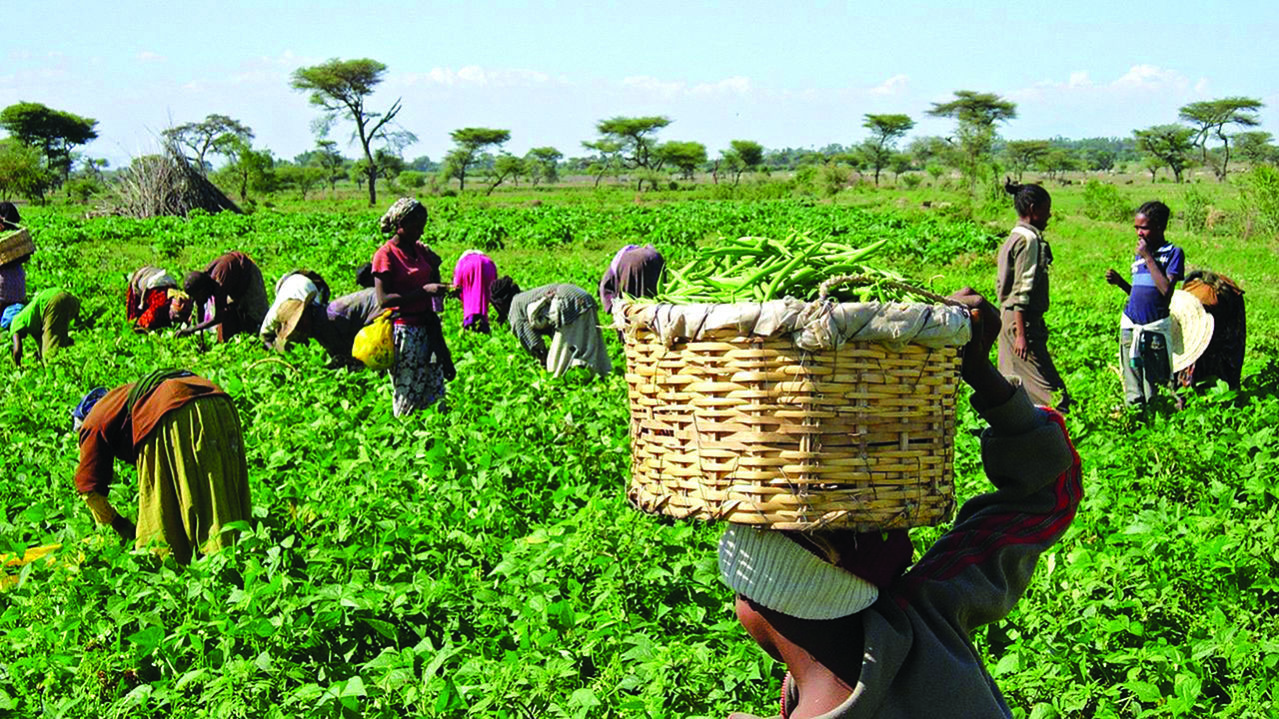
The Federal Government says it has empowered about 50,000 smallholder farmers in Gombe and Jigawa to boost agricultural productivity and achieve food security.
Mr Anyim Joseph, Gombe State Coordinator of the Federal Ministry of Agriculture and Food Security (FMAFS), made the disclosure while reviewing the ministry’s activities on Saturday in Gombe.
Joseph said the ministry had provided farmer support services for the 2026 rain-fed and dry-season activities as part of President Bola Tinubu’s food security strategy.
He said the programme was designed to improve farmers’ access to inputs, mobilise participation and boost crop production.
The coordinator said the government had distributed fertilisers, seeds and chemicals to 10,000 farmers this cropping season.
Joseph added that the ministry had shortlisted 12,000 farmers for the dry-season rice and wheat cultivation programme in the state.
“We shortlisted 12,000 farmers for the dry-season intervention programme and are awaiting approval to begin distribution of the inputs to them,” he said.
Joseph said the Tinubu administration had invested heavily in revolutionising the agricultural sector through a series of interventions.
“Many inputs and implements have been distributed to the farmers, including power tillers and solar-powered irrigation equipment.
“As part of the support, dam construction in Balanga is underway. It will provide fishing opportunities, encourage irrigation activities and create jobs to ensure food security,” he said.
According to Joseph, the interventions aim to empower farmers with modern farming skills and enhance wealth creation so they can escape the poverty line in rural communities.
He said the interventions had positively impacted the lives of peasant farmers, improving how they feed, dress and engage in petty trades to sustain their families.
Joseph highlighted that the jobs created through the interventions had significantly reduced criminality, as more youths engaged in agriculture.
Embracing agriculture, he said, would divert their attention from idleness and criminal tendencies that could jeopardise their future.
The coordinator urged farmers to embrace the initiatives to improve the agricultural sector and boost food production by ensuring effective utilisation of the inputs.
Also speaking, Sadeeq Ahmed, Chairman of the All Farmers Association of Nigeria (AFAN) in the state, said the Tinubu administration distributed over 200,000 bags of assorted fertilisers to 5,000 farmers this cropping season.
He said the inputs were being distributed in collaboration with the Bank of Agriculture (BoA).
The chairman said the bank had also introduced a Guaranteed Minimum Price (GMP) scheme to protect farmers against losses and address concerns about commodity pricing.
Ahmed said the federal government had also set up warehouses and weighbridges to enhance proper measurement and preservation of agricultural produce.
He said the gesture gave farmers the opportunity to sell their produce at a protected price and guard against losses at harvest.
He added that the National Agricultural Land Development Authority (NALDA) had initiated free services such as land clearing, harrowing and harvesting for dry-season farmers.
On livestock, Ahmed lauded the establishment of the Federal Ministry of Livestock Development, saying it would improve coordination of the agricultural sector and help address herder-farmer clashes in the country.
Similarly, Mr Auwalu Isa, Coordinator of the Federal Ministry of Agriculture and Food Security in Jigawa, said the federal government distributed 20,160 bags of fertilisers to 5,040 farmers under the 2026 Presidential Fertiliser Intervention.
He said the allocation comprised 15,120 bags of NPK fertiliser and 5,040 bags of urea.
“Each of the farmers got four bags of fertilisers,” he said.
Isa said about 3,040 farmers under AFAN received 12,160 bags of fertilisers, while another 2,000 farmers selected through the state government’s agencies received 8,000 bags.
He said the federal government also distributed equipment and farming implements to smallholder farmers in the state in 2025.
The coordinator said the items included mini combine harvesters, power tillers, threshers, planters, motorised weeders, chemicals and organic fertilisers.
Isa added that 2,000 date palm seedlings were distributed to farmers’ groups in Jigawa in 2025.
To cushion food inflation, Isa said the federal government distributed 714 bags of maize flour to women cooperatives, Internally Displaced Persons (IDPs), Persons Living With Disabilities (PLWDs) and correctional centres in the state.
He said women cooperatives and PLWDs received 143 bags each, while IDPs received 285 bags and correctional facilities got 143 bags.
The coordinator said the food items were distributed under the 2026 Renewed Hope National Accelerated Cassava Production Programme.
“Preliminary feedback from previous interventions indicated positive results, although the ministry is yet to compile its latest harvest report.
“From the reports we have gathered in previous years, we can say that the government interventions are yielding good results,” he said.
