

• Home
  • Agric
  • Sci & Tech
  • Health
  • Environment
  • Hausa News
  • More
    • Business/Banking & Finance
    • POLITICS
    • Entertainments & Sports
    • International
    • Investigation
    • Law & Human Rights
    • Africa
    • ACCOUNTABILITY/CORRUPTION
    • Hassan Gimba
    • Column
    • Prof. Jibrin Ibrahim
    • Prof. M.K. Othman
    • Defense/Security
    • Education
    • Energy/Electricity
    • Entertainment/Arts & Sports
    • Society and Lifestyle
    • Food & Agriculture
    • Health & Healthy Living
    • International News
    • Interviews
    • Investigation/Fact-Check
    • LAW & HUMAN RIGHTS
    • Oil & Gas/Mineral Resources
    • PRESS FREEDOM/JOURNALISM/PR
    • General News
    • Presidency
  • About Us
    • Contact Us
    • Board Of Advisory
    • Privacy Policy
    • Ethics Policy
    • Teamwork And Collaboration Policy
    • Fact-Checking Policy
    • Advertising
  • Media OutReach Newswire
    • Wire News
  • The Stories
Facebook Twitter Instagram
Trending
  • Wildfires: 267,000 flee as France, Spain battle raging infernos
  • [INTERVIEW] Nigeria’s insecurity will be defeated in 774 LGAs and Abuja — DIG Gumel
  • State police bill bars governors from controlling commissions, guarantees direct funding
  • FG launches portal for Nigerians to access loans for laptops, smartphones, tablets
  • PFIPC: Fake agency originated during Buhari administration – Budget Office
  • How Obasanjo is using Na’Abba bribery claim to favour his kinsman ahead of 2027 polls – Atiku
  • Telemedicine: Why the next billion-dollar healthcare investment opportunity has arrived in Nigeria [I], by Dr Fakunle Aremu
  • Alimosho residents decry uncollected refuse
Facebook Twitter Instagram YouTube
AsheNewsAsheNews
  • Home
  • Agric

    LIFE-ND targets 10,805 beneficiaries in Delta AF phase

    July 25, 2026

    FG, IFAD launch CSAPR project to boost climate-resilient agriculture

    July 25, 2026

    Nigeria to send 120 members team to WSF 2026 in Benin

    July 25, 2026

    Kano health commissioner urges farmers to boost nutritious food production

    July 24, 2026

    Ogun VCDP distributes 16 tricycles to farmer groups

    July 24, 2026
  • Sci & Tech

    FG launches portal for Nigerians to access loans for laptops, smartphones, tablets

    July 25, 2026

    Zambia’s Mwale elected ATU secretary-general

    July 25, 2026

    NASENI shortlists 12 research proposals for commercialisation grant

    July 24, 2026

    TikTok removes 4.8m videos in Nigeria in Q1 2026

    July 23, 2026

    ALTON: Nigeria’s digital economy ambition unattainable without protected telecom infrastructure

    July 23, 2026
  • Health

    Telemedicine: Why the next billion-dollar healthcare investment opportunity has arrived in Nigeria [I], by Dr Fakunle Aremu

    July 25, 2026

    NCDC: Lassa fever cases rise in week 28

    July 25, 2026

    Taraba health college holds free dental outreach

    July 25, 2026

    Edo unveils roadmap for universal health coverage

    July 24, 2026

    NAFDAC launches nationwide crackdown on sachet, small-bottle alcohol

    July 23, 2026
  • Environment

    Wildfires: 267,000 flee as France, Spain battle raging infernos

    July 25, 2026

    Alimosho residents decry uncollected refuse

    July 25, 2026

    Shettima: Africa must control Its resources, trade

    July 25, 2026

    UNDP/GEF-SGP empowers over 600 nature-positive MSMEs

    July 24, 2026

    Association to deliver 10,000 social housing units by 2030

    July 24, 2026
  • Hausa News

    UNA signs MoU to launch air Bissau in Guinea-Bissau

    June 15, 2026

    Otti plans 250-room 5-star hotel in Umuahia

    April 11, 2026

    Anti-quackery task force seals 4 fake hospitals in Rivers

    August 29, 2025

    [BIDIYO] Yadda na lashe gasa ta duniya a fannin Ingilishi – Rukayya ‘yar shekara 17

    August 6, 2025

    A Saka Baki, A Sasanta Saɓani Tsakanin ‘Yanjarida Da Liman, Daga Muhammad Sajo

    May 21, 2025
  • More
    1. Business/Banking & Finance
    2. POLITICS
    3. Entertainments & Sports
    4. International
    5. Investigation
    6. Law & Human Rights
    7. Africa
    8. ACCOUNTABILITY/CORRUPTION
    9. Hassan Gimba
    10. Column
    11. Prof. Jibrin Ibrahim
    12. Prof. M.K. Othman
    13. Defense/Security
    14. Education
    15. Energy/Electricity
    16. Entertainment/Arts & Sports
    17. Society and Lifestyle
    18. Food & Agriculture
    19. Health & Healthy Living
    20. International News
    21. Interviews
    22. Investigation/Fact-Check
    23. LAW & HUMAN RIGHTS
    24. Oil & Gas/Mineral Resources
    25. PRESS FREEDOM/JOURNALISM/PR
    26. General News
    27. Presidency
    Featured
    Recent

    Wildfires: 267,000 flee as France, Spain battle raging infernos

    July 25, 2026

    [INTERVIEW] Nigeria’s insecurity will be defeated in 774 LGAs and Abuja — DIG Gumel

    July 25, 2026

    State police bill bars governors from controlling commissions, guarantees direct funding

    July 25, 2026
  • About Us
    1. Contact Us
    2. Board Of Advisory
    3. Privacy Policy
    4. Ethics Policy
    5. Teamwork And Collaboration Policy
    6. Fact-Checking Policy
    7. Advertising
    Featured
    Recent

    Wildfires: 267,000 flee as France, Spain battle raging infernos

    July 25, 2026

    [INTERVIEW] Nigeria’s insecurity will be defeated in 774 LGAs and Abuja — DIG Gumel

    July 25, 2026

    State police bill bars governors from controlling commissions, guarantees direct funding

    July 25, 2026
  • Media OutReach Newswire
    • Wire News
  • The Stories
AsheNewsAsheNews
Home»Food & Agriculture»Biofilm mulching cuts water use and emissions in rice farming, research shows – report
Food & Agriculture

Biofilm mulching cuts water use and emissions in rice farming, research shows – report

NewsdeskBy NewsdeskDecember 31, 2025Updated:December 31, 2025No Comments4 Mins Read
Share
Facebook Twitter LinkedIn Pinterest Email

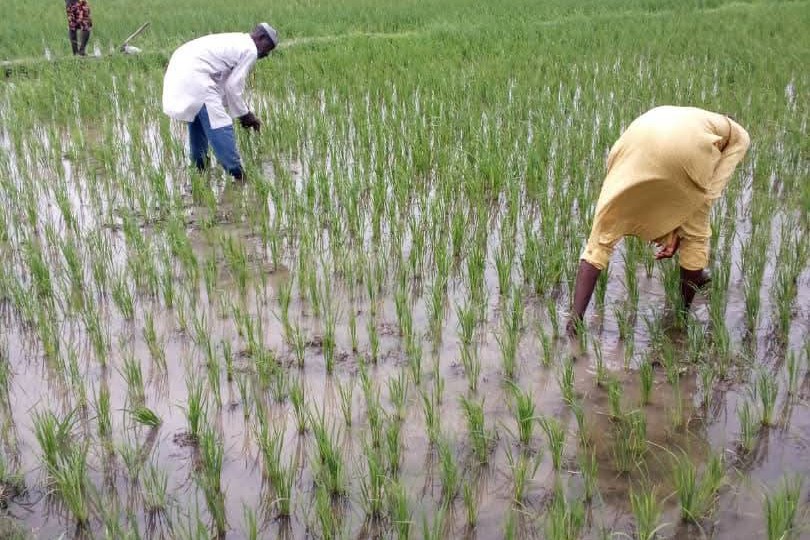
Biodegradable film mulching, also known as biofilm, is emerging as a promising tool to make rice production more climate-resilient by sharply reducing water use and greenhouse gas emissions without sacrificing yield, according to a latest report published by the International Rice Research Institute (IRRI).

Rice agriculture traditionally relies on continuous flooding, a practice that consumes vast quantities of freshwater and creates anaerobic soil conditions that promote methane emissions — a greenhouse gas far more potent than carbon dioxide.

With climate change tightening water supplies and intensifying environmental concerns, scientists and farmers are exploring sustainable alternatives that maintain productivity while lowering environmental footprints.

What is biofilm?

Biofilm refers to thin, biodegradable sheets made from plant-based materials such as polybutylene adipate terephthalate (PBAT) and polylactic acid (PLA) — polymers derived from crops like corn and sugarcane.

Once applied as mulch on rice fields, these films break down naturally in soil within approximately 100 days, eliminating plastic residue and reducing waste.

When laid over the soil surface, biofilms help conserve soil moisture, suppress weed growth, and improve seed-to-soil contact, leading to healthier crop establishment and reduced labor needs.

Major environmental and agronomic benefits

According to the IRRI report, biodegradable film mulching offers multiple advantages that could transform rice systems:

  • Dramatic Water Savings: Biofilm mulching can cut irrigation water requirements by up to 50–60 percent compared with traditional flooded rice systems, making it a powerful tool for water-scarce regions.
  • Lower Greenhouse Gas Emissions: The technique has been shown to reduce emissions of methane (CH₄) and nitrous oxide (N₂O) by up to 54 percent, contributing to lower overall climate impacts from rice fields.
  • Improved Soil Health: Beyond acting as a physical barrier, biofilms can add organic carbon to the soil as they degrade, boosting microbial activity, aiding nutrient cycling, and enhancing soil structure — all vital for long-term fertility.
  • Enhanced Yields: Biofilm use has been associated with yield increases of approximately 20–25 percent relative to conventional puddled transplanted rice, driven by better tillering, root development, and reduced fertilizer leaching.

Academic studies cited in the IRRI report support these findings. For example, a 2023 paper in Resources, Conservation and Recycling found that biodegradable film mulching in dryland rice production could save as much as 67 percent of irrigation water and lower methane emissions by 73 percent while maintaining yields comparable to traditional systems.

Additionally, a 2025 study in the Journal of Integrative Agriculture highlighted how biofilm created favorable soil conditions, allowing stronger root growth and improved water efficiency under reduced‐water regimes.

Supporting sustainable direct-seeded rice

Biofilm also facilitates direct-seeded rice (DSR), an emerging method that bypasses traditional transplanting to save water.

However, DSR’s reliance on non-flooded fields can lead to weed problems. Biofilm mulch acts as a physical barrier to weed emergence, helping farmers reduce dependence on water for weed control and integrate other sustainable practices such as alternate wetting and drying (AWD) to further enhance efficiency.

Economic and adoption challenges

Despite its potential, widespread adoption of biodegradable film mulching in South Asia and other major rice-growing regions remains limited.

The technology’s current cost — roughly $100–120 per hectare — could be a barrier for smallholder farmers, although local manufacturing and raw material sourcing could help reduce costs.

When paired with reduced water use and lower input costs, total returns per hectare can exceed current profit margins under conventional practices.

Research gaps and future directions

The IRRI report stresses the need for expanded field-level validation across diverse agro-ecological zones, localized economic assessments, and integration with existing climate-smart practices.

Such studies would help tailor biofilm strategies to local conditions and accelerate adoption among farmers facing increasing climate and resource pressures.

As global demand for rice continues to rise amid mounting environmental constraints, innovations like biodegradable film mulching could play a pivotal role in balancing productivity, water conservation, and climate mitigation — ushering in a new era of sustainable rice production.

Credit: Farmersreviewafrica

biofilm International Rice Research Institute polybutylene adipate terephthalate
Share. Facebook Twitter Pinterest LinkedIn WhatsApp Reddit Tumblr Email
Newsdesk
  • Website

Related Posts

LIFE-ND targets 10,805 beneficiaries in Delta AF phase

July 25, 2026

FG, IFAD launch CSAPR project to boost climate-resilient agriculture

July 25, 2026

Nigeria to send 120 members team to WSF 2026 in Benin

July 25, 2026

Leave A Reply Cancel Reply

Wildfires: 267,000 flee as France, Spain battle raging infernos

July 25, 2026

[INTERVIEW] Nigeria’s insecurity will be defeated in 774 LGAs and Abuja — DIG Gumel

July 25, 2026

State police bill bars governors from controlling commissions, guarantees direct funding

July 25, 2026

FG launches portal for Nigerians to access loans for laptops, smartphones, tablets

July 25, 2026
About Us
About Us

ASHENEWS (AsheNewsDaily.com), published by PenPlus Online Media Publishers, is an independent online newspaper. We report development news, especially on Agriculture, Science, Health and Environment as they affect the under-reported rural and urban poor.

We also conduct investigations, especially in the areas of ASHE, as well as other general interests, including corruption, human rights, illicit financial flows, and politics.

Contact Info:
  • 1st floor, Dogon Daji House, No. 5, Maiduguri Road, Sokoto
  • +234(0)7031140009
  • ashenewsdaily@gmail.com
Facebook Twitter Instagram Pinterest
© 2026 All Rights Reserved. ASHENEWS Daily Designed & Managed By DeedsTech

Type above and press Enter to search. Press Esc to cancel.