


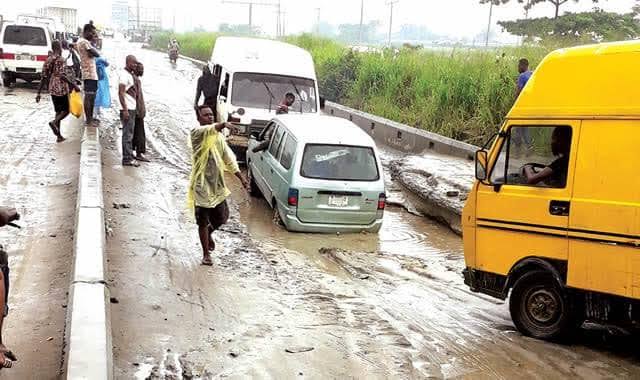
Motorists, commuters, and transport operators across Kogi State have voiced serious concerns over the poor condition of major highways, describing several sections as dangerous and calling for urgent government intervention.
A survey by reporters found that, although the Federal Ministry of Works has reconstructed parts of the Kabba–Egbe Road between Oyi and Iddo in Yagba East Local Government Area, large stretches of the highway—particularly the Egbe–Ilorin axis—remain severely deteriorated.
The assessment revealed numerous potholes, erosion-prone areas, and failed sections that make travel increasingly difficult, especially during the rainy season.
Commuters reported that the poor roads have led to longer travel times, higher vehicle maintenance costs, and increased transport fares.
Road users also expressed concerns about inadequate security along some major routes, especially the Kabba–Egbe corridor, warning that limited patrols expose travelers to security risks, particularly at night.
At the Lokoja Mega Terminal in Felele, transport operators described the Lokoja–Abuja Highway as deplorable despite ongoing reconstruction efforts.
They said journeys that previously took two to three hours now often last between four and 12 hours due to traffic congestion and slow construction.
Drivers and passengers noted that delays during festive periods had stranded travelers for hours, and the lack of viable alternative routes has worsened the situation.
Operators on the Lokoja–Ilorin route said the deteriorating Kabba–Egbe Road had forced them to use longer diversions through neighboring states, significantly increasing fuel consumption and operating costs.
Some also cited security threats, including kidnapping incidents along poorly maintained roads.
Motorists on the Lokoja–Auchi–Benin and Lokoja–Naka routes made similar complaints, linking road damage to rising insecurity and frequent vehicle breakdowns.
Meanwhile, Yunusa Alhassan, Managing Director of the Kogi Road Maintenance Agency (KOGROMA), identified several major roads facing serious deterioration.
He listed the Lokoja–Ajaokuta–Itobe–Ayingba Road, Ajegu–Idah Road, Lokoja–Shintaku–Dekina–Ayingba corridor, sections of the Lokoja–Kabba Road, and flood-prone parts of the Abuja–Lokoja Highway.
According to Alhassan, the main causes of road failure in the state include heavy axle loads, poor drainage, flooding, erosion, aging pavements, and delayed maintenance.
He said KOGROMA is currently undertaking rehabilitation and maintenance projects across the state’s three senatorial districts, including township road repairs, asphalt overlays, erosion-control works, and full reconstruction.
“The agency has also adopted a rainy-season response strategy involving emergency pothole repairs, drainage desilting, culvert rehabilitation, and erosion-control measures,” he stated.
Alhassan emphasized that sustainable improvement of Kogi’s road network requires proactive maintenance, effective drainage management, strict enforcement of axle-load regulations, and timely rehabilitation of critical infrastructure.
“Road infrastructure is vital for economic growth and social development.
To ensure long-term sustainability, maintenance must be proactive rather than reactive,” he concluded.
