


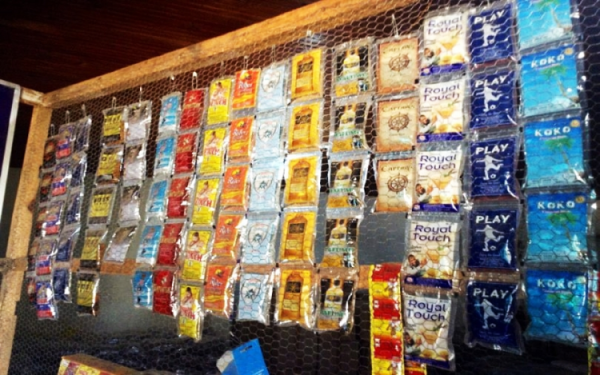
The Renevlyn Development Initiative (RDI) has urged the National Agency for Food and Drug Administration and Control (NAFDAC) to remain firm in enforcing the ban on the production, distribution and sale of alcoholic beverages in sachets, PET bottles and glass containers below 200 millilitres.
This is contained in a statement signed by the RDI Executive Director, Mr Philip Jakpor, and made available to journalists on Friday in Lagos.
Jakpor said the call came amid growing opposition from segments of the alcohol and beverage industry following the commencement of enforcement on Jan. 22.
He noted that the enforcement exercise was the culmination of more than two years of engagement between NAFDAC and industry stakeholders on the implementation of the policy.
Jakpor recalled that the Association of Food, Beverage and Tobacco Employers and the Distillers and Blenders Association of Nigeria signed an agreement with the Federal Ministry of Health and NAFDAC in December 2018 to phase out alcohol in sachets and PET bottles below 200ml by Jan. 31, 2024.
He added that the deadline was later extended to give manufacturers adequate time to comply with the policy.
“However, the Food, Beverage and Tobacco Senior Staff Association (FOBTOB), alongside the Nigeria Employers’ Consultative Association (NECA) and the Manufacturers Association of Nigeria (MAN), have criticized the policy, citing potential job losses and operational disruptions.
“NAFDAC has maintained that the policy is irreversible, explaining that it is driven by public health concerns, particularly the risks posed to children exposed to alcohol at an early age,” Jakpor said.
He commended the agency for what he described as a bold and life-saving intervention.
“We must commend NAFDAC for this long-overdue action. The enforcement of the sachet alcohol ban is a step in the right direction.
“The agency must not be distracted by the familiar rhetoric of imaginary job losses advanced by the alcohol industry in defense of profit over public health,” he said.
Jakpor noted that alcohol-related harm remained a major but under-addressed driver of non-communicable diseases and mental health conditions, affecting both adults and children.
He dismissed the industry’s opposition, describing it as a deliberate attempt to undermine regulation.
Jakpor cited the Movendi International 2025 Big Alcohol Exposed Report, which documented 1,300 cases and 77 independent studies detailing how the alcohol industry interferes with evidence-based alcohol policies globally.
“The sustained effort by alcohol lobbyists in Nigeria to derail enforcement of the sachet alcohol ban under the guise of job losses reflects a global strategy of interference adapted to local contexts,” he said.
He urged NAFDAC to stand firm, describing the policy as epochal and capable of setting a precedent for other African countries facing similar industry pressure.
Jakpor also commended NAFDAC’s Director-General, Prof. Mojisola Adeyeye, for prioritizing the health and wellbeing of Nigerians.
“Nigerians fully support this action. The false narratives and twisted rhetoric of the alcohol industry to sustain business as usual will fail,” he said.
