

• Home
  • Agric
  • Sci & Tech
  • Health
  • Environment
  • Hausa News
  • More
    • Business/Banking & Finance
    • POLITICS
    • Entertainments & Sports
    • International
    • Investigation
    • Law & Human Rights
    • Africa
    • ACCOUNTABILITY/CORRUPTION
    • Hassan Gimba
    • Column
    • Prof. Jibrin Ibrahim
    • Prof. M.K. Othman
    • Defense/Security
    • Education
    • Energy/Electricity
    • Entertainment/Arts & Sports
    • Society and Lifestyle
    • Food & Agriculture
    • Health & Healthy Living
    • International News
    • Interviews
    • Investigation/Fact-Check
    • LAW & HUMAN RIGHTS
    • Oil & Gas/Mineral Resources
    • PRESS FREEDOM/JOURNALISM/PR
    • General News
    • Presidency
  • About Us
    • Contact Us
    • Board Of Advisory
    • Privacy Policy
    • Ethics Policy
    • Teamwork And Collaboration Policy
    • Fact-Checking Policy
    • Advertising
  • Media OutReach Newswire
    • Wire News
  • The Stories
Facebook Twitter Instagram
Trending
  • Despite tight monetary policy, Nigeria’s broad money supply climbs to N129.21trn in May
  • Nigerians keep N5.19trn outside banks despite cashless drive
  • Santuscom’s fertilizer to improve soil, crops
  • DSN CEO: Data classification key to Nigeria’s data sovereignty
  • Nigeria’s national metering rate rises to 57%
  • Lagos to increase investment in tech, innovation
  • Fulani group urges herders to support security efforts, expose criminals in Southwest
  • Nigeria’s local petrol production hits 48m litres daily
Facebook Twitter Instagram YouTube
AsheNewsAsheNews
  • Home
  • Agric

    Santuscom’s fertilizer to improve soil, crops

    June 23, 2026

    Nigeria’s neem advantage: Unlocking a strategic bioeconomy industry for climate, agriculture and industrial growth, Dr Fakunle Aremu

    June 22, 2026

    AFAN predicts drop in food prices after fertiliser distribution

    June 22, 2026

    Northern Nigeria’s poultry economy: Unlocking a multi-billion dollar investment opportunity across the value chain, By Dr. Fakunle Aremu

    June 19, 2026

    Association trains farmers on agroforestry, carbon opportunities

    June 18, 2026
  • Sci & Tech

    DSN CEO: Data classification key to Nigeria’s data sovereignty

    June 23, 2026

    Lagos to increase investment in tech, innovation

    June 23, 2026

    ALTON supports CBN’s local data hosting mandate

    June 20, 2026

    NDPC seeks INEC data records over breach allegations

    June 20, 2026

    SGF urges Galaxy Backbone to boost cybersecurity, broadband

    June 20, 2026
  • Health

    RCCG freedom court parish holds community cleanup for 18th anniversary

    June 23, 2026

    NAFDAC holds workshop on medicine safety in Karu

    June 22, 2026

    Expert urges focused use of N10bn for Ebola preparedness

    June 22, 2026

    From Sokoto to Bulgaria: Dr. Dange’s mission to transform pediatric care

    June 21, 2026

    Nigeria’s Fathers face silent mental health crisis

    June 21, 2026
  • Environment

    Nigeria’s national metering rate rises to 57%

    June 23, 2026

    Nigeria’s local petrol production hits 48m litres daily

    June 23, 2026

    Lagos joins global under2 climate coalition

    June 23, 2026

    FAAN considers extending airport taxi upgrade deadline to October

    June 23, 2026

    Floods, Windstorm devastate Ebonyi farmlands, shops

    June 22, 2026
  • Hausa News

    UNA signs MoU to launch air Bissau in Guinea-Bissau

    June 15, 2026

    Otti plans 250-room 5-star hotel in Umuahia

    April 11, 2026

    Anti-quackery task force seals 4 fake hospitals in Rivers

    August 29, 2025

    [BIDIYO] Yadda na lashe gasa ta duniya a fannin Ingilishi – Rukayya ‘yar shekara 17

    August 6, 2025

    A Saka Baki, A Sasanta Saɓani Tsakanin ‘Yanjarida Da Liman, Daga Muhammad Sajo

    May 21, 2025
  • More
    1. Business/Banking & Finance
    2. POLITICS
    3. Entertainments & Sports
    4. International
    5. Investigation
    6. Law & Human Rights
    7. Africa
    8. ACCOUNTABILITY/CORRUPTION
    9. Hassan Gimba
    10. Column
    11. Prof. Jibrin Ibrahim
    12. Prof. M.K. Othman
    13. Defense/Security
    14. Education
    15. Energy/Electricity
    16. Entertainment/Arts & Sports
    17. Society and Lifestyle
    18. Food & Agriculture
    19. Health & Healthy Living
    20. International News
    21. Interviews
    22. Investigation/Fact-Check
    23. LAW & HUMAN RIGHTS
    24. Oil & Gas/Mineral Resources
    25. PRESS FREEDOM/JOURNALISM/PR
    26. General News
    27. Presidency
    Featured
    Recent

    Despite tight monetary policy, Nigeria’s broad money supply climbs to N129.21trn in May

    June 23, 2026

    Nigerians keep N5.19trn outside banks despite cashless drive

    June 23, 2026

    Santuscom’s fertilizer to improve soil, crops

    June 23, 2026
  • About Us
    1. Contact Us
    2. Board Of Advisory
    3. Privacy Policy
    4. Ethics Policy
    5. Teamwork And Collaboration Policy
    6. Fact-Checking Policy
    7. Advertising
    Featured
    Recent

    Despite tight monetary policy, Nigeria’s broad money supply climbs to N129.21trn in May

    June 23, 2026

    Nigerians keep N5.19trn outside banks despite cashless drive

    June 23, 2026

    Santuscom’s fertilizer to improve soil, crops

    June 23, 2026
  • Media OutReach Newswire
    • Wire News
  • The Stories
AsheNewsAsheNews
Home»Environment/Climate Change»ABU undergraduate turns to charcoal business to survive
Environment/Climate Change

ABU undergraduate turns to charcoal business to survive

NewsdeskBy NewsdeskOctober 24, 2025Updated:October 24, 2025No Comments6 Mins Read
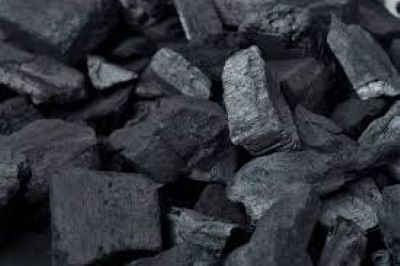
Charcoal
Charcoal
Share
Facebook Twitter LinkedIn Pinterest Email

An undergraduate of Ahmadu Bello University (ABU), Zaria, Joshua Christopher, has said that economic hardship pushed him into charcoal production, which has now become his main source of livelihood while pursuing his degree.

Christopher, a Chemistry student, disclosed this during a field visit to Kajuru Local Government Area (LGA) of Kaduna State on Thursday. He explained that he ventured into the business to sustain himself both in school and at home, despite being aware of its environmental consequences.

“I am currently running my degree programme in Chemistry at ABU Zaria, and this is what I do to sustain myself both at home and in school,” he said.

Christopher explained that charcoal production involves cutting down trees, dividing them into logs, arranging them neatly, covering them with soil, and burning them under controlled heat.

According to him, the process takes between one and four days depending on the moisture level of the wood, and a single round of production can yield up to six bags of charcoal.

He acknowledged that deforestation is harmful to the environment but said economic hardship has forced many young people into the trade.

“If you must deforest, then you must afforest — meaning if you cut one tree, you should plant two or three to replace it,” he added.

Similarly, Frank Bala, a 25-year-old charcoal dealer in Idon community, Kajuru LGA, said he has been in the business for three years and described it as moderately profitable.

Bala explained that producers transport charcoal from the forest to dealers, who then sell to retailers.

“On good days, we sell up to 50 bags, though the number varies depending on the season. Charcoal is cheaper during the dry season and more expensive during the rainy season because it becomes scarce,” he said.

He added that more than 50 charcoal dealers operate in the area, though the number fluctuates with market demand.

Bala, a graduate of Agriculture, admitted awareness of the negative impact of deforestation but said the business provides an alternative source of income for many unemployed youths.

“I know the effects of tree cutting and deforestation, but sometimes you have to work with what is available. This is better than venturing into crime,” he said.

Bala also noted that Idon’s security situation is relatively calm, making it easier for them to operate, although forest guards occasionally visit.

“Sometimes they come around, but we always cooperate with them and settle issues peacefully whenever necessary,” he added.

He appealed to the government and development partners to create alternative livelihood opportunities for young people engaged in the charcoal trade, saying such initiatives would reduce deforestation while sustaining their income.

Government Steps Up Fight Against Illegal Logging

Meanwhile, the Kaduna State Ministry of Environment and Natural Resources has intensified efforts to protect forest reserves across the state. The ministry has deployed forest guards and is collaborating with security agencies to tackle illegal logging and charcoal production.

The Assistant Director of Forest Resources, Mr. Godwin Michael, said during a spot check in Kajuru that the government remained committed to enforcing the ban on forest exploitation and promoting sustainable forest management.

Michael recalled that in 2015, the then governor declared a state of emergency on forestry after discovering that Kaduna’s forest cover had fallen below 15 per cent — far below the internationally recommended minimum of 25 per cent.

He said the Keep Kaduna Green (KKG) Tree Planting Project, launched in 2016, led to the planting of over four million trees across the state between 2016 and 2019. However, insecurity and the COVID-19 pandemic slowed progress.

“Our forest guards are handicapped because they are not armed, and most of these illegal operators come at night to cut down trees,” Michael said.

He added that the ministry has established checkpoints in collaboration with the police to ensure compliance.

“Anyone caught with forest produce without proper documentation is arrested. The goods are confiscated and auctioned, and the proceeds are paid directly into the state government coffers,” he stated.

Michael further disclosed that most charcoal and timber entering Kaduna originate from neighbouring states such as Nasarawa, Niger, and Kogi.

“About 90 per cent of the charcoal coming into Kaduna is not from within the state,” he said.

Also speaking, Mr. Zakariya Naye, Divisional Forestry Officer for Kajuru LGA, identified lack of logistics and equipment as major challenges facing forest guards.

“Our major problems are lack of mobility and lack of arms. Without vehicles or protection, it is difficult to enter the forests and stop illegal activities,” he said, urging the government to provide adequate support.

Journalists, Experts Advocate Climate Reporting

The field visit was organised by Bridge That Gap Hope for Africa Initiative (BTG) under the Women Empowerment and Climate Resilience Initiative (WECRI).

The initiative is part of the Partnership for Agile Governance and Climate Engagement (PACE) programme funded by the UK International Development office. The programme focuses on building sustainable communities and strengthening climate resilience among vulnerable populations in Kaduna State.

The field visit and spot check marked the end of a three-day workshop on “Strengthening Journalism and Reporting on Climate-related Issues.”

During the workshop, environmental experts, including Dr. Joseph Onoja, Director-General of the Nigeria Conservation Foundation (NCF), warned that deforestation contributes about 10 per cent of global greenhouse gas emissions. He urged journalists to intensify climate reporting.

Similarly, Jonah Birga, an Environmental Data Analyst, presented local case studies and deforestation data for Kaduna, revealing that Nigeria loses approximately 350,000 to 400,000 hectares of forest annually, largely due to high demand for charcoal in urban areas.

Mr. Michael Simire, Publisher and Editor-in-Chief of EnviroNews Nigeria, emphasised that ethical journalism recognises no “two sides” to the proven science of human-caused climate change.

He urged journalists to prioritise scientific consensus, expose misinformation and greenwashing, and employ Freedom of Information (FOI) laws, secure tools, and inclusive storytelling in climate reporting.

The Executive Director of BTG, Ms. Gloria Bulus, said the organisation focuses on governance, climate change, and livelihood interventions aligned with the Sustainable Development Goals (SDGs).

Bulus explained that BTG prioritises SDG 13 (Climate Action) by training journalists, conducting community engagements, and empowering rural women through livelihood support, pre-planting awareness campaigns, and school programmes.

She stressed that these initiatives aim to reduce poverty and strengthen sustainable governance and climate resilience.

ABU undergraduate charcoal business economic hardship KKG NCF PACE
Share. Facebook Twitter Pinterest LinkedIn WhatsApp Reddit Tumblr Email
Newsdesk
  • Website

Related Posts

Nigeria’s national metering rate rises to 57%

June 23, 2026

Nigeria’s local petrol production hits 48m litres daily

June 23, 2026

Lagos joins global under2 climate coalition

June 23, 2026

Leave A Reply Cancel Reply

Despite tight monetary policy, Nigeria’s broad money supply climbs to N129.21trn in May

June 23, 2026

Nigerians keep N5.19trn outside banks despite cashless drive

June 23, 2026

Santuscom’s fertilizer to improve soil, crops

June 23, 2026

DSN CEO: Data classification key to Nigeria’s data sovereignty

June 23, 2026
About Us
About Us

ASHENEWS (AsheNewsDaily.com), published by PenPlus Online Media Publishers, is an independent online newspaper. We report development news, especially on Agriculture, Science, Health and Environment as they affect the under-reported rural and urban poor.

We also conduct investigations, especially in the areas of ASHE, as well as other general interests, including corruption, human rights, illicit financial flows, and politics.

Contact Info:
  • 1st floor, Dogon Daji House, No. 5, Maiduguri Road, Sokoto
  • +234(0)7031140009
  • ashenewsdaily@gmail.com
Facebook Twitter Instagram Pinterest
© 2026 All Rights Reserved. ASHENEWS Daily Designed & Managed By DeedsTech

Type above and press Enter to search. Press Esc to cancel.