

• Home
  • Agric
  • Sci & Tech
  • Health
  • Environment
  • Hausa News
  • More
    • Business/Banking & Finance
    • POLITICS
    • Entertainments & Sports
    • International
    • Investigation
    • Law & Human Rights
    • Africa
    • ACCOUNTABILITY/CORRUPTION
    • Hassan Gimba
    • Column
    • Prof. Jibrin Ibrahim
    • Prof. M.K. Othman
    • Defense/Security
    • Education
    • Energy/Electricity
    • Entertainment/Arts & Sports
    • Society and Lifestyle
    • Food & Agriculture
    • Health & Healthy Living
    • International News
    • Interviews
    • Investigation/Fact-Check
    • LAW & HUMAN RIGHTS
    • Oil & Gas/Mineral Resources
    • PRESS FREEDOM/JOURNALISM/PR
    • General News
    • Presidency
  • About Us
    • Contact Us
    • Board Of Advisory
    • Privacy Policy
    • Ethics Policy
    • Teamwork And Collaboration Policy
    • Fact-Checking Policy
    • Advertising
  • Media OutReach Newswire
    • Wire News
  • The Stories
Facebook Twitter Instagram
Trending
  • Smallholders unable to afford essential farm inputs, expert says
  • Farmers say high costs drive up catfish prices
  • NEWSAN calls for urgent repairs to sewage systems
  • Rising feed costs push farmers out of business
  • Naira slips to ₦1,379.99/$ as interbank FX turnover tops $500m
  • FAAC shares ₦2.44trn October revenue as statutory, VAT receipts decline
  • State trains veterinarians to expand rural services
  • UniCal Alumni turn to agribusiness to tackle graduate unemployment
Facebook Twitter Instagram YouTube
AsheNewsAsheNews
  • Home
  • Agric

    Smallholders unable to afford essential farm inputs, expert says

    November 19, 2026

    Farmers say high costs drive up catfish prices

    November 19, 2026

    Rising feed costs push farmers out of business

    November 19, 2026

    State trains veterinarians to expand rural services

    November 19, 2026

    UniCal Alumni turn to agribusiness to tackle graduate unemployment

    November 19, 2026
  • Sci & Tech

    Sultan inaugurates 500-seat ICT centre at Saki nursing college, backs health technology expansion

    November 19, 2026

    Linking payment systems key to Africa’s trade integration, officials say

    November 19, 2026

    CJID announces 2026 media, development conference

    November 18, 2026

    GOVMAIL adoption grows across Nigeria’s public sector

    November 17, 2026

    CADEF: Low public trust threatens Nigeria’s energy transition

    November 14, 2026
  • Health

    Foundation, ACF urge investment in boys’ development

    November 19, 2026

    Nigeria’s home care framework launched to support vulnerable people

    November 19, 2026

    WHO calls for coordinated action to curb antimicrobial resistance

    November 19, 2026

    Men should seek early medical care, NMA chief says

    November 19, 2026

    First lady calls for UN recognition of men’s day

    November 19, 2026
  • Environment

    NEWSAN calls for urgent repairs to sewage systems

    November 19, 2026

    Nigeria targets open defecation free status by 2030

    November 19, 2026

    Erosion puts Cross River transmission line at risk

    November 19, 2026

    Partnership targets open defecation in 8 states

    November 18, 2026

    Air Peace adds more daily flights between Lagos, Abuja

    November 18, 2026
  • Hausa News

    Foundation unveils public sector reform playbook

    November 12, 2026

    Tinubu asks Reps to approve N10.79tn external borrowing for 2026 budget

    November 11, 2026

    UNA signs MoU to launch air Bissau in Guinea-Bissau

    June 15, 2026

    Otti plans 250-room 5-star hotel in Umuahia

    April 11, 2026

    Anti-quackery task force seals 4 fake hospitals in Rivers

    August 29, 2025
  • More
    1. Business/Banking & Finance
    2. POLITICS
    3. Entertainments & Sports
    4. International
    5. Investigation
    6. Law & Human Rights
    7. Africa
    8. ACCOUNTABILITY/CORRUPTION
    9. Hassan Gimba
    10. Column
    11. Prof. Jibrin Ibrahim
    12. Prof. M.K. Othman
    13. Defense/Security
    14. Education
    15. Energy/Electricity
    16. Entertainment/Arts & Sports
    17. Society and Lifestyle
    18. Food & Agriculture
    19. Health & Healthy Living
    20. International News
    21. Interviews
    22. Investigation/Fact-Check
    23. LAW & HUMAN RIGHTS
    24. Oil & Gas/Mineral Resources
    25. PRESS FREEDOM/JOURNALISM/PR
    26. General News
    27. Presidency
    Featured
    Recent

    Smallholders unable to afford essential farm inputs, expert says

    November 19, 2026

    Farmers say high costs drive up catfish prices

    November 19, 2026

    NEWSAN calls for urgent repairs to sewage systems

    November 19, 2026
  • About Us
    1. Contact Us
    2. Board Of Advisory
    3. Privacy Policy
    4. Ethics Policy
    5. Teamwork And Collaboration Policy
    6. Fact-Checking Policy
    7. Advertising
    Featured
    Recent

    Smallholders unable to afford essential farm inputs, expert says

    November 19, 2026

    Farmers say high costs drive up catfish prices

    November 19, 2026

    NEWSAN calls for urgent repairs to sewage systems

    November 19, 2026
  • Media OutReach Newswire
    • Wire News
  • The Stories
AsheNewsAsheNews
Home»Entertainment/Arts & Sports»ALA: Grand Master of Hausa Poetry, Literary Aesthetics and Moral Crusader, by Prof. MK Othman
Entertainment/Arts & Sports

ALA: Grand Master of Hausa Poetry, Literary Aesthetics and Moral Crusader, by Prof. MK Othman

EditorBy EditorNovember 16, 2026Updated:November 19, 2026No Comments5 Mins Read
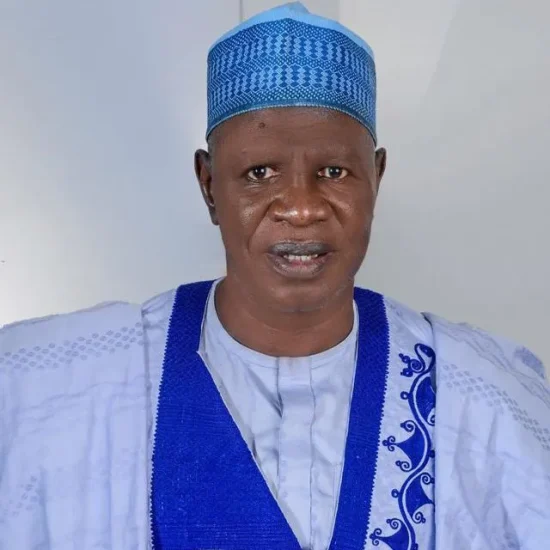
Nigeria - Prof. MK Othman
Prof. MK Othman
Share
Facebook Twitter LinkedIn Pinterest Email

Aminu Ladan Abubakar (ALA) is one of the greatest modern Hausa poets and singers, known for skillfully blending music, literature, philosophy, politics, and social criticism into a single artistic expression. His poetic mastery and melodic appeal, paired with deep philosophical reflections on human nature, leadership, morality, justice, life, politics, and society, invite listeners to think and deeply appreciate his lyrics rather than merely dance and be entertained. One of ALA’s greatest strengths is his command of the Hausa language, with a rich vocabulary of proverbs, idioms, metaphors, and traditional poetic expressions that set his songs uniquely apart from those of praise singers and the mediocre who sing for a pot of porridge.

In this vein, ALA differs from other Hausa musicians who focus mainly on romance and entertainment. In his songs, he addresses bad governance and political irresponsibility; corruption and abuse of public office; poverty and social inequality; injustice and discrimination; the responsibilities of leaders and followers; and historical antecedents. Every Hausa speaker with listening ears cannot help but admire the acrobatic skill with which ALA uses the Hausa language as a moral crusader, peace ambassador, and pillar of unity for national development. His songs convey lessons about integrity, humility, patience, accountability, human dignity, and the temporary nature of power and wealth. Again, ALA’s songs show that music can be engaging and beautiful literature. The rhythm, rhyme, imagery, symbolism, and carefully constructed verses make his compositions especially appealing to lovers of Hausa poetry.

Still, ALA’s songs attract diverse listeners at different levels: the ordinary listener may enjoy the melody, lovers of Hausa literature may appreciate the poetry, intellectuals may examine the philosophical arguments, political analysts may interpret the governance messages, and historians may appreciate the cultural and historical references. These are admirers of ALA’s Hausa songs, music, and poetry. In essence, ALA transforms Hausa music from entertainment into a vehicle for intellectual stimulation and societal reflection. ALA has often been willing to address sensitive social and political issues, even when many would prefer to stay quiet. ALA’s poetry echoes Bob Marley’s musical revolution, which raised global consciousness among oppressed, underdog, and black people in the 1970s and 80s. However, ALA’s philosophies are rooted in Islamic perspectives, making them distinct from Marley’s work. Still, the lessons remain resonant. This gives his music a distinctive identity as a platform for public discourse.

For this reason, Federal University Dutsin-Ma (FUDMA) organized the first international conference on ALA’s literary works, held on the 9th of November and graced by four first-class emirs and other highly respected dignitaries from across Nigeria and our neighboring sister country, the Niger Republic.

Among the prominent traditional rulers who graced the occasion were the Emir of Katsina, Alhaji Abdulmumini Kabir Usman; the Emir of Kano, Alhaji Aminu Ado Bayero; the Emir of Daura, Alhaji Faruk Umar; the Emir of Lafia, Justice Sidi Muhammad Bage; and the Emir of Katsina Maradi in the Republic of Niger, Alhaji Ahmed Ali Zaki. Distinguished dignitaries included Ambassador Ahmed Rufa’i Abubakar (Sardaunan Katsina, former DG NIA), who chaired the event; Dr. Ibrahim M. Ida (Wazirin Katsina and Secretary, Katsina Council of Emirs); Hon. Justice Musa Danladi Abubakar (Chief Judge, Katsina State); Dr. Abdu Haruna (Sarkin Yaƙin Katsinan Maradi); and Alhaji Abdurrahman Mubi (Salanken Ƙasar Hausa), among many others. It was a mammoth gathering of ALA’s admirers, lovers, and scholars, with more than 400 people participating both virtually and in person.  

More than 140 scholarly papers were presented across 12 in-person parallel sessions and virtual panels in Arabic, English, French, and Hausa. Alongside the academic sessions, the event featured the formal inauguration of the FUDMA Hausa Research Center and the launch of a new literary anthology of competition-winning novels on insecurity in Nigeria, published as a compendium. The compendium is a must-read for policymakers in Nigeria seeking lasting solutions to the country’s insecurity challenges.

After extensive deliberations on the presented papers, participants emphasized that ALA’s body of work transcends entertainment, serving as a vital blend of indigenous orature, Islamic scholarship, and modern literary aesthetics. The need to sustain the intellectual momentum generated at the conference cannot be overstated, and thus calls for integrating ALA’s works into university curricula. They urged the departments of Nigerian languages, literature, and linguistics at universities and other tertiary institutions to adopt ALA’s compositions as core texts for studying indigenous poetics and literary composition. To advance African integration of literary work, multilingual translation of ALA’s Hausa works into English, Arabic, French, and other global languages is needed to broaden their international reach.

Again, the participants called for urgent institutional efforts to document, archive, and digitize ALA’s oral, written, and performed works for the education of youth, posterity, and advancement. A call was made to support emerging Hausa literary scholars, with a recommendation to establish ALA research grants, mentorship schemes, and publishing outlets for young researchers and postgraduate students. Another key point advocated was strengthening inter-university collaboration by formalizing joint research partnerships among participating institutions, including Federal University Dutsin-Ma, Bayero University Kano, Sule Lamido University Kafin Hausa, Umaru Musa Yar’adua University Katsina, and Rutgers University (New Jersey, USA). The participants are poised to institutionalize and sustain the conference as an annual international forum dedicated to African literary theory and oral artistry.

Who is ALA? Aminu Ladan Abubakar was born in 1973 in Kano. He attended Tudun Murtala Primary School, Government Science Secondary School Dakata Kwaji, Kano School of Technology, and the National Open University, where he earned a Bachelor of Arts (Hausa). He received more than 30 national and international merit awards, recognitions, and traditional titles from first- and second-class emirs and chiefs across Nigeria and beyond. ALA is married and has children.

In conclusion, the conference closed in an atmosphere of deep intellectual camaraderie, shared cultural pride, and renewed dedication to advancing African literatures. Participants departed with a collective resolve to champion and build on the poetics, theoretical insights, and principles of literary composition exemplified in the enduring works of Aminu Ladan Abubakar (ALA).

Aminu Ladan Abubakar (ALA) Hausa Poetry Literary Aesthetics Moral Crusader
Share. Facebook Twitter Pinterest LinkedIn WhatsApp Reddit Tumblr Email
Editor
  • Website

Related Posts

Nigerian universities on the rise again: Salute to the FGN and Academia [III], by Prof. MK Othman

October 19, 2026

Nigerian universities on the rise again: Salute to the FGN and academia [II], By Prof. MK Othman

October 13, 2026

Nigerian universities on the rise again: Salute to the FGN and Academia, by Prof. MK Othman

October 5, 2026

Leave A Reply Cancel Reply

Smallholders unable to afford essential farm inputs, expert says

November 19, 2026

Farmers say high costs drive up catfish prices

November 19, 2026

NEWSAN calls for urgent repairs to sewage systems

November 19, 2026

Rising feed costs push farmers out of business

November 19, 2026
About Us
About Us

ASHENEWS (AsheNewsDaily.com), published by PenPlus Online Media Publishers, is an independent online newspaper. We report development news, especially on Agriculture, Science, Health and Environment as they affect the under-reported rural and urban poor.

We also conduct investigations, especially in the areas of ASHE, as well as other general interests, including corruption, human rights, illicit financial flows, and politics.

Contact Info:
  • 1st floor, Dogon Daji House, No. 5, Maiduguri Road, Sokoto
  • +234(0)7031140009
  • ashenewsdaily@gmail.com
Facebook Twitter Instagram Pinterest
© 2026 All Rights Reserved. ASHENEWS Daily Designed & Managed By DeedsTech

Type above and press Enter to search. Press Esc to cancel.