

• Home
  • Agric
  • Sci & Tech
  • Health
  • Environment
  • Hausa News
  • More
    • Business/Banking & Finance
    • POLITICS
    • Entertainments & Sports
    • International
    • Investigation
    • Law & Human Rights
    • Africa
    • ACCOUNTABILITY/CORRUPTION
    • Hassan Gimba
    • Column
    • Prof. Jibrin Ibrahim
    • Prof. M.K. Othman
    • Defense/Security
    • Education
    • Energy/Electricity
    • Entertainment/Arts & Sports
    • Society and Lifestyle
    • Food & Agriculture
    • Health & Healthy Living
    • International News
    • Interviews
    • Investigation/Fact-Check
    • LAW & HUMAN RIGHTS
    • Oil & Gas/Mineral Resources
    • PRESS FREEDOM/JOURNALISM/PR
    • General News
    • Presidency
  • About Us
    • Contact Us
    • Board Of Advisory
    • Privacy Policy
    • Ethics Policy
    • Teamwork And Collaboration Policy
    • Fact-Checking Policy
    • Advertising
  • Media OutReach Newswire
    • Wire News
  • The Stories
Facebook Twitter Instagram
Trending
  • Lagos residents blame urbanisation for worsening floods
  • PTA rejects concession of King’s college Lagos to Old Boys
  • Calabar landslides kill 5, destroy homes
  • Who gets to participate? Zauro and the architecture of economic citizenship, by Mohammed M. Haruna, PhD, mnipr
  • PTA calls for upward review of teachers’ salaries
  • FG expands funding, local production to improve cancer care
  • Gov Otti warns Abia farmers to register for input support
  • AFAN in Ogun dismisses impostors parading as executives
Facebook Twitter Instagram YouTube
AsheNewsAsheNews
  • Home
  • Agric

    Gov Otti warns Abia farmers to register for input support

    July 11, 2026

    AFAN in Ogun dismisses impostors parading as executives

    July 11, 2026

    BOA launches 2026 wet season input distribution in Katsina

    July 11, 2026

    From scarcity to scale: What Africa can learn from India’s agricultural transformation, by Alice Ruhweza and Dr Purvi Mehta

    July 10, 2026

    Experts recommend local alternatives to cut poultry feed costs

    July 10, 2026
  • Sci & Tech

    Nigeria’s food service industry hits $11.09bn in 2025 – Moniepoint

    July 10, 2026

    Academy of medical sciences condemns maternal mortality, epidemic risks

    July 9, 2026

    NCC advances transparent pricing for fibre sharing

    July 8, 2026

    IHVN, partners launch Lassa fever research to support vaccine development in Bauchi

    July 8, 2026

    Meta rolls out first in-house AI image generator across WhatsApp, Instagram, Facebook

    July 8, 2026
  • Health

    FG expands funding, local production to improve cancer care

    July 11, 2026

    Niger targets 100 Level-2 PHCs by year-end

    July 11, 2026

    Psychiatrist urges Nigerians to prioritise brain health

    July 10, 2026

    Niger govt intensifies monitoring of PHC upgrades to level II

    July 10, 2026

    Zamfara approves 6 month maternity leave for female civil servants

    July 10, 2026
  • Environment

    Lagos residents blame urbanisation for worsening floods

    July 12, 2026

    PTA rejects concession of King’s college Lagos to Old Boys

    July 12, 2026

    Calabar landslides kill 5, destroy homes

    July 12, 2026

    NMC dismisses claims of Nigeria’s IMO observer status

    July 11, 2026

    Association urges Nigerians on proper waste management

    July 11, 2026
  • Hausa News

    UNA signs MoU to launch air Bissau in Guinea-Bissau

    June 15, 2026

    Otti plans 250-room 5-star hotel in Umuahia

    April 11, 2026

    Anti-quackery task force seals 4 fake hospitals in Rivers

    August 29, 2025

    [BIDIYO] Yadda na lashe gasa ta duniya a fannin Ingilishi – Rukayya ‘yar shekara 17

    August 6, 2025

    A Saka Baki, A Sasanta Saɓani Tsakanin ‘Yanjarida Da Liman, Daga Muhammad Sajo

    May 21, 2025
  • More
    1. Business/Banking & Finance
    2. POLITICS
    3. Entertainments & Sports
    4. International
    5. Investigation
    6. Law & Human Rights
    7. Africa
    8. ACCOUNTABILITY/CORRUPTION
    9. Hassan Gimba
    10. Column
    11. Prof. Jibrin Ibrahim
    12. Prof. M.K. Othman
    13. Defense/Security
    14. Education
    15. Energy/Electricity
    16. Entertainment/Arts & Sports
    17. Society and Lifestyle
    18. Food & Agriculture
    19. Health & Healthy Living
    20. International News
    21. Interviews
    22. Investigation/Fact-Check
    23. LAW & HUMAN RIGHTS
    24. Oil & Gas/Mineral Resources
    25. PRESS FREEDOM/JOURNALISM/PR
    26. General News
    27. Presidency
    Featured
    Recent

    Lagos residents blame urbanisation for worsening floods

    July 12, 2026

    PTA rejects concession of King’s college Lagos to Old Boys

    July 12, 2026

    Calabar landslides kill 5, destroy homes

    July 12, 2026
  • About Us
    1. Contact Us
    2. Board Of Advisory
    3. Privacy Policy
    4. Ethics Policy
    5. Teamwork And Collaboration Policy
    6. Fact-Checking Policy
    7. Advertising
    Featured
    Recent

    Lagos residents blame urbanisation for worsening floods

    July 12, 2026

    PTA rejects concession of King’s college Lagos to Old Boys

    July 12, 2026

    Calabar landslides kill 5, destroy homes

    July 12, 2026
  • Media OutReach Newswire
    • Wire News
  • The Stories
AsheNewsAsheNews
Home»ECONOMY»Nigerian banks incur $1bn in loan losses, blame macro-economic conditions
ECONOMY

Nigerian banks incur $1bn in loan losses, blame macro-economic conditions

Nigerian banks incur $1bn in loan losses, blame macro-economic conditions
Abdallah el-KurebeBy Abdallah el-KurebeSeptember 22, 2023Updated:September 22, 2023No Comments5 Mins Read
Nigerian banks
Share
Facebook Twitter LinkedIn Pinterest Email
  • Nigerian commercial banks have incurred an estimated $1 billion in loan losses during the first half of 2023, a significant increase compared to the same period last year, largely attributed to rising inflation and interest rate hikes by the Central Bank of Nigeria. 
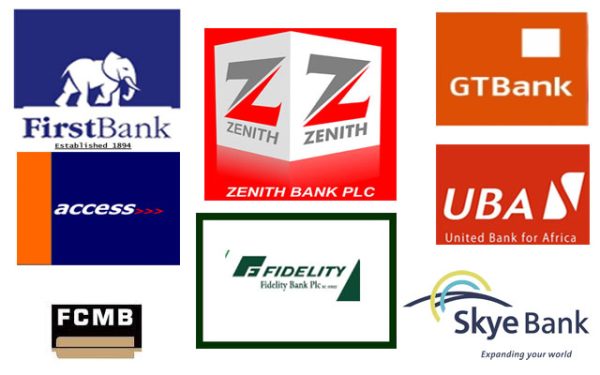
  • Amidst these macroeconomic challenges, banks like UBA and GTCO have seen over 1,000% year-on-year growths in impairment charges, affecting their core business of lending and reducing their net interest income. 
  • Despite the adverse conditions, banks have managed to maintain non-performing loan ratios within regulatory limits, partly due to a substantial increase in non-interest income generated from forex revaluations. 

Nigeria’s leading commercial banks suffered loan losses estimated at a combined $1 billion in the first half of 2023. 

This is according to data collated from the 2023 half-year financial statements released by the banks in the last few weeks. 

In terms of local currency, the losses amount to over N730 billion for the first two quarters of the year, dwarfing the N163 billion incurred over the same period last year.  

It’s worth noting that Access Bank, Nigeria’s most substantial financial institution by total assets, has not yet released its audited accounts for the first half of the year. 

Rising Inflation and Interest Rates fuel losses 

The surge in impairments comes against a backdrop of growing inflationary pressures and subsequent hikes in interest rates.

To curb spiralling inflation, the Central Bank of Nigeria (CBN) has significantly raised its key interest rates, going from 11.5% in December 2021 to a 15-year peak of 18.75%.  

Market experts widely anticipate another interest rate hike at the upcoming Monetary Policy Committee (MPC) meeting, which has been rescheduled from its original dates of September 25 and 26, 2023. 

As the CBN continues its aggressive policy measures to combat inflation, the cost of borrowing has also risen. This inflationary environment makes loans more expensive to service, thereby increasing the likelihood of borrower default. 

The Domino Effect on Impairment Charges 

Faced with the growing risk of customer default, banks have had to escalate their impairment charges to buffer against potential future losses.  

In the first half of 2023, impairment charges on loans and advances across banks witnessed a significant year-on-year surge, with banks like UBA and GTCO recording over 1,000% year-on-year growth in impairment charges during the same period.  Both banks recorded loan impairments of N164.2 billion and N153.9 billion respectively.  

GTB attributed these ballooning losses to “weakening macroeconomic conditions” and losses incurred from investments in Ghana’s Eurobonds. 

“The Group booked loan impairment charges of ₦82.96bn in H1-2023 from ₦3.51bn in H1-2022 due to weakening macroeconomic variables.

“The Group also recognised ₦81.3bn in H1-2023 as an impairment charge on other Financial Assets (FA) also by way of management overlay as loss rate heightened on its investment in Ghanaian sovereign securities and other foreign currency financial instruments whose underlying values are sensitive to adverse exchange rate movement.”

The substantial surge in impairment charges on loans and advances underscores a significant concern; banks are bracing themselves for more substantial losses from their core revenue stream, which is lending to customers.    

These provisions have cast a shadow over the banks’ income generated from their core business line, which is lending to customers, consequently reducing their net interest income after impairment charges.   

Zenith Bank specifically outlined this dilemma, indicating that high impairment levels, coupled with elevated interest expenses due to inflation, have impacted its net interest margin (NIM), which fell from 7.1% to 5.9% year-on-year. 

Impairment levels increased significantly in recognition of the heightened risk environment resulting in the cost of risk growing from 1.4% to 8.8%. Cost of funding also grew YoY from 1.4% in H1 2022 to 2.6% in H1 2023 due to the spike in interest rates, with interest expense growing from NGN57 billion in H1 2022 to NGN153.6 billion in H1 2023. This affected our net interest margin (NIM) which reduced from 7.1% to 5.9% over the same period. 

Silver Linings and Analyst Perspectives 

Despite these grim figures, commercial banks have maintained non-performing loan ratios that are within regulatory limits. GTB, Zenith Bank, UBA, and FBN Holding reported NPL ratios of 4.6%, 3.9%, 3.3%, and 4.3%, respectively.

These more favourable ratios have been bolstered by a considerable increase in non-interest income, particularly from forex positions.  

For example, four banks within the FUGAZ group (excluding Access Bank) reported a combined N1.3 trillion from forex revaluation gains, primarily from swaps and non-deliverable forwards.

This is a significant leap from just N16 billion over the same period in 2022.  

Some financial analysts who spoke with Nairametrics suggested that the escalation in loan impairments might be a strategic move by banks.

This increase could be a way to fast-track loan provisioning, which can now be offset by the gains from forex revaluations. 

 Nairametrics

CBN Loses Nigerian Banks
Share. Facebook Twitter Pinterest LinkedIn WhatsApp Reddit Tumblr Email
Abdallah el-Kurebe
  • Website
  • Facebook
  • Twitter
  • LinkedIn

Related Posts

Naira weakens to N1,381/$ despite rise in Nigeria’s external reserves to $51.7bn

July 11, 2026

[PHOTO NEWS] Cardoso hosts finance minister Oyedele on working visit to CBN

July 10, 2026

Standard ₦100 banknote remains legal tender, CBN clarifies

July 8, 2026

Leave A Reply Cancel Reply

Lagos residents blame urbanisation for worsening floods

July 12, 2026

PTA rejects concession of King’s college Lagos to Old Boys

July 12, 2026

Calabar landslides kill 5, destroy homes

July 12, 2026

Who gets to participate? Zauro and the architecture of economic citizenship, by Mohammed M. Haruna, PhD, mnipr

July 11, 2026
About Us
About Us

ASHENEWS (AsheNewsDaily.com), published by PenPlus Online Media Publishers, is an independent online newspaper. We report development news, especially on Agriculture, Science, Health and Environment as they affect the under-reported rural and urban poor.

We also conduct investigations, especially in the areas of ASHE, as well as other general interests, including corruption, human rights, illicit financial flows, and politics.

Contact Info:
  • 1st floor, Dogon Daji House, No. 5, Maiduguri Road, Sokoto
  • +234(0)7031140009
  • ashenewsdaily@gmail.com
Facebook Twitter Instagram Pinterest
© 2026 All Rights Reserved. ASHENEWS Daily Designed & Managed By DeedsTech

Type above and press Enter to search. Press Esc to cancel.