


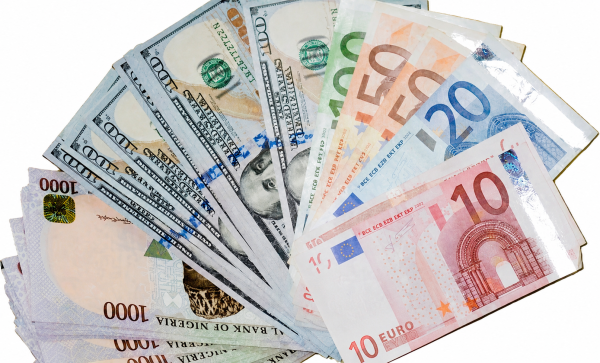
The naira has maintained its gains against the euro, trading at N1,497 per euro as rising French borrowing costs and concerns over the country’s fiscal outlook put pressure on the European currency.
The exchange rate, reported in the Central Bank of Nigeria’s latest figures for the midweek session, moved below the N1,500-per-euro threshold for the first time since April 2024.
Pressure on the euro intensified after yields on France’s 10-year government bonds rose to 5 per cent, their highest level since 2002, amid concerns about rising energy costs and the country’s fiscal position.
French bond yields increased by seven basis points, widening the spread between French and German 10-year government debt to 159.4 basis points, its largest margin in 15 years.
The widening spread reflects growing investor concerns about France’s fiscal risks and uncertainty surrounding the passage of its next budget. Political divisions and public discontent over the rising cost of living have added to the pressure.
The euro also weakened against the US dollar, falling as much as 0.2 per cent to $1.1214, as volatility in European bond markets and higher energy prices weighed on the currency.
In Nigeria, the naira’s performance comes amid a shift in monetary policy following the CBN’s September decision to cut the Monetary Policy Rate by 350 basis points, from 26.5 per cent to 23 per cent.
However, the apex bank has retained a 45 per cent Cash Reserve Requirement for commercial banks, while continuing to monitor liquidity conditions and foreign exchange stability.
Nigeria’s inflation had also slowed for two consecutive months to around 14.6 per cent, according to figures cited in the report.
Although the naira’s appreciation against the euro marks a notable exchange-rate development, the euro’s weakness is an important factor behind the movement. A recovery in the European currency could test the naira’s recent gains.
The direction of the pair will depend partly on developments in France’s fiscal outlook, European bond markets and conditions in Nigeria’s foreign exchange market.
