


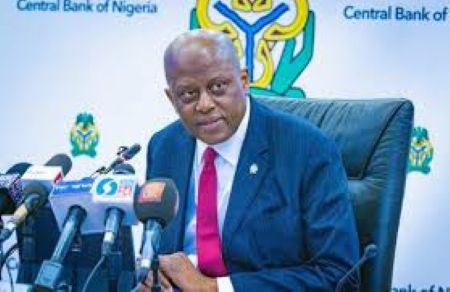
The Federal Government and the Central Bank of Nigeria (CBN) have signed a Memorandum of Understanding (MoU) to institutionalise coordination between fiscal and monetary authorities and strengthen the country’s economic management.
The agreement, signed in Abuja on Friday by Finance Minister and Coordinating Minister of the Economy, Taiwo Oyedele, and CBN Governor Olayemi Cardoso, provides a structured framework for regular consultations, information sharing and coordinated policy assessments.
Under the framework, the Federal Ministry of Finance and the CBN will deepen cooperation in government cash management, debt issuance planning, liquidity forecasting, macroeconomic analysis and periodic policy consultations.
Cardoso said the agreement formalises a longstanding relationship between the two institutions and would replace largely practice-based collaboration with clearer processes and enduring institutional commitments.
He said the timing was particularly important as the CBN advances its transition towards an inflation-targeting framework, noting that effective monetary policy requires a supportive fiscal environment.
According to him, regular dialogue and coordinated policy assessments would help both institutions align their actions, minimise policy trade-offs and improve the quality of economic decision-making.
Oyedele said the objective was to ensure that fiscal and monetary policies work together without compromising the CBN’s operational independence.
He explained that government borrowing affects liquidity and interest rates, while monetary policy influences government financing costs. Similarly, tariffs and exchange rates affect prices and revenue, while government spending influences demand.
The minister said the MoU would strengthen information sharing, align macroeconomic assumptions, improve economic forecasts and provide clearer mechanisms for resolving areas where fiscal and monetary policies could work at cross purposes.
Oyedele said the government’s objective was to bring inflation sustainably into single digits, stressing that achieving this would require more than monetary policy.
He identified food supply, energy, logistics and imported costs among the structural factors contributing to inflation, adding that fiscal measures would complement monetary interventions through disciplined spending, improved cash management and more efficient government financing.
The minister also said better economic data would be critical to effective policymaking, with the government working with the National Bureau of Statistics to strengthen available information, including producer-price data.
The two institutions are also expected to share information on government cash positions, financing plans, credit growth and foreign exchange flows under the new framework.
The agreement is intended to make fiscal-monetary coordination less dependent on the individuals occupying key offices and more firmly anchored in institutional processes.
