

We lost Prof Biodun Jeyifo, or BJ as we fondly called him, last week, not long after we organised an 80th anniversary symposium in his honour. At the event, his bosom friend. Dr Yemi Ogunbiyi explained he was not supposed to have reached the ripe old age of 80 as much earlier in life; he had been diagnosed with a disease that was supposed to guarantee a much shorter life-span. It was for this reason that he relocated to the United States to have access to better medical facilities. We thank God for giving him a long and fulfilled life.
I had known BJ as a young Marxist student in Ahmadu Bello University, Zaria, who travelled frequently to Ife, to engage with the relatively large number of student and lecturer comrades who flourished within the university community. I always found him to be an inspirational figure with total commitment to revolutionary struggle. He loved polemics and was never one to shy away from an argument, as he was endowed with the gift of the gab. BJ also never hesitated to criticise the older generation of Marxists, who he felt had failed in their task of leading the country into the desired socialist future we deserved.
I remember a meeting of Nigerian revolutionaries, a word we used to describe ourselves in those days, a big debate over who had the correct understanding of the social forces in the country and how to combat them and open a path for genuine revolutionary struggle. The meeting, which took place in Jos, was strongly marked by an age divide which crept up between BJ and Eddie Madunagu on the one hand and the older comrades on the important question of revolutionary capacity and strategy. As often happens in such situations, labels emerge to counter stronger arguments and BJ and Eddie were labelled with the “insult” word of Trotskyites to delegitimize their arguments. Maybe one day, I will write about my recollections about labelling in Nigeria’s left history- the Trotskyites, the labour aristocrats, the opportunists, the Stalinists, the Maoists, the suspected state agents and other false pretenders. It has been a significant burden for left movements throughout history.
This is the reason why, after over a century of organisation, at no time did the left ever develop a unified movement. The numerous conferences and movements starting with the Zikist Movement, which was denounced by Zik himself in the 1950s, Tunji Otegbeye’s Socialist Workers and Farmers Party in the 1960s, The Movement for People’s Democracy (1975), All Nigeria Socialist Conference, Zaria (1977 and !978), all failed to achieve the unity goal. The left has been in a situation in which its objectives were always clear – building a better life for the masses of our people after displacing the ruling class that has neither the intention nor capacity to do so has always floundered.
As a young lecturer at Ahmadu Bello University in 1980, I was already in the progressive caucus when Biodun Jeyifo (BJ) and Uzodinma Nwala, newly elected pioneer President and Secretary of ASUU, stormed our Samaru campus to bring the good news. The transformation has occurred, they proclaimed, by the law of 1978, the Nigerian Association of University Teachers, then existing in the five pioneer universities, was dead and from its grave emerged the Academic Staff Union of Universities (ASUU), a trade union. We were in exquisite excitement as BJ explained to us that intellectuals can now join the working-class struggle as trade unionists and bring our intellectual support to the larger struggle to improve the educational system, but even more important, make our contribution to creating a progressive Nigeria. We celebrated the irony of a repressive military regime accidentally creating favourable conditions for the revolution.
I was in the team that dashed off to the Department of Electrical Engineering to inform Prof Buba Bajoga, the last head of the association, that a new regime had arrived and his association had been annulled by law. Always a gentleman, he accepted the new state of affairs and moved on. We organised elections, and George Kwanashie and Raufu Mustapha emerged as the first leadership of ASUU in ABU, the bedrock of campus radicalism in Nigeria. We immediately engaged in organising the first ASUU strike, and in 1982, I spent months in the Ibadan headquarters providing support for the ASUU negotiating team. In 1983, I became the secretary of ASUU in ABU with Yahaya Abdullahi as Chairman, and the struggle continued.
BJ’s core argument was that with a joint umbrella coordination of the organizational work of workers and intellectuals, an opportunity could be created for a revolutionary vanguard to emerge and create the necessary impetus for the Nigerian revolution, which could completely transform the entire African continent. It would be recalled that before “fabricating” ASUU from a law that the universities were not even aware of, BJ and some of his comrades had established the Ogi commune in rural Osun State, where they worked with the peasantry, hoping to emulate the Maoist revolution in Nigeria. The commune failed, and ASUU became the next revolutionary stepping stone.
The revolution did not happen then. BJ moved to the United States, became one of the world’s finest literary critics and constructed the poetics and aesthetics that justified why Wole Soyinka deserved the Nobel Prize for literature. Thanks to BJ’s work, Soyinka got it and placed Nigeria on the literary map. As BJ joins the ancestors, his footprints and polemics continue to inspire revolutionaries and others with the gift of the gab.
Biodun Jeyifo (BJ): Fond memories of a committed intellectual, by Prof. Jibrin Ibrahim
 By Editor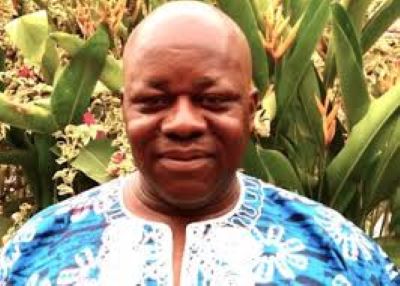
Prof. Jibrin Ibrahim
