

• Home
  • Agric
  • Sci & Tech
  • Health
  • Environment
  • Hausa News
  • More
    • Business/Banking & Finance
    • POLITICS
    • Entertainments & Sports
    • International
    • Investigation
    • Law & Human Rights
    • Africa
    • ACCOUNTABILITY/CORRUPTION
    • Hassan Gimba
    • Column
    • Prof. Jibrin Ibrahim
    • Prof. M.K. Othman
    • Defense/Security
    • Education
    • Energy/Electricity
    • Entertainment/Arts & Sports
    • Society and Lifestyle
    • Food & Agriculture
    • Health & Healthy Living
    • International News
    • Interviews
    • Investigation/Fact-Check
    • LAW & HUMAN RIGHTS
    • Oil & Gas/Mineral Resources
    • PRESS FREEDOM/JOURNALISM/PR
    • General News
    • Presidency
  • About Us
    • Contact Us
    • Board Of Advisory
    • Privacy Policy
    • Ethics Policy
    • Teamwork And Collaboration Policy
    • Fact-Checking Policy
    • Advertising
  • Media OutReach Newswire
    • Wire News
  • The Stories
Facebook Twitter Instagram
Trending
  • US-Israeli war on Iran: Wetin be Nigeria’s own? [IV] By Hassan Gimba
  • How Adeleke beat the ‘gang’ to win Osun governorship election
  • NiMet forecasts 3 days of cloudy, thundery weather across Nigeria
  • Climate crisis, mining expansion threaten Southern Africa’s girls, Group warns
  • RMAFC completes review of revenue allocation formula, advances remuneration reforms
  • UN says $50m ransom helped finance Al-Qaeda-linked offensive in Mali
  • Sokoto, EU, UNICEF unveil 10-year education plan to strengthen inclusion, resilience
  • YSU to make tree planting compulsory before graduation
Facebook Twitter Instagram YouTube
AsheNewsAsheNews
  • Home
  • Agric

    FG reserves 33,000 hectares for livestock settlements in Abuja

    August 15, 2026

    Kogi moves to establish cashew processing plant

    August 14, 2026

    NADF graduates 250 mechanisation service providers

    August 14, 2026

    Agrolog distributes ginger rhizomes to Kaduna farmers

    August 14, 2026

    Kaduna strengthens agricultural stakeholder coordination

    August 13, 2026
  • Sci & Tech

    AHI summer programme trains 20 young people in AI

    August 14, 2026

    Abuja GSM village seeks FG partnership for youth tech training centre

    August 13, 2026

    GSMA launches circularity services for mobile operators

    August 13, 2026

    Digital literacy key to fighting youth unemployment in Kano – Experts

    August 12, 2026

    YIN urges investment in youth, digital skills for Nigeria’s economic growth

    August 12, 2026
  • Health

    Urologists warn against prolonged antibiotics for persistent urinary symptoms

    August 15, 2026

    Lawyer launches 220-hour SGBV law reading marathon for Africa

    August 15, 2026

    Tarauni LGA distributes malaria drugs to 77,627 children

    August 14, 2026

    FG urges deeper China-Africa health cooperation

    August 14, 2026

    Stakeholders call for better women’s health data systems

    August 14, 2026
  • Environment

    NiMet forecasts 3 days of cloudy, thundery weather across Nigeria

    August 16, 2026

    Climate crisis, mining expansion threaten Southern Africa’s girls, Group warns

    August 15, 2026

    YSU to make tree planting compulsory before graduation

    August 15, 2026

    FG inaugurates new NSIWC board

    August 14, 2026

    Sokoto-Badagry highway to boost agriculture – Idris

    August 14, 2026
  • Hausa News

    UNA signs MoU to launch air Bissau in Guinea-Bissau

    June 15, 2026

    Otti plans 250-room 5-star hotel in Umuahia

    April 11, 2026

    Anti-quackery task force seals 4 fake hospitals in Rivers

    August 29, 2025

    [BIDIYO] Yadda na lashe gasa ta duniya a fannin Ingilishi – Rukayya ‘yar shekara 17

    August 6, 2025

    A Saka Baki, A Sasanta Saɓani Tsakanin ‘Yanjarida Da Liman, Daga Muhammad Sajo

    May 21, 2025
  • More
    1. Business/Banking & Finance
    2. POLITICS
    3. Entertainments & Sports
    4. International
    5. Investigation
    6. Law & Human Rights
    7. Africa
    8. ACCOUNTABILITY/CORRUPTION
    9. Hassan Gimba
    10. Column
    11. Prof. Jibrin Ibrahim
    12. Prof. M.K. Othman
    13. Defense/Security
    14. Education
    15. Energy/Electricity
    16. Entertainment/Arts & Sports
    17. Society and Lifestyle
    18. Food & Agriculture
    19. Health & Healthy Living
    20. International News
    21. Interviews
    22. Investigation/Fact-Check
    23. LAW & HUMAN RIGHTS
    24. Oil & Gas/Mineral Resources
    25. PRESS FREEDOM/JOURNALISM/PR
    26. General News
    27. Presidency
    Featured
    Recent

    US-Israeli war on Iran: Wetin be Nigeria’s own? [IV] By Hassan Gimba

    August 16, 2026

    How Adeleke beat the ‘gang’ to win Osun governorship election

    August 16, 2026

    NiMet forecasts 3 days of cloudy, thundery weather across Nigeria

    August 16, 2026
  • About Us
    1. Contact Us
    2. Board Of Advisory
    3. Privacy Policy
    4. Ethics Policy
    5. Teamwork And Collaboration Policy
    6. Fact-Checking Policy
    7. Advertising
    Featured
    Recent

    US-Israeli war on Iran: Wetin be Nigeria’s own? [IV] By Hassan Gimba

    August 16, 2026

    How Adeleke beat the ‘gang’ to win Osun governorship election

    August 16, 2026

    NiMet forecasts 3 days of cloudy, thundery weather across Nigeria

    August 16, 2026
  • Media OutReach Newswire
    • Wire News
  • The Stories
AsheNewsAsheNews
Home»Column»Hassan Gimba»US-Israeli war on Iran: Wetin be Nigeria’s own? [IV] By Hassan Gimba
Hassan Gimba

US-Israeli war on Iran: Wetin be Nigeria’s own? [IV] By Hassan Gimba

EditorBy EditorAugust 16, 2026Updated:August 16, 2026No Comments6 Mins Read
Hassan Gimba 57
Share
Facebook Twitter LinkedIn Pinterest Email

On Thursday, July 30, 2026, Saudi Arabia announced the formation of a 14-member Multinational Maritime Defence Coalition, ostensibly to guarantee freedom of navigation in the Bab el-Mandeb Strait and the Gulf of Aden. Its practical objective is to break the Houthi naval blockade of Saudi Arabia declared on July 20.

The founding members are Saudi Arabia, Turkey, Kuwait, Bahrain, Qatar, Jordan, Egypt, Pakistan, Djibouti, Somalia, Sudan, Yemen, Bangladesh and, yes, Nigeria.

Turkey, which has one of Europe’s largest militaries, brings NATO membership, a powerful navy and a strong economy. Pakistan, a nuclear power, is also being courted by the United States for its strategic importance in the Global South. Nigeria, meanwhile, may be regarded as the coalition’s African representative.

But the Houthis have survived a decade of Saudi-led military operations, including years of airstrikes and a naval blockade, without capitulating.

A maritime coalition unwilling to conduct effective ground operations in Yemen faces the same strategic limitations that previous anti-Houthi arrangements encountered. Saudi Arabia previously recruited black fighters from Sudan, only for many to be killed in a conflict that had little to do with them.

Even naval escorts and convoy systems cannot guarantee the safety of ships. The shore-based missiles and drones used by the Houthis cannot be neutralised from the sea alone.

ALSO READ US-Israeli war on Iran: The new Sheriff in town [III], by Hassan Gimba

The Houthis have also demonstrated their ability to challenge superior military powers, with the US military losing F/A-18 Super Hornet fighter jets and MQ-9 Reaper drones during operations in the region. Washington attributed some losses to accidents, mechanical failures and operational pressures rather than direct Houthi action.

Iran understands this dynamic. That may explain why Tehran’s response to the coalition appears to be one of patience rather than alarm. The Houthis survived the first Saudi-led coalition; Iran will calculate their chances against a second.

The proposed coalition could, however, be stillborn. Several countries that might be expected to support Saudi Arabia have either declined to join or expressed reservations. The UAE and Oman, for instance, have not signed the founding statement.

The United States has also rejected Saudi Arabia’s proposal, while European countries have been unable to establish a similar coalition. Yemen’s Houthi-linked Al-Masirah has described the proposed alliance as incapable of breaking the blockade or protecting targets within the range of Yemeni missiles and drones.

Even the British shipping publication Lloyd’s List reportedly questioned the coalition’s effectiveness, describing it as more of a political message than a naval force capable of changing the security situation in the region.

But where does Nigeria fit into all this?

Nigeria does have a five-year defence pact with Saudi Arabia, signed on December 9, 2025, covering military cooperation, intelligence sharing and counter-terrorism efforts. But can Nigeria mobilise Africa, or even West Africa, behind such an undertaking?

Nigeria is still battling Boko Haram, banditry, kidnappings and other armed groups at home. What would it mean for the country to confront an adversary whose missiles and drones have challenged the military capabilities of the United States, Israel and Saudi Arabia?

Saudi Arabia has American military bases, sophisticated weapons and enormous financial resources, yet it has struggled to defeat the Houthis. What, then, is Nigeria’s own there?

Nigeria has not even dredged the Niger River, yet it wants to help protect the Red Sea and Bab el-Mandeb Strait. What is Nigeria’s own there?

I would not object if Nigeria had derived substantial benefits from its relationship with Saudi Arabia. But what exactly have we received?

For instance, Nigerians do not obtain Saudi visas on arrival, except under privileged circumstances involving holders of Schengen, UK or US visas.

The King Salman Humanitarian Aid and Relief Centre has conducted periodic free medical missions in Nigeria, including eye-care programmes under Saudi Noor, specialised procedures such as hearing implants at the National Hospital, Abuja, and cardiac interventions in Kano. These, however, are temporary humanitarian programmes conducted in partnership with Nigerian public hospitals rather than permanent Saudi government facilities.

The Saudi German Hospital network also has a presence in Nigeria. Still, it is a private healthcare group founded by the Batterjee family and is not owned or operated by the Saudi government.

Saudi Arabia has supported the construction of numerous mosques in Nigeria through non-governmental organisations, royal donors and religious bodies. But where are the Saudi-funded hospitals, primary, secondary or tertiary institutions dedicated to engineering, medicine and modern sciences?

Meanwhile, Saudi Arabia has funded hospitals, schools and other infrastructure projects across several African countries. These include hospitals and schools in Zambia, a $75 million Mother and Child Referral Hospital in Guinea, the rehabilitation of the King Khalid University Hospital in Bujumbura, Burundi, and an 800-bed specialised gynaecological and paediatric hospital in Lusaka.

The Saudi government has also funded the $50 million Riyadh Referral Hospital in Sierra Leone and invested $28 million in regional public schools in Niger Republic. It has built a scientific secondary school and a higher college for teacher preparation in Benin Republic, with similar projects reported in Mozambique, Burkina Faso, Malawi, Senegal and Cameroon.

Yet none of these countries has been called upon to help Saudi Arabia fight the Houthis.

Perhaps that was partly what Burkina Faso’s President Ibrahim Traoré had in mind when he reportedly declined a Saudi offer to build 200 mosques and instead requested investments in schools, hospitals and job-creating infrastructure. He argued that Burkina Faso already had enough underutilised mosques and wanted the funding redirected towards vocational centres, hospitals and other development projects.

Saudi Arabia has enormous resources with which to entice countries to support its strategic interests. But there would be no need for all this brouhaha if Riyadh stopped doing the bidding of the United States and Israel, eased the restrictions imposed on Yemen and allowed the Yemeni people to breathe.

Then, to us: What is Nigeria’s “own” in fighting the Houthis for Saudi Arabia?

What have the Houthis done to Nigeria?

This is a fight we know little about, a conflict that does not concern us directly. Before committing Nigerian resources, personnel and lives to it, perhaps the government should first answer this simple question in pidgin English: Wetin be Nigeria’s own for di mata?

Concluded.

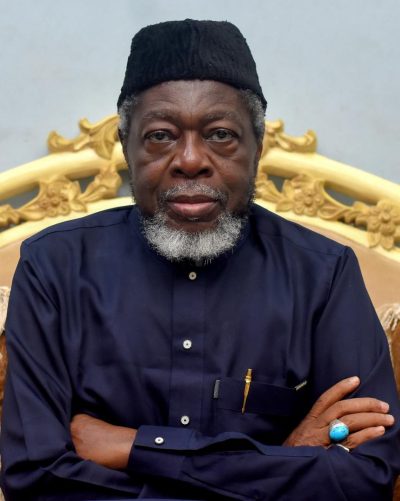
Hassan Gimba, ANIPR, is the Publisher and CEO of Neptune Prime.

Share. Facebook Twitter Pinterest LinkedIn WhatsApp Reddit Tumblr Email
Editor
  • Website

Related Posts

US-Israeli war on Iran: The new Sheriff in town [III], by Hassan Gimba

August 9, 2026

US-Israeli War on Iran: The honey badger of nations (II), by Hassan Gimba

August 2, 2026

US-Israeli war on Iran: The endgame [I], by Hassan Gimba

July 26, 2026

Leave A Reply Cancel Reply

US-Israeli war on Iran: Wetin be Nigeria’s own? [IV] By Hassan Gimba

August 16, 2026

How Adeleke beat the ‘gang’ to win Osun governorship election

August 16, 2026

NiMet forecasts 3 days of cloudy, thundery weather across Nigeria

August 16, 2026

Climate crisis, mining expansion threaten Southern Africa’s girls, Group warns

August 15, 2026
About Us
About Us

ASHENEWS (AsheNewsDaily.com), published by PenPlus Online Media Publishers, is an independent online newspaper. We report development news, especially on Agriculture, Science, Health and Environment as they affect the under-reported rural and urban poor.

We also conduct investigations, especially in the areas of ASHE, as well as other general interests, including corruption, human rights, illicit financial flows, and politics.

Contact Info:
  • 1st floor, Dogon Daji House, No. 5, Maiduguri Road, Sokoto
  • +234(0)7031140009
  • ashenewsdaily@gmail.com
Facebook Twitter Instagram Pinterest
© 2026 All Rights Reserved. ASHENEWS Daily Designed & Managed By DeedsTech

Type above and press Enter to search. Press Esc to cancel.