

• Home
  • Agric
  • Sci & Tech
  • Health
  • Environment
  • Hausa News
  • More
    • Business/Banking & Finance
    • POLITICS
    • Entertainments & Sports
    • International
    • Investigation
    • Law & Human Rights
    • Africa
    • ACCOUNTABILITY/CORRUPTION
    • Hassan Gimba
    • Column
    • Prof. Jibrin Ibrahim
    • Prof. M.K. Othman
    • Defense/Security
    • Education
    • Energy/Electricity
    • Entertainment/Arts & Sports
    • Society and Lifestyle
    • Food & Agriculture
    • Health & Healthy Living
    • International News
    • Interviews
    • Investigation/Fact-Check
    • LAW & HUMAN RIGHTS
    • Oil & Gas/Mineral Resources
    • PRESS FREEDOM/JOURNALISM/PR
    • General News
    • Presidency
  • About Us
    • Contact Us
    • Board Of Advisory
    • Privacy Policy
    • Ethics Policy
    • Teamwork And Collaboration Policy
    • Fact-Checking Policy
    • Advertising
  • Media OutReach Newswire
    • Wire News
  • The Stories
Facebook Twitter Instagram
Trending
  • Expert warns of misdiagnosis in early Lassa Fever cases
  • Equities Market ends May on upward trend
  • Banks’ lending to government rises by N15.66trn in 1 year — CBN
  • Association threatens nationwide strike over insecurity, wages
  • Lomé Rotary plants mangroves to boost climate resilience
  • BOSCHMA donates ₦4.4m in medical supplies for cholera fight
  • Abuja crash claims 4 lives
  • Super Eagles win fourth Unity cup in London
Facebook Twitter Instagram YouTube
AsheNewsAsheNews
  • Home
  • Agric

    Lomé Rotary plants mangroves to boost climate resilience

    May 31, 2026

    Tech, Wellness take center stage at 2026 world interiors day

    May 30, 2026

    FUTA Don advocates plant-based insecticides for preservation of stored agricultural products

    May 29, 2026

    Association launches sensitisation campaign against cassava mosaic virus in Kebbi

    May 27, 2026

    NGO partners with Rotary club on tree planting in Togo

    May 27, 2026
  • Sci & Tech

    Iran–US/Israel war and Nigeria’s education, energy, health, security, economy: Why STEM matters – Dr. Balarabe Shehu Kakale

    May 30, 2026

    Expert warns on poor personal data protection awareness in Nigeria

    May 27, 2026

    Experts identify poor data visibility as barrier to AI adoption in Africa

    May 26, 2026

    Niger govt to turn library into ICT, innovation hub

    May 26, 2026

    MTN hosts EPL watch party in Ibadan

    May 24, 2026
  • Health

    Expert warns of misdiagnosis in early Lassa Fever cases

    May 31, 2026

    BOSCHMA donates ₦4.4m in medical supplies for cholera fight

    May 31, 2026

    WHO Chief stresses community ownership to end Ebola outbreak

    May 31, 2026

    Borno warns of Cholera outbreak amid rising cases

    May 30, 2026

    Doctor urges local-language anti-tobacco campaigns

    May 30, 2026
  • Environment

    First lady: Nigeria too great to be intimidated by insurgents

    May 31, 2026

    Al-Habibiyah society urges children to obey parents on Sallah

    May 31, 2026

    TETFund boss reaffirms Tinubu’s commitment to tackling insecurity

    May 31, 2026

    LASTMA reports fatal accident on Oshodi-Apapa expressway

    May 30, 2026

    Lagos residents back monthly sanitation exercise

    May 30, 2026
  • Hausa News

    Otti plans 250-room 5-star hotel in Umuahia

    April 11, 2026

    Anti-quackery task force seals 4 fake hospitals in Rivers

    August 29, 2025

    [BIDIYO] Yadda na lashe gasa ta duniya a fannin Ingilishi – Rukayya ‘yar shekara 17

    August 6, 2025

    A Saka Baki, A Sasanta Saɓani Tsakanin ‘Yanjarida Da Liman, Daga Muhammad Sajo

    May 21, 2025

    Dan majalisa ya raba kayan miliyoyi a Funtuwa da Dandume

    March 18, 2025
  • More
    1. Business/Banking & Finance
    2. POLITICS
    3. Entertainments & Sports
    4. International
    5. Investigation
    6. Law & Human Rights
    7. Africa
    8. ACCOUNTABILITY/CORRUPTION
    9. Hassan Gimba
    10. Column
    11. Prof. Jibrin Ibrahim
    12. Prof. M.K. Othman
    13. Defense/Security
    14. Education
    15. Energy/Electricity
    16. Entertainment/Arts & Sports
    17. Society and Lifestyle
    18. Food & Agriculture
    19. Health & Healthy Living
    20. International News
    21. Interviews
    22. Investigation/Fact-Check
    23. LAW & HUMAN RIGHTS
    24. Oil & Gas/Mineral Resources
    25. PRESS FREEDOM/JOURNALISM/PR
    26. General News
    27. Presidency
    Featured
    Recent

    Expert warns of misdiagnosis in early Lassa Fever cases

    May 31, 2026

    Equities Market ends May on upward trend

    May 31, 2026

    Banks’ lending to government rises by N15.66trn in 1 year — CBN

    May 31, 2026
  • About Us
    1. Contact Us
    2. Board Of Advisory
    3. Privacy Policy
    4. Ethics Policy
    5. Teamwork And Collaboration Policy
    6. Fact-Checking Policy
    7. Advertising
    Featured
    Recent

    Expert warns of misdiagnosis in early Lassa Fever cases

    May 31, 2026

    Equities Market ends May on upward trend

    May 31, 2026

    Banks’ lending to government rises by N15.66trn in 1 year — CBN

    May 31, 2026
  • Media OutReach Newswire
    • Wire News
  • The Stories
AsheNewsAsheNews
Home»Column»Hassan Gimba»From shared desks to separate worlds: The price of educational apartheid, by Hassan Gimba
Hassan Gimba

From shared desks to separate worlds: The price of educational apartheid, by Hassan Gimba

EditorBy EditorNovember 2, 2025Updated:November 3, 2025No Comments6 Mins Read
Hassan Gimba
Hassan Gimba
Share
Facebook Twitter LinkedIn Pinterest Email

In traditional Nigeria, especially in the Muslim North, where I can confidently say I know a thing or two, segregation was minimal. Communities were integrated, with children of various social backgrounds associating freely. This social cohesion, evident from history and personal accounts, has eroded, giving way to educational divisions that now mirror and deepen societal inequalities.

Stories from our elders describe community events that fostered lifelong friendships between the offspring of the bourgeoisie and the proletariat. The bourgeoisie included the middle class, senior public officials, and wealthy families, while the proletariat comprised the masses.

In those days, for instance, circumcisions were done ceremonially, as a kind of initiation into manhood. The boy, once circumcised, could flex the little muscles he had and compete in manly games with the boys, mimicking their heroes. He could even go hunting and take part in local wrestling and boxing competitions held for those who had tasted the knife of the circumciser.

Annual initiation rituals were organised by the Emir or local ruler for all boys, regardless of social class. Everyone was treated equally, united by these ceremonies, which marked their transition into manhood together.

These boys grew up as age mates and enrolled in the same schools, from elementary to tertiary institutions. The boys who grew up this way became friends, and sometimes their bonds were stronger than those of blood brothers.

Many who became leaders were children of nobodies. Well, not really nobodies — let us say children of the proletariat, the have-nots. They went on to bring in children of the haves whose fortunes had waned. Of course, the reverse also occurred, because they grew up and studied together as one.

At events, you would see them together, boundaries between classes dissolved. The sons of those who hadn’t were active participants in the marriages of the children of those who had, and vice versa. They were friends, solving each other’s family, personal, or official problems, holding hands together, and rising to the top as a team. You would see them together in activities celebrating each other’s life and death. That symbiotic relationship effectively closed the gap between the two classes and united Nigerians more. The son of the poor had hope, and the son of the rich knew he had to work to make it. There was little room for the sense of entitlement we now see.

Ask those who attended public schools in those days — Government College, Maiduguri; Barewa College; King’s College, Lagos; Alhuda-Huda, Zaria; Government College, Keffi; Government Girls’ College, Maiduguri, and Dala, Kano, etc. Ask those who went to public universities together, too. Here, we can also say we experienced it.

When I was in Shehu Garbai Primary School in Maiduguri in the early ’70s, Mairo, the daughter of the then-governor of the North East, Brigadier Musa Usman, was in my class. Mohammed Suleiman Kumo, Baba, and Indo Buba Ardo were the children of serving commissioners, and we were all in the same class. We had children of the Shehu and Emirs there, and indeed, those of the wealthiest citizens of the era. We were all treated equally and never felt out of sorts with them. I was even the class monitor, though my father was a mid-level civil servant.

At my secondary school, Government College, Maiduguri, we had the children of the Deputy Governor, Ibrahim Anas; the SSG; the Head of Service; several commissioners; permanent secretaries; and the state accountant-general. What mattered was who was brilliant and who was not. In choosing school leaders, there was no favouritism. The teachers assessed the desired qualities and chose accordingly.

No one was judged by who their father was, politics, religious leaning, or tribe.

But in both schools, I also shared the same class and sometimes desks with the children of the downtrodden, some whose parents were drivers or messengers, others petty traders who wanted their children to become better than them by getting a quality education from well-funded, superbly managed public schools.

But all these are no more, as private schools have come and shattered the harmony we met and grew up with. The rise of separate, class-based educational systems has ruptured the bond and widened the gaps between social groups, creating a form of educational apartheid. Now, you have schools that only the children of the upper echelons of society attend, and others for the children of the struggling masses. They no longer mingle. Not in marriages — now, intermarriages between these two classes are becoming a thing of the past, a taboo unlike before. Not in health care — each class has its own hospital. Not in markets, as theirs are in plazas. We are gradually becoming torn apart by our leaders’ resolve to show how different they are from us mere mortals, pushing us into a nation of “birds of the same feathers…”, akin to what the Hausa would say, “Kwarya ta bi kwarya.”

Meanwhile, children from disadvantaged backgrounds now attend dilapidated public schools or subpar private schools whose owners care more about squeezing profit from struggling parents than providing quality education. These institutions further deepen the gulf between the privileged and the struggling.

This deepening divide in education is a sure recipe for social disaster, as it also inculcates the psychology of “master” students and “servant” students. Students in highly elitist institutions tend to look down on those attending regular schools. The poor kids never have confidence when they stand near such elitist students — and this impression may last a lifetime. The growing educational apartheid risks entrenching lasting inequality and resentment in society.

Granted, private schools provide jobs, pay taxes, build structures, and generate wealth. Still, they must ensure that a significant percentage of their admissions are reserved for children from poor and vulnerable backgrounds. There must be a mixture — a meeting point between all classes of people in education. And, as it used to be, public schools must be upgraded to compete with the best private schools around.

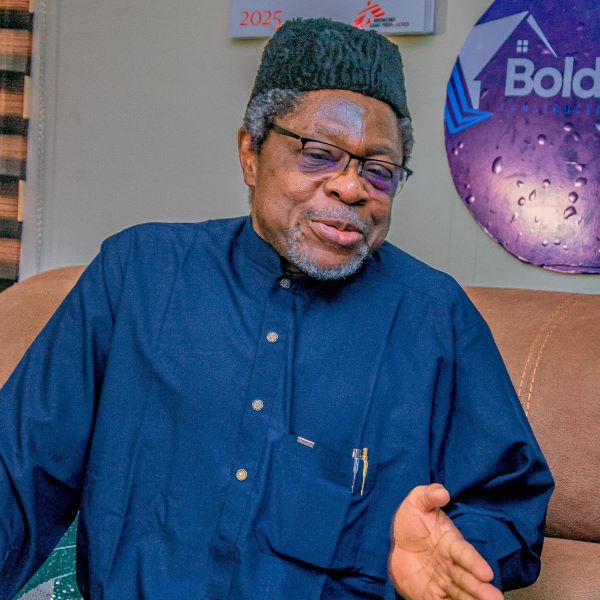
Hassan Gimba is the Publisher and Editor-in-Chief of Neptune Prime.

Educational aparthy Separate worlds
Share. Facebook Twitter Pinterest LinkedIn WhatsApp Reddit Tumblr Email
Editor
  • Website

Related Posts

How I returned from the gate of the other world (IV), by Hassan Gimba

May 24, 2026

How I returned from the gate of the other world [III], by Hassan Gimba

May 17, 2026

How I returned from the gate of the other world (II), by Hassan Gimba

May 10, 2026

Leave A Reply Cancel Reply

Expert warns of misdiagnosis in early Lassa Fever cases

May 31, 2026

Equities Market ends May on upward trend

May 31, 2026

Banks’ lending to government rises by N15.66trn in 1 year — CBN

May 31, 2026

Association threatens nationwide strike over insecurity, wages

May 31, 2026
About Us
About Us

ASHENEWS (AsheNewsDaily.com), published by PenPlus Online Media Publishers, is an independent online newspaper. We report development news, especially on Agriculture, Science, Health and Environment as they affect the under-reported rural and urban poor.

We also conduct investigations, especially in the areas of ASHE, as well as other general interests, including corruption, human rights, illicit financial flows, and politics.

Contact Info:
  • 1st floor, Dogon Daji House, No. 5, Maiduguri Road, Sokoto
  • +234(0)7031140009
  • ashenewsdaily@gmail.com
Facebook Twitter Instagram Pinterest
© 2026 All Rights Reserved. ASHENEWS Daily Designed & Managed By DeedsTech

Type above and press Enter to search. Press Esc to cancel.