


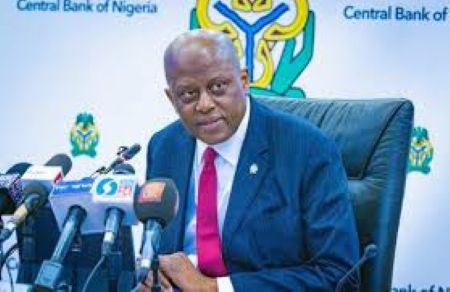
Nigeria’s central bank governor, Olayemi Cardoso, has warned that the escalating conflict involving the United States, Israel and Iran could shape future interest-rate decisions, as rising oil prices risk stoking inflation despite boosting export earnings.
Cardoso, speaking in an interview with the Financial Times, said geopolitical shocks are most likely to affect Nigeria through energy prices and global financial conditions—two critical variables policymakers are tracking ahead of a key monetary policy meeting in May.
“Higher oil prices can support export earnings and strengthen the balance of payments, but they can also feed into domestic inflation through fuel, transport and imported goods,” he said, underscoring the policy trade-offs facing Africa’s largest oil producer.
Brent crude has surged to above $100 per barrel in recent weeks amid deepening Middle East tensions, heightening fears of supply disruptions.
While higher oil prices typically strengthen Nigeria’s fiscal position and external reserves, they also risk reigniting inflationary pressures in an economy that has only recently recorded a sustained slowdown in price growth.
Headline inflation eased for the 12th consecutive month to 15.06 percent in February 2026. The naira also appreciated to N1,345 per dollar, supported by improving foreign exchange liquidity despite volatility linked to global tensions.
However, Cardoso cautioned that gains in price stability remain fragile, noting that imported inflation—particularly through refined fuel and other dollar-denominated goods—continues to pose a significant risk, even as foreign exchange reforms take hold.
He also identified global risk sentiment as a second transmission channel. Heightened geopolitical uncertainty could weaken investor appetite for emerging and frontier markets, potentially reducing capital inflows and tightening financial conditions.
For Nigeria, which has been working to rebuild investor confidence after years of currency distortions and capital controls, any reversal in portfolio inflows could put pressure on the naira and external reserves.
“The precise impact will depend on how events evolve,” Cardoso said.
Despite the risks, the CBN governor expressed confidence in the country’s ability to withstand external shocks, citing improved policy buffers, stronger reserves, and increased efficiency in the foreign exchange market.
He added that monetary policy has returned “to a more orthodox footing,” reflecting the central bank’s aggressive tightening cycle aimed at stabilising prices and the currency.
The remarks suggest the Central Bank of Nigeria may adopt a cautious stance, prioritising inflation control over early rate cuts, even if higher oil prices provide short-term economic relief.
Nigeria’s benchmark interest rate currently stands at 26.50 percent, following a series of hikes to curb inflation. Any renewed surge in price pressures driven by global oil markets could further delay expectations of monetary easing.
