


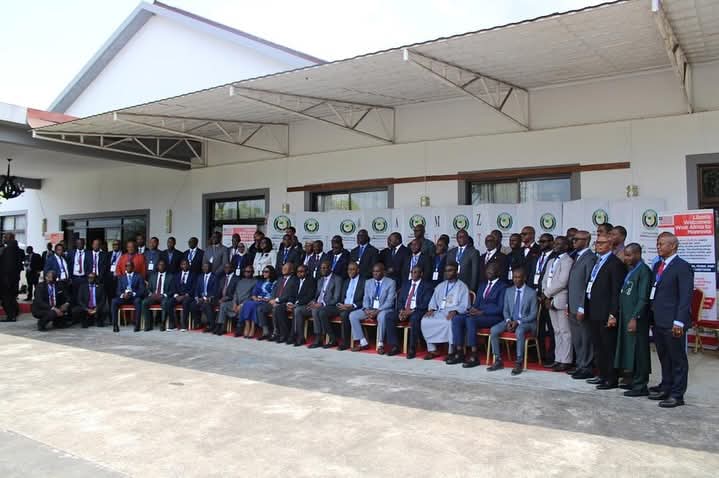
The Governor of the Central Bank of Nigeria, , has led a Nigerian delegation to a high-level Committee of Governors meeting in Monrovia, Liberia, as regional monetary authorities advance discussions on a proposed single West African currency.
The delegation, which included the CBN Deputy Governor for Economic Policy, participated in the meeting as part of the statutory engagements.
The Committee of Governors — composed of central bank heads from across the subregion — serves as a technical and policy coordination platform for harmonising monetary frameworks, reviewing macroeconomic convergence indicators, and aligning institutional preparations required for monetary integration. It also evaluates progress toward meeting agreed benchmarks such as inflation control, fiscal discipline, exchange-rate stability, and external reserve adequacy, which are prerequisites for adopting a common currency regime.
At the Monrovia session, deliberations centred on advancing the roadmap toward a unified West African currency, including policy synchronisation, strengthening financial sector resilience, and enhancing cross-border payment and settlement systems. The committee’s work feeds directly into ministerial and political decision-making structures within the regional bloc, making it a critical mechanism for translating integration ambitions into actionable economic policy.
Regional economic implications
Progress within the governors’ forum carries significant implications for the regional economy. A single currency framework — if implemented — is expected to reduce transaction costs associated with exchange-rate conversion, facilitate intra-regional trade, and deepen financial market integration. By improving price transparency and lowering currency volatility, policymakers anticipate stronger investment flows and more efficient allocation of capital across member states.
However, the initiative also raises structural considerations, including the need for policy convergence and loss of independent monetary levers at the national level. For larger economies such as Nigeria, participation underscores the balancing act between regional integration benefits and safeguarding domestic macroeconomic stability.
Analysts note that continued engagement by monetary authorities signals sustained commitment to the integration agenda, even as timelines remain contingent on achieving convergence targets. The Committee of Governors’ technical reviews and coordination efforts therefore remain central to determining both the feasibility and eventual economic impact of the single-currency project on West Africa’s growth trajectory and financial architecture.
