

• Home
  • Agric
  • Sci & Tech
  • Health
  • Environment
  • Hausa News
  • More
    • Business/Banking & Finance
    • Politics/Elections
    • Entertainments & Sports
    • International
    • Investigation
    • Law & Human Rights
    • Africa
    • ACCOUNTABILITY/CORRUPTION
    • Hassan Gimba
    • Column
    • Prof. Jibrin Ibrahim
    • Prof. M.K. Othman
    • Defense/Security
    • Education
    • Energy/Electricity
    • Entertainment/Arts & Sports
    • Society and Lifestyle
    • Food & Agriculture
    • Health & Healthy Living
    • International News
    • Interviews
    • Investigation/Fact-Check
    • Judiciary/Legislature/Law & Human Rights
    • Oil & Gas/Mineral Resources
    • Press Freedom/Media/PR/Journalism
    • General News
    • Presidency
  • About Us
    • Contact Us
    • Board Of Advisory
    • Privacy Policy
    • Ethics Policy
    • Teamwork And Collaboration Policy
    • Fact-Checking Policy
    • Advertising
  • Media OutReach Newswire
    • Wire News
  • The Stories
Facebook Twitter Instagram
Trending
  • Naira outperforms African peers despite persistent FX pressures
  • LASU begins indigeneship verification for 2026/2027 admissions
  • Reps approve $516m loan for Sokoto–Badagry superhighway
  • Court affirms FCCPC’s power to probe medical negligence
  • Indigenous, feminist groups push rights-based energy transition at Colombia conference
  • NGX reports smooth start to extended trading hours
  • Reps panel adopts N105.14bn RMAFC 2025 budget
  • China becomes first major economy with full Africa zero-tariff
Facebook Twitter Instagram YouTube
AsheNewsAsheNews
  • Home
  • Agric

    World agriculture forum inaugurates Nigeria Country council

    April 28, 2026

    U.S. revives GSM-102 credit scheme to deepen agricultural trade with Nigeria

    April 27, 2026

    Poultry farmers seek increased financing to boost production

    April 27, 2026

    Malnutrition: FG rolls out community food bank programme in Northeast

    April 27, 2026

    Yam prices surge across Lagos markets

    April 26, 2026
  • Sci & Tech

    Artemis II: Space exploration, and the question of African future, By Prof. M. K. Othman

    April 28, 2026

    Nigeria needs unified cybersecurity – Expert warns

    April 27, 2026

    MTN Nigeria backs youth platform with over N45m

    April 27, 2026

    PalmPay CEO flags trust issues in digital payments

    April 25, 2026

    Meta to cut 10% of workforce amid AI push

    April 25, 2026
  • Health

    Kano commences 2026 Africa vaccination week

    April 28, 2026

    Nigeria faces acute shortage of public health physicians

    April 28, 2026

    Ghana rejects U.S. bilateral health deal

    April 28, 2026

    Social media fuels health misinformation – Expert

    April 28, 2026

    FCT residents express mixed views on childhood immunisation

    April 28, 2026
  • Environment

    CTV audience grows over 300% to 8m viewers on GOtv

    April 27, 2026

    Yobe council approves N59.8bn for project, infrastructure

    April 27, 2026

    Rainstorm damages homes, school in Kaduna

    April 27, 2026

    LASTMA to launch free short code for traffic reports

    April 27, 2026

    LASEMA averts casualties in truck accident at Daleko bridge, Isolo

    April 27, 2026
  • Hausa News

    Otti plans 250-room 5-star hotel in Umuahia

    April 11, 2026

    Anti-quackery task force seals 4 fake hospitals in Rivers

    August 29, 2025

    [BIDIYO] Yadda na lashe gasa ta duniya a fannin Ingilishi – Rukayya ‘yar shekara 17

    August 6, 2025

    A Saka Baki, A Sasanta Saɓani Tsakanin ‘Yanjarida Da Liman, Daga Muhammad Sajo

    May 21, 2025

    Dan majalisa ya raba kayan miliyoyi a Funtuwa da Dandume

    March 18, 2025
  • More
    1. Business/Banking & Finance
    2. Politics/Elections
    3. Entertainments & Sports
    4. International
    5. Investigation
    6. Law & Human Rights
    7. Africa
    8. ACCOUNTABILITY/CORRUPTION
    9. Hassan Gimba
    10. Column
    11. Prof. Jibrin Ibrahim
    12. Prof. M.K. Othman
    13. Defense/Security
    14. Education
    15. Energy/Electricity
    16. Entertainment/Arts & Sports
    17. Society and Lifestyle
    18. Food & Agriculture
    19. Health & Healthy Living
    20. International News
    21. Interviews
    22. Investigation/Fact-Check
    23. Judiciary/Legislature/Law & Human Rights
    24. Oil & Gas/Mineral Resources
    25. Press Freedom/Media/PR/Journalism
    26. General News
    27. Presidency
    Featured
    Recent

    Naira outperforms African peers despite persistent FX pressures

    April 28, 2026

    LASU begins indigeneship verification for 2026/2027 admissions

    April 28, 2026

    Reps approve $516m loan for Sokoto–Badagry superhighway

    April 28, 2026
  • About Us
    1. Contact Us
    2. Board Of Advisory
    3. Privacy Policy
    4. Ethics Policy
    5. Teamwork And Collaboration Policy
    6. Fact-Checking Policy
    7. Advertising
    Featured
    Recent

    Naira outperforms African peers despite persistent FX pressures

    April 28, 2026

    LASU begins indigeneship verification for 2026/2027 admissions

    April 28, 2026

    Reps approve $516m loan for Sokoto–Badagry superhighway

    April 28, 2026
  • Media OutReach Newswire
    • Wire News
  • The Stories
AsheNewsAsheNews
Home»Africa»[VIEWPOINT] Why Africa may remain poor even after 100 years
Africa

[VIEWPOINT] Why Africa may remain poor even after 100 years

EditorBy EditorDecember 29, 2024Updated:December 29, 2024No Comments5 Mins Read
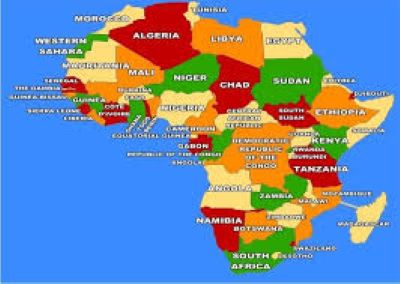
Map of Africa
Map of Africa
Share
Facebook Twitter LinkedIn Pinterest Email

Africa, often referred to as the cradle of humanity, is a continent brimming with untapped resources, vibrant cultures, and immense potential. Yet, it remains the world’s poorest continent, home to 33 of the 46 least developed countries (LDCs) as defined by the United Nations. Despite receiving over $1.3 trillion in foreign aid since the 1960s (World Bank), poverty and inequality persist. Why does Africa remain poor, and could this reality endure for another century? In this article, I explore the key factors contributing to this challenge.

By Julius Domba

The Historical Burden of Colonisation: Africa’s colonial past continues to cast a shadow over its present. During the colonial era, European powers prioritised resource extraction and ignored the development of local infrastructure or human capital. This left newly independent African nations with weak institutions, fragmented societies, and economies reliant on raw material exports.

A stark example is the Democratic Republic of Congo, where decades of exploitation by Belgium laid the foundation for corruption and conflict. Today, Congo ranks among the world’s poorest countries, with 63% of its population living on less than $2.15 a day (World Bank, 2023).

Poor Governance and Corruption: Governance remains a critical issue. Transparency International’s Corruption Perceptions Index (2023) ranks 18 African countries among the bottom 30 globally. This corruption siphons off vital resources, stalling development. For instance: In Nigeria, an estimated $582 billion has been lost to corruption since independence in 1960 (Africa Progress Panel).

South Africa’s “State Capture” scandal showed how political corruption can cripple even relatively developed economies.

Corruption not only erodes public trust but also discourages foreign investment and diverts resources away from critical sectors like education and healthcare.

Dependency on Foreign Aid: Africa received $54.4 billion in official development assistance (ODA) in 2021 (OECD). While aid addresses immediate needs, it often fosters dependency rather than self-reliance. For example: In Malawi, foreign aid accounts for 37% of the national budget (IMF, 2022).

Aid projects are frequently criticised for being donor-driven, with funds tied to specific conditions that may not align with local priorities. Without building local capacity and ownership, aid risks perpetuating a cycle of dependency.

Rapid Population Growth and Unemployment: Africa’s population is projected to double to 2.5 billion by 2050 (UN, 2023). While this demographic boom presents an opportunity for economic growth, it also poses significant challenges.

Youth unemployment remains alarmingly high, with rates exceeding 30% in countries like South Africa and Nigeria (ILO, 2023). Africa must create 20 million jobs annually to keep pace with its growing labour force (World Bank).

The continent risks social unrest and deepening poverty without addressing this employment gap.

Africa has the world’s highest out-of-school rates, with 98 million children and adolescents missing out on education (UNESCO, 2022). Even for those in school, the quality of education often falls short. Only 10% of African children achieve minimum proficiency in reading by age 10, compared to 50% globally (World Bank, 2022).

Sub-Saharan Africa spends only 4.5% of its GDP on education, which is lower than the global average of 5% (UNESCO).

This education gap limits the continent’s ability to build a skilled workforce, crucial for industrialization and innovation.

The Resource Curse: Africa holds 30% of the world’s mineral reserves and 65% of its arable land (African Development Bank), yet it remains underdeveloped. This paradox, known as the “resource curse,” occurs when resource wealth leads to corruption, conflict, and economic instability. Nigeria, Africa’s largest oil producer, has earned over $340 billion in oil revenues since 1960, yet over 40% of its population lives below the poverty line (World Bank). The Democratic Republic of Congo has $24 trillion worth of untapped mineral wealth but ranks 179th out of 191 countries in the Human Development Index (UNDP, 2023). Foreign companies often dominate resource extraction, repatriating profits and leaving little for local economies.

Climate Change and Environmental Challenges: Africa contributes only 3% of global greenhouse gas emissions but bears the brunt of climate change. By 2050, up to 86 million Africans could be displaced due to climate-related issues (World Bank). Agriculture, which employs 60% of the continent’s workforce, is particularly vulnerable. Crop yields are expected to decline by up to 50% in some regions by 2100 (IPCC, 2023). Climate change exacerbates food insecurity, water scarcity, and resource conflicts, further hindering development.

Africa operates within a global system that is often disadvantaged. African countries spend $22 billion annually on debt repayment, diverting funds from education, healthcare, and infrastructure (IMF, 2023).

Trade barriers, such as EU agricultural subsidies, make it difficult for African farmers to compete in global markets. For instance, cotton farmers in Burkina Faso lose millions annually due to subsidies given to U.S. cotton producers (WTO, 2023).

While the challenges are daunting, there are glimmers of hope:

Technological Innovation: Mobile banking in Kenya (e.g., M-Pesa) has revolutionised financial inclusion, with over 80% of Kenyans now accessing financial services.

Renewable Energy: Africa could become a leader in renewable energy, leveraging its abundant solar and wind resources.

Regional Cooperation: Initiatives like the African Continental Free Trade Area (AfCFTA) aim to increase intra-African trade, which currently accounts for only 15% of the continent’s trade volume (UNECA, 2023).

Africa’s challenges are deeply rooted in history, compounded by poor governance, global inequalities, and emerging threats like climate change. Without systemic reforms, poverty and underdevelopment may persist for generations. However, Africa’s vast resources, youthful population, and growing innovations offer a path forward.

The question remains: will African leaders and global partners rise to the challenge? Or will the mistakes of the past continue to shape the continent’s future? The answer will determine whether Africa can unlock its potential or remain mired in poverty for another hundred years.

Domba is a teacher at St. Balikuddembe SS Kisoga in Mukono

AfCFTA Africa IMF UNECA UNESCO World Bank WTO
Share. Facebook Twitter Pinterest LinkedIn WhatsApp Reddit Tumblr Email
Editor
  • Website

Related Posts

OPINION: Why Ondo North must choose substance over symbolism in the red chamber

April 26, 2026

[VIEWPOINT] Why Adeyanju earns 90% approval in Ondo North senate poll, By Bashir Adefaka

April 23, 2026

IMF backs Nigeria’s bank recapitalisation as buffer against global economic shocks

April 21, 2026

Leave A Reply Cancel Reply

Naira outperforms African peers despite persistent FX pressures

April 28, 2026

LASU begins indigeneship verification for 2026/2027 admissions

April 28, 2026

Reps approve $516m loan for Sokoto–Badagry superhighway

April 28, 2026

Court affirms FCCPC’s power to probe medical negligence

April 28, 2026
About Us
About Us

ASHENEWS (AsheNewsDaily.com), published by PenPlus Online Media Publishers, is an independent online newspaper. We report development news, especially on Agriculture, Science, Health and Environment as they affect the under-reported rural and urban poor.

We also conduct investigations, especially in the areas of ASHE, as well as other general interests, including corruption, human rights, illicit financial flows, and politics.

Contact Info:
  • 1st floor, Dogon Daji House, No. 5, Maiduguri Road, Sokoto
  • +234(0)7031140009
  • ashenewsdaily@gmail.com
Facebook Twitter Instagram Pinterest
© 2026 All Rights Reserved. ASHENEWS Daily Designed & Managed By DeedsTech

Type above and press Enter to search. Press Esc to cancel.