


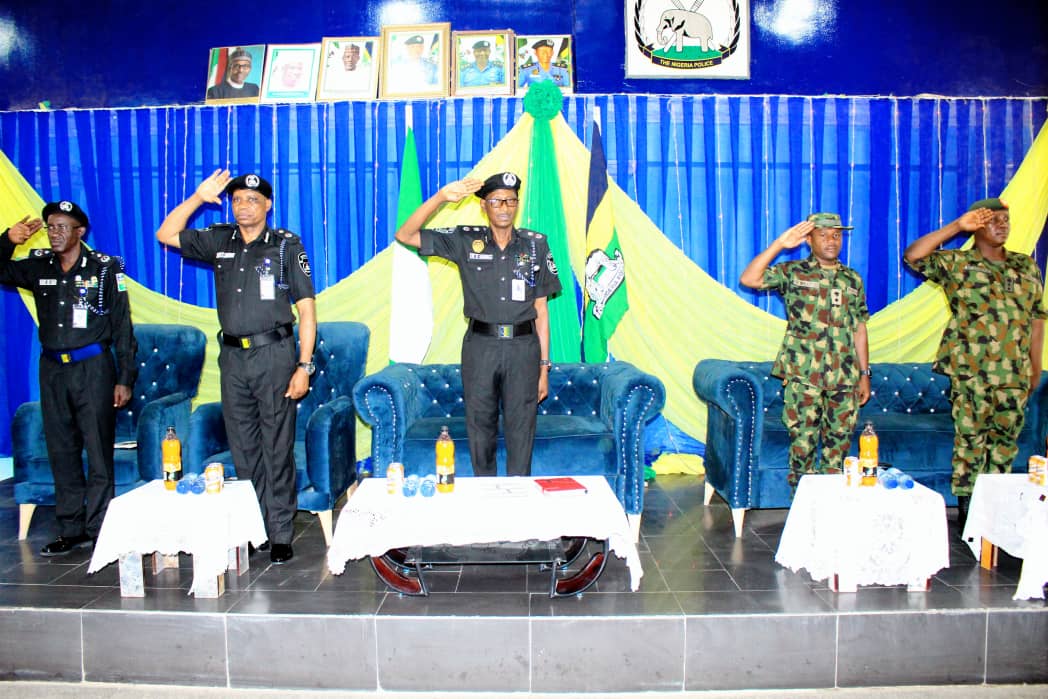
By CP Mohammed Usaini Gumel
Let me begin with a phrase mostly agreed by scholars that, security is a ‘contested concept’ and there is a consensus that it implies freedom from threats to core values (for both individual and groups). However, there is a major disagreement about whether the main focus of internal security should be on individual, national or international. Some security experts argued that the concept of security has always been associated with the safety and survival of the State and its citizens from harm or destruction or from dangerous threats. Therefore, it is right to say that in totality the concept is that the State is the only institution that is saddled with the primary responsibility and power for the safety of its territory and its people. Therefore, the concept of security in this discussion is operationalized within the context of a nation hence the concept of internal security.
Antecedents of Internal Security Challenges
Since 1st October, 1960 when Nigeria got her independence, the peoples joy was without limit, their joy knew no bound because of the perceived security benefit and freedom from threats they would enjoy. Therefore, it’s on the foregoing that internal security became a subject for the nation.
“Internal Security”, as explained has to do with freedom from threats or absence of those tendencies which could undermine internal cohesion and the corporate existences of a country and its ability to maintain its vital institution for the promotion of its core values and socio-political and economic objectives as well as meet the legitimate operations of the people. Rather, the situation in Nigeria today which is being accompanied by armed robbers’ attacks, kidnappings, extortion, political assassinations, associated trans-border crimes, terrorism, cybercrimes, espionage, smuggling of arms, insurgency, oil theft, bunkering, drug related crimes, incessant vandalization of public infrastructures and associated crimes.
My dear Course Participants and fellow colleagues’ officers, as described above with all honesty, I’m pretty sure that you will agree with me that Nigeria is since its independence characterized by internal security challenges of various dimensions. Currently, there is increasing spate of widespread communal clashes caused by lack of democratic culture leading to electoral violence, financial crimes, poverty, ethnicity rivalry, religious extremism, and so forth. Additionally, there are political and social-economic related security problems such as tribalism, false image of who we are, weak leadership, Nigerian style fraudulent activities popularly known as 419, lack of patriotism, social injustice and culture of mediocrity, indiscipline, corruption, ethnicity conflicts and most importantly the oil-related security problems and the dreaded Boko haram challenges which have bedeviled the Nigeria society.
Recent research has shown that presently secessionist movements have emerged in different parts of the country such as the Movement for the Actualization of the Sovereign State of the Biafra (MASSOB)/Indigenous People of Biafra (IPOB) and Eastern Security Network (ESN) in the South East, Boko haram and banditry groups in the North East with extending to North West and North Central, the ISWAP and the Shiite IMN poisonous agitation for the reconstruction of Nigeria as an Islamic Country and the rejection of Western culture especially education. In the Niger Delta region of course, you are aware of the existence of volunteer forces demanding for greater control of the oil wealth. All these are rebellious movements that constitute threat to the internal Security of Nigeria and are obstacles against National integration and development.
Reinforcing Police Capacity and military involvement in internal security
One of the primary purposes of Government in any Nation is the provision of security. The role is emphasized in the 1999 constitution of the Federal Republic of Nigeria (CFRN) that security and welfare of the people shall be the primary purpose of the Government. This power is enshrined in Section 12 (2) (b). In performing this role, the government delegates the duty of maintenance of internal security to the Nigeria police. Please be aware that the Police are by law saddled with the responsibility of preventing and detecting crimes, preserving peace and order and enforcing all laws and regulations. The Police are therefore expected to perform these roles efficiently and effectively. However, with the high rate of insecurity in the country, the question that borders every mind is whether the police are performing these roles as expected of them. Majority are of the opinion that the police falls below their standards of performance. Does it mean that police don’t have the capacity to maintain the National Security Stability and at what level Should Military be co-opted to compliment police for security operation?
My submission here will answer all these questions. No doubt that the Nigeria Police Force is the lead Agency in internal security but the persistence of internal security challenges and the seemingly inability of Police alone to adequately curb the emerging trends necessitate the honest collaboration of not only the Army but the entire armed forces of Nigeria. The air and water way experts are therefore inclusive in internal security management. The high rate of violent crimes such as terrorist attacks, kidnappings, armed- robbery, banditry, suicide bombings, ethnic clashes, politically-motivated killings, and other forms of criminal activities in the country are becoming increasingly a regular occurrence and have created a lot of high-risk operations burden to the Police.
Let me again expose this forum to current capability of the Police in Nigeria in line with the scale of the United Nations standard and at the same time elaborate on the Nigeria Army operational efficiency in internal security operations. According to UN, the standard ratio in policing is for every 400 citizen there must be one policeman that is well trained, well equipped and well-motivated to effectively police them. In Nigeria, with the current population of over two hundred million (200,000,000) and the police strength of a little over four hundred thousand (400,000) coupled with numerous challenges including non-provision of the required technical equipment supports for internal policing clearly necessities synergy with the armed forces and other relevant security agencies to curtail the escalation of security threats in the country.
The operational efficiency of the Army in Internal security
The Nigeria Army since independence in 1960 has being a critical component in the development, stability and progress of the Nation. The hallmark clearly suggests that the role of the military in internal security operations cannot be over emphasized. The complex task of keeping Nigeria one and of protecting the Nation from external and internal aggression (Attacks) undoubtedly rest primarily on the military. The 1999 constitution which is the supreme law of the land gives the Armed Forces of Nigeria the backing and the higher responsibility for launching aggression against insurgency in the Nation and this justifies the military involvement. Therefore, ideas of National security which was largely defined in Militarized terms with scholars and statements advocating on the Military capabilities of states to deal with threat that face the Nation. In line with above, the involvement of the Military in such security scenario are necessitated whenever the situations are adjudged to have overwhelmed the police. Security is all about National interest and involves the sum of total actions and measures, including legislature and operational procedures, adopted to ensure peace, stability and the general well-being of a Nation and it citizens. This explains why Soldiers are being deployed to keep peace across Nigeria even though the constitutional role of the Military is to defend the country from external aggression. The increasing deployment of military forces for internal security operations across the country underscores the profoundly dysfunctional state of Nigeria’s public safety institutions. Scholarly article by Adesote and Abimbola (2014) notes that Boko-haram has been waging a brutal war against the Nigerian state with sophisticated weapons since 2009 and that has left the Nigeria police stretched.
Another Scholar (George, 2014) in his expressed opinion said that; the Military is finding it difficult doing the job of the Police, but it has been left with no choice. The kind of criminality and the kinds of weapons being used have reached a level of sophistication that the Police don’t have the capacity to handle it and the Military has to come in.
The Military is also constitutionally mandated to assist the Police and other cognate public Security Agencies in maintaining peace, law and order especially in the face of dire civil-unrest. Army are traditionally mandated to uphold the sovereignty and territorial integrity of the country; they are also required to play significant role in Internal Security Operations (ISOPs) whenever and wherever the need arises.
The Constitutional Bases
The 1999 constitution of Nigeria which provides for the Military in its section 217 makes it clear that the duties of the Military, that is the Army, Navy and Airforce will be to defend Nigeria from external aggression, maintain its territorial integrity and securing its borders from isolation on lands, Sea or Air, suppressing insurrection and acting in aid of civil authorities to restore order when called upon to do so by the president but subject to such conditions as may be prescribed by an Act of National Assembly (Azinge,2013). Also, Section 8 (1) of the Armed forces Act also provides that the president shall determine the operational use of the Armed forces.
Section 305 of the same constitution which empowers the president to issue a proclamation of state of emergency is one amongst other basis for military engagements in internal security operations. This section provides that state of emergency shall be declared in the following situations:
➢ When there is actual breakdown of public order and public safety in the federation or any part thereof to such extent as to require extraordinary measures to restore peace and security,
➢ If there is clear and present danger of an actual breakdown of public safety in the federation or any part thereof requiring extraordinary measures to avert any such dangers,
➢ If there is an occurrence or imminent danger or the occurrence of any disaster or national calamity affecting the community or a section of the community in the federation, or there is any other public danger which clearly constitutes a threat to the existence of the federation (Okoli and Orinya, 2013).
Finally, Since the situation of internal security challenges is increasing and the Nigeria Police Force is becoming overstretched in some special circumstances that they can no longer in a standalone capacity overcome the situation, the development thus leaves no option except for military intervention as the last option to restore breakdown of public order. Therefore, those provisions highlighted above are the circumstances that provide for the military to come in to perform internal security operations which is in general terms to restore peace and save lives as the constitution states.
Thank you all for listening and pray that you all return safely to your destination.
This was a speech delivered by CP Mohammed Usaini Gumel, FIPMA, psc on the occasion of scholarly visit to Kano State Police Command by Junior Course Participants of the Armed Forces Command and Staff College, Jaji, Kaduna state at Police Headquarters, Bompai, Kano
