

• Home
  • Agric
  • Sci & Tech
  • Health
  • Environment
  • Hausa News
  • More
    • Business/Banking & Finance
    • POLITICS
    • Entertainments & Sports
    • International
    • Investigation
    • Law & Human Rights
    • Africa
    • ACCOUNTABILITY/CORRUPTION
    • Hassan Gimba
    • Column
    • Prof. Jibrin Ibrahim
    • Prof. M.K. Othman
    • Defense/Security
    • Education
    • Energy/Electricity
    • Entertainment/Arts & Sports
    • Society and Lifestyle
    • Food & Agriculture
    • Health & Healthy Living
    • International News
    • Interviews
    • Investigation/Fact-Check
    • LAW & HUMAN RIGHTS
    • Oil & Gas/Mineral Resources
    • PRESS FREEDOM/JOURNALISM/PR
    • General News
    • Presidency
  • About Us
    • Contact Us
    • Board Of Advisory
    • Privacy Policy
    • Ethics Policy
    • Teamwork And Collaboration Policy
    • Fact-Checking Policy
    • Advertising
  • Media OutReach Newswire
    • Wire News
  • The Stories
Facebook Twitter Instagram
Trending
  • Association trains farmers on agroforestry, carbon opportunities
  • Nigerian SMEs boost growth via digital payments, investments
  • Benin residents urge quick completion of Ramat park flyover
  • NCoS launches new PPP committee for infrastructure projects
  • Osun residents seek alternatives amid gas price surge
  • Lagos police nab woman over human trafficking of Kaduna girls
  • Jigawa techs call for vocational skills support
  • Oyo assembly cancels anniversary celebrations over security concerns
Facebook Twitter Instagram YouTube
AsheNewsAsheNews
  • Home
  • Agric

    Association trains farmers on agroforestry, carbon opportunities

    June 18, 2026

    IWMI, IFPRI link Kano farmers to solar irrigation support

    June 17, 2026

    Dangote expects over $4bn annual forex earnings from fertiliser exports

    June 16, 2026

    AFAN Kano calls for fertilizer subsidy to boost agriculture

    June 16, 2026

    Food security expert urges youth involvement in agriculture

    June 16, 2026
  • Sci & Tech

    Nigerian SMEs boost growth via digital payments, investments

    June 18, 2026

    Jigawa techs call for vocational skills support

    June 18, 2026

    Mupita warns against rising Afrophobic sentiments

    June 18, 2026

    AI expert urges youth to focus on human skills

    June 18, 2026

    Nigeria fully digitized 38 MDAs, says civil service head

    June 17, 2026
  • Health

    WHO releases first guidelines for Filovirus diseases

    June 18, 2026

    NAFDAC prepares for second phase of sachet alcohol enforcement

    June 18, 2026

    Nigeria launches N50m fund for cancer patients

    June 17, 2026

    NEDC boosts healthcare in Adamawa

    June 17, 2026

    Niger intensifies Ebola screening for returning pilgrims from Saudi Arabia

    June 17, 2026
  • Environment

    Benin residents urge quick completion of Ramat park flyover

    June 18, 2026

    Shettima urges states to document assets, boost investment, tourism

    June 18, 2026

    GlobalFact summit brings 500 fact-checkers from 80 countries to Lithuania

    June 17, 2026

    All injured passengers discharged after train accident

    June 16, 2026

    SWEEP calls for waste management reforms in Lagos

    June 16, 2026
  • Hausa News

    UNA signs MoU to launch air Bissau in Guinea-Bissau

    June 15, 2026

    Otti plans 250-room 5-star hotel in Umuahia

    April 11, 2026

    Anti-quackery task force seals 4 fake hospitals in Rivers

    August 29, 2025

    [BIDIYO] Yadda na lashe gasa ta duniya a fannin Ingilishi – Rukayya ‘yar shekara 17

    August 6, 2025

    A Saka Baki, A Sasanta Saɓani Tsakanin ‘Yanjarida Da Liman, Daga Muhammad Sajo

    May 21, 2025
  • More
    1. Business/Banking & Finance
    2. POLITICS
    3. Entertainments & Sports
    4. International
    5. Investigation
    6. Law & Human Rights
    7. Africa
    8. ACCOUNTABILITY/CORRUPTION
    9. Hassan Gimba
    10. Column
    11. Prof. Jibrin Ibrahim
    12. Prof. M.K. Othman
    13. Defense/Security
    14. Education
    15. Energy/Electricity
    16. Entertainment/Arts & Sports
    17. Society and Lifestyle
    18. Food & Agriculture
    19. Health & Healthy Living
    20. International News
    21. Interviews
    22. Investigation/Fact-Check
    23. LAW & HUMAN RIGHTS
    24. Oil & Gas/Mineral Resources
    25. PRESS FREEDOM/JOURNALISM/PR
    26. General News
    27. Presidency
    Featured
    Recent

    Association trains farmers on agroforestry, carbon opportunities

    June 18, 2026

    Nigerian SMEs boost growth via digital payments, investments

    June 18, 2026

    Benin residents urge quick completion of Ramat park flyover

    June 18, 2026
  • About Us
    1. Contact Us
    2. Board Of Advisory
    3. Privacy Policy
    4. Ethics Policy
    5. Teamwork And Collaboration Policy
    6. Fact-Checking Policy
    7. Advertising
    Featured
    Recent

    Association trains farmers on agroforestry, carbon opportunities

    June 18, 2026

    Nigerian SMEs boost growth via digital payments, investments

    June 18, 2026

    Benin residents urge quick completion of Ramat park flyover

    June 18, 2026
  • Media OutReach Newswire
    • Wire News
  • The Stories
AsheNewsAsheNews
Home»Environment/Climate Change»Research: Current from collapse of an Atlantic Ocean would ripple across the world
Environment/Climate Change

Research: Current from collapse of an Atlantic Ocean would ripple across the world

Abdallah el-KurebeBy Abdallah el-KurebeJune 15, 2022No Comments6 Mins Read
Share
Facebook Twitter LinkedIn Pinterest Email

Climate change is slowing down the conveyor belt of ocean currents that brings warm water from the tropics up to the North Atlantic.

Research by Matthew England, Scientia Professor and Deputy Director of the ARC Australian Centre for Excellence in Antarctic Science (ACEAS), UNSW Sydney; Andréa S. Taschetto, Associate Professor, UNSW Sydney, and Bryam Orihuela-Pinto, PhD Candidate, UNSW Sydney

Our research, published today (June 6) in Nature Climate Change, looks at the profound consequences to global climate if this Atlantic conveyor collapses entirely.

We found the collapse of this system – called the Atlantic meridional overturning circulation – would shift the Earth’s climate to a more La Niña-like state.

This would mean more flooding rains over eastern Australia and worse droughts and bushfire seasons over southwest United States.

East-coast Australians know what unrelenting La Niña feels like. Climate change has loaded our atmosphere with moister air, while two summers of La Niña warmed the ocean north of Australia.

Both contributed to some of the wettest conditions ever experienced, with record-breaking floods in New South Wales and Queensland.

Meanwhile, over the southwest of North America, a record drought and severe bushfires have put a huge strain on emergency services and agriculture, with the 2021 fires alone estimated to have cost at least US$70 billion.

Earth’s climate is dynamic, variable, and ever-changing. But our current trajectory of unabated greenhouse gas emissions is giving the whole system a giant kick that’ll have uncertain consequences – consequences that’ll rewrite our textbook description of the planet’s ocean circulation and its impact.

What is the Atlantic overturning meridional circulation?

The Atlantic overturning circulation comprises a massive flow of warm tropical water to the North Atlantic that helps keep European climate mild, while allowing the tropics a chance to lose excess heat. An equivalent overturning of Antarctic waters can be found in the Southern Hemisphere.

Climate records reaching back 120,000 years reveal the Atlantic overturning circulation has switched off, or dramatically slowed, during ice ages.

It switches on and placates European climate during so-called ‘interglacial periods’, when the Earth’s climate is warmer.

Since human civilization began around 5,000 years ago, the Atlantic overturning has been relatively stable. But over the past few decades, a slowdown has been detected, and this has scientists worried.

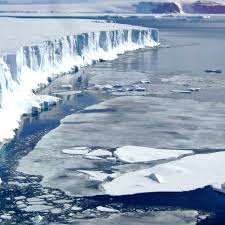
Why the slowdown? One unambiguous consequence of global warming is the melting of polar ice caps in Greenland and Antarctica.

When these icecaps melt they dump massive amounts of freshwater into the oceans, making water more buoyant and reducing the sinking of dense water at high latitudes.

Around Greenland alone, a massive 5 trillion tons of ice has melted in the past 20 years. That’s equivalent to 10,000 Sydney Harbours worth of freshwater.

This melt rate is set to increase over the coming decades if global warming continues unabated.

A collapse of the North Atlantic and Antarctic overturning circulations would profoundly alter the anatomy of the world’s oceans.

It would make them fresher at depth, deplete them of oxygen, and starve the upper ocean of the upwelling of nutrients provided when deep waters resurface from the ocean abyss. The implications for marine ecosystems would be profound.

With Greenland ice melt already well underway, scientists estimate the Atlantic overturning is at its weakest for at least the last millennium, with predictions of a future collapse on the cards in coming centuries if greenhouse gas emissions go unchecked.

The ramifications of a slowdown

In our study, we used a comprehensive global model to examine what Earth’s climate would look like under such a collapse.

We switched the Atlantic overturning off by applying a massive meltwater anomaly to the North Atlantic, and then compared this to an equivalent run with no meltwater applied.

Our focus was to look beyond the well-known regional impacts around Europe and North America, and to check how Earth’s climate would change in remote locations, as far south as Antarctica.

The first thing the model simulations revealed was that without the Atlantic overturning, a massive pile up of heat builds up just south of the Equator.

This excess of tropical Atlantic heat pushes more warm moist air into the upper troposphere (around 10 kilometers into the atmosphere), causing dry air to descend over the east Pacific.

The descending air then strengthens trade winds, which pushes warm water toward the Indonesian seas. And this helps put the tropical Pacific into a La Niña-like state.

Australians may think of La Niña summers as cool and wet. But under the long-term warming trend of climate change, their worst impacts will be flooding rain, especially over the east.

We also show an Atlantic overturning shutdown would be felt as far south as Antarctica. Rising warm air over the West Pacific would trigger wind changes that propagate south to Antarctica. This would deepen the atmospheric low-pressure system over the Amundsen Sea, which sits off west Antarctica.

This low-pressure system is known to influence ice sheet and ice shelf melt, as well as ocean circulation and sea-ice extent as far west as the Ross Sea.

A new world order

At no time in Earth’s history, giant meteorites and super-volcanos aside, has our climate system been jolted by changes in atmospheric gas composition like what we are imposing today by our unabated burning of fossil fuels.

The oceans are the flywheel of Earth’s climate, slowing the pace of change by absorbing heat and carbon in vast quantities. But there is payback, with sea level rise, ice melt, and a significant slowdown of the Atlantic overturning circulation projected for this century.

Now we know this slowdown will not just affect the North Atlantic region, but as far away as Australia and Antarctica.

We can prevent these changes from happening by growing a new low-carbon economy. Doing so will change, for the second time in less than a century, the course of Earth’s climate history – this time for the better.

Matthew England, Scientia Professor and Deputy Director of the ARC Australian Centre for Excellence in Antarctic Science (ACEAS), UNSW Sydney; Andréa S. Taschetto, Associate Professor, UNSW Sydney, and Bryam Orihuela-Pinto, PhD Candidate, UNSW Sydney.

From ScienceAlert.com

Antarctic waters ARC Australian Centre for Excellence in Antarctic Science Associate Professor Andréa S. Taschetto Atlantic Ocean climate change Conversation Dr Bryam Orihuela-Pinto Greenland ice melt Nature Climate change North Atlantic Ocean Currents Prof Matthew England Scientia UNSW Sydney
Share. Facebook Twitter Pinterest LinkedIn WhatsApp Reddit Tumblr Email
Abdallah el-Kurebe
  • Website
  • Facebook
  • Twitter
  • LinkedIn

Related Posts

Benin residents urge quick completion of Ramat park flyover

June 18, 2026

Shettima urges states to document assets, boost investment, tourism

June 18, 2026

GlobalFact summit brings 500 fact-checkers from 80 countries to Lithuania

June 17, 2026

Leave A Reply Cancel Reply

Association trains farmers on agroforestry, carbon opportunities

June 18, 2026

Nigerian SMEs boost growth via digital payments, investments

June 18, 2026

Benin residents urge quick completion of Ramat park flyover

June 18, 2026

NCoS launches new PPP committee for infrastructure projects

June 18, 2026
About Us
About Us

ASHENEWS (AsheNewsDaily.com), published by PenPlus Online Media Publishers, is an independent online newspaper. We report development news, especially on Agriculture, Science, Health and Environment as they affect the under-reported rural and urban poor.

We also conduct investigations, especially in the areas of ASHE, as well as other general interests, including corruption, human rights, illicit financial flows, and politics.

Contact Info:
  • 1st floor, Dogon Daji House, No. 5, Maiduguri Road, Sokoto
  • +234(0)7031140009
  • ashenewsdaily@gmail.com
Facebook Twitter Instagram Pinterest
© 2026 All Rights Reserved. ASHENEWS Daily Designed & Managed By DeedsTech

Type above and press Enter to search. Press Esc to cancel.