


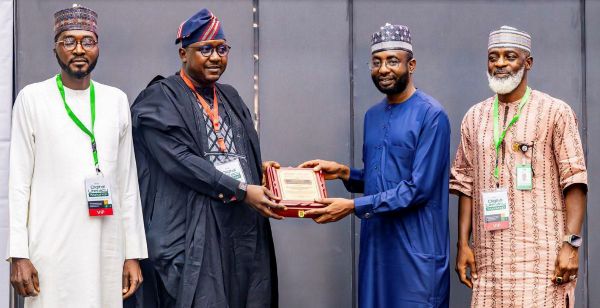
Sokoto State has emerged as Nigeria’s leading subnational contributor to digital literacy, recording 58,573 beneficiaries under the Federal Government’s Digital Literacy for All (DL4ALL) initiative.
The state also received the Sub-National Digital Transformation and Institutional Leadership Award at a digital literacy workshop organised by the National Information Technology Development Agency (NITDA) in Abuja.
Data presented at the workshop ranked Sokoto ahead of the Bureau for ICT and Digital Economy, which recorded 56,582 beneficiaries, Jigawa State with 52,814, Kaduna AGILE with 45,758 and Zamfara State with 24,691.
The recognition highlights Sokoto’s efforts to expand digital skills development and technology-driven opportunities under Governor Ahmed Aliyu’s administration.
The state’s delegation was led by the Commissioner for Innovation and Digital Economy, Bashar Umar Kwabo, while the ministry’s Permanent Secretary, Nasir Daniya, participated in discussions on digital literacy among children, traders, graduates and other segments of society.
Kwabo, who received the award on behalf of the state government and its digital ecosystem, attributed the achievement to ongoing efforts to promote digital innovation and skills acquisition.
He commended the ministry’s staff and technical officers of the Sokoto Information and Communications Technology Development Agency (SICTDA) for supporting the state’s digital transformation agenda.
The commissioner urged them to sustain the momentum by expanding grassroots digital literacy programmes and promoting technology-based entrepreneurship.
The workshop, themed “Measuring Progress, Strengthening Partnerships, Accelerating Impact,” brought together government institutions, development organisations, private-sector operators and other stakeholders to assess Nigeria’s digital literacy drive.
NITDA Director-General, Kashifu Inuwa Abdullahi, highlighted the importance of digital skills in expanding economic opportunities and preparing Nigerians for an increasingly technology-driven economy.
The event also featured the launch of the National Digital Literacy Dashboard, designed to track training activities and support coordination among participating organisations.
Nigeria is targeting 70 per cent digital literacy by 2027 and 90 per cent by 2030, with stakeholders emphasising the need to widen access to digital skills, particularly for persons with disabilities and underserved communities.
