


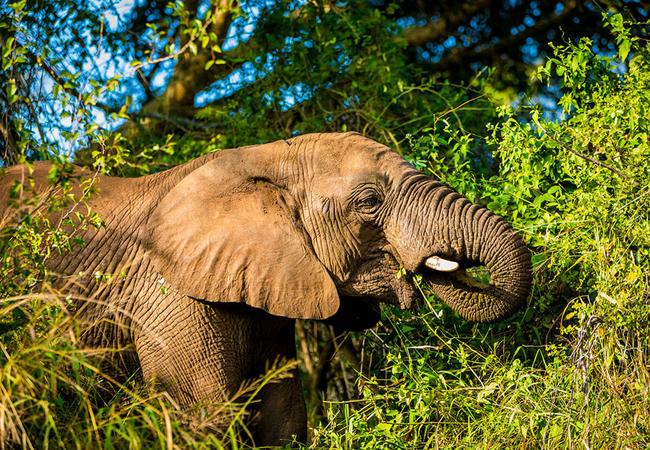
Wild African elephants around Kenya’s Mount Elgon appear to seek out and consume dozens of plant species in ways consistent with self‑medication, according to a new study that also reports mothers preparing plant mixtures for their calves.
The research, published in Scientific Reports, identifies 35 plant species used by the elephants in specific health contexts; 25 of those are also employed in local human traditional medicine, suggesting a shared ethnoveterinary knowledge between people and animals in the region.
Observations from the slopes of Elgon
The study focuses on elephants on the eastern slopes of Mount Elgon, an extinct 4,321‑metre volcano that straddles the Kenya–Uganda border and is already famous for its “cave elephants” that mine mineral‑rich rock.
Researchers from institutions including the Bernhard Nocht Institute for Tropical Medicine in Hamburg, Brown University, the Mount Elgon Foundation and the National Museums of Kenya combined interviews with local experts and field checks to map which plants the animals reportedly select when sick or weak.
Local observers told the team that elephants change their plant choices depending on symptoms, and in some cases mothers were seen chewing specific roots and leaves, mixing the resulting mash with breast milk, and feeding it to their young.
“Putative” self‑medication, not proven cure
Despite the striking patterns, the authors stress that their findings do not prove the plants actually treat illness in elephants. The evidence is based on human testimony and behavioural observation, not laboratory confirmation of pharmacological effects in the animals.
The paper therefore describes the behaviour as “putative self‑medication”: consistent with therapeutic plant use, but requiring further work—such as biochemical analysis of the plants and closer monitoring of elephant health outcomes—to move from correlation to causation.
Why it matters
If confirmed, the results would add one of the most complex examples of zoopharmacognosy—animal self‑medication—to the scientific record, joining cases such as primates swallowing rough leaves to expel parasites and birds using ants to clean their feathers.
The overlap between plants used by elephants and those used in local human medicine also highlights how closely wildlife and community knowledge can be intertwined, with potential implications for conservation, land‑use planning and the protection of medicinal flora around Mount Elgon.
Next steps for researchers
The team says further research should focus on identifying active compounds in the key plant species, tracking individual elephants’ health before and after plant use, and testing whether the observed behaviours improve survival or recovery rates.
Until then, the safest headline is not that elephants definitively “cure” themselves, but that they may be intentionally using medicinal plants—a behaviour that, if validated, would underscore the sophistication of one of Africa’s most iconic species.
Sources:
Scientific Reports paper: “African elephants putatively self‑medicate with medicinal plants in the Mount Elgon region, Kenya”
Kenyan and international coverage (The Star, BBC topic page, Ground News, InShorts, GB News, Pollar News) summarising methods, plant counts and cautions
