


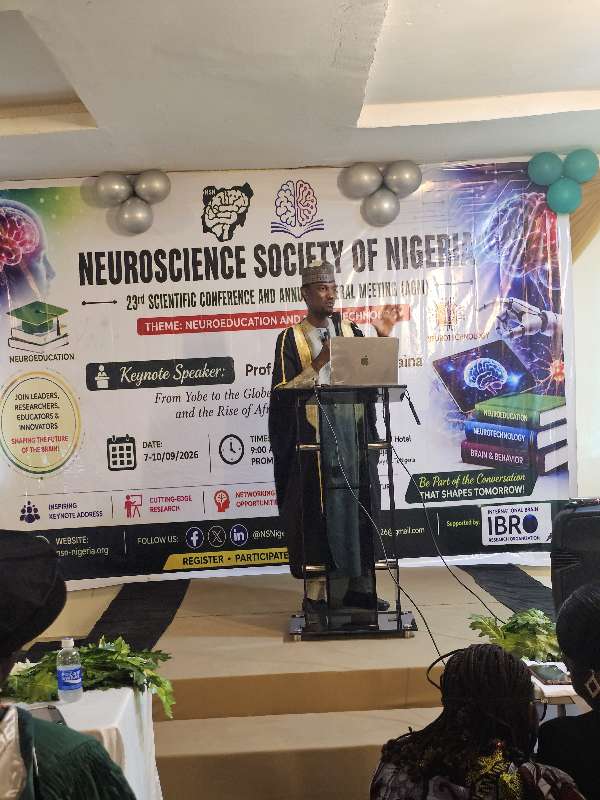
Africa contributes less than one per cent of dementia research despite projections that dementia cases in West Africa could increase by about 348 per cent over the next 25 years, Professor Mahmoud Bukar Maina has warned.
Maina, a Professor of Neuroscience and Director of the Biomedical Science Research and Training Centre at the Yobe state University, spoke at the 23rd Scientific Conference and Annual General Meeting of the Neuroscience Society of Nigeria in Abuja.
He said the continent’s limited contribution to dementia research leaves it inadequately prepared for the projected increase in the disease.
“Up to 2022, only about one per cent of dementia research, in fact, even probably not up to that, less than one per cent of dementia research has come from Africa,” he said.
“We are saying this is a continent that has high genetic diversity, we are saying that this is a continent where dementia is going to increase by over 300% in many places, but yet, less than or about just one per cent of dementia research is coming from the continent.
“That means we are not prepared to tackle this challenge that is about to hit us in the next 25 years.”
‘We are consumers instead of driving our own needs’
Maina, who is also the Special Advisor on Science research and Innovation to the Yobe State Governor, said the problem was not limited to dementia research.
According to him, inadequate testing of medicines in African populations could mean that researchers do not fully understand how some drugs affect Africans before the medicines reach the market.
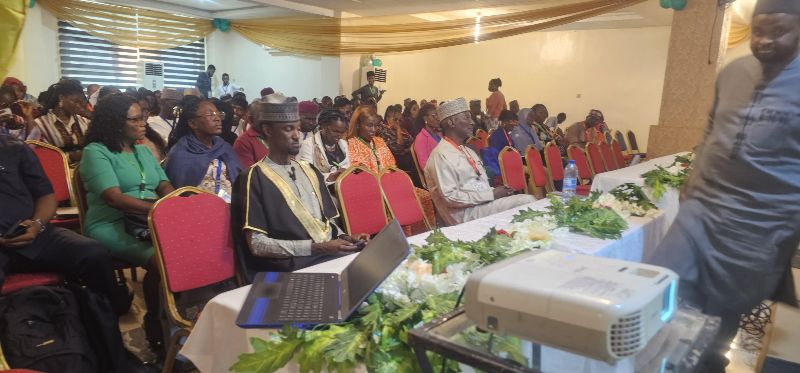
“Often times, the side effect, you know, is because when the drug was being developed, from the preclinical level to the clinical level, it has never been tested in our own people,” he said, “So we are consumers, instead of us driving our own needs.”
He said his research programme was attempting to generate population-specific evidence by studying people with dementia and examining their genetics, biomarkers and other characteristics.
His team is also using induced pluripotent stem cells to grow brain cells in the laboratory for dementia research.
Funding as biggest challenge
Maina identified funding as the biggest obstacle to neuroscience research in Nigeria, “Funding is the biggest, biggest challenge,” he said.
He said inadequate financing affects researchers’ ability to acquire equipment and consumables and limits their ability to access specialised laboratories.
He called for increased government and philanthropic investment, stronger collaboration between clinicians and basic scientists and greater community participation in research.
