


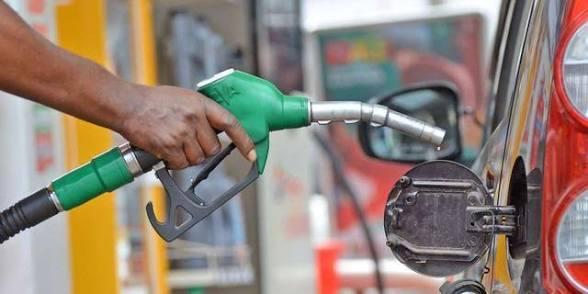
Rising energy and transportation costs are putting pressure on household incomes in Lagos, making the transition to cleaner energy difficult for many residents.
Residents, workers and renewable-energy operators spoke in separate interviews about the impact of rising energy costs.
Mr Cyprian Udoh, a civil servant, said rising energy costs were negatively affecting workers, leaving many with little or nothing to save.
Mrs Ogonna Igwe, a trader, said rising transportation costs were eroding traders’ profits and making it increasingly difficult to sustain their businesses.
Mr Moses Alabi, a Lagos Island worker, said high transport fares had forced some workers to seek accommodation closer to their workplaces. According to him, the measure was aimed at reducing commuting costs and preserving income for other essential needs.
Mr Charles Ogidi, a solar-panel installer, said the cost of installing solar systems remained beyond the reach of many residents seeking alternatives.
The Chief Executive Officer of Zamar Solutions, Mrs Joy Ijeneme, said the transition must include building local capacity to install, maintain and repair renewable-energy technologies. She noted that some imported renewable-energy products lacked adequate local technical support when they developed faults.
For millions of Lagos households, energy costs now compete with transportation, cooking, lighting and other essential household expenses.
Petrol prices at some Lagos filling stations rose to about N1,310 per litre by late August, from around N1,205 per litre. Petrol sold for an average of N1,205 per litre in Lagos in both June and August 2026. Some outlets sold petrol above N1,400 per litre, while depot prices stood at about N1,200 per litre on 28 August.
The increase has raised expenditure for households relying on petrol-powered generators to supplement electricity supply. Households without generators are also affected, as businesses transfer increased operating costs to consumers through higher prices of goods and services.
Diesel prices have similarly remained elevated, raising operational costs for businesses and contributing to higher prices of goods and services. Fluctuations in liquefied petroleum gas and kerosene prices have also influenced household choices and the affordability of cooking energy.
The situation has made energy a competition among household needs rather than simply a choice of fuel.
Nigeria’s Energy Transition Plan provides the national framework for achieving net-zero emissions by 2060. The plan projects renewable energy to account for 82 per cent of installed electricity generation capacity by 2050. It also projects solar photovoltaic capacity to reach 209 gigawatts within the period.
The plan identifies transport and power among major sources of energy-related emissions and targets significant reductions through cleaner technologies. However, Nigeria is transitioning from a relatively low renewable-energy base.
The International Renewable Energy Agency puts Nigeria’s installed solar photovoltaic capacity at 197 megawatts. Of this figure, 124 megawatts is reported as off-grid capacity, while solar-panel imports reached 1.33 gigawatts in 2024. The figures suggest a gap between renewable-energy equipment entering the country and capacity reflected in official statistics.
A 2024 Sustainable Energy for All study, supported by the Lagos State Government, examined fossil-fuel generator use across the state’s 20 local government areas. The study identified distributed solar photovoltaic systems, particularly rooftop solar with battery storage, as an option for reducing generator dependence. However, the upfront cost remains a major barrier, especially for low-income households facing rising living expenses.
Experts say affordable financing, consumer protection and reliable after-sales services are necessary to expand renewable-energy access.
Lagos has also strengthened its legal framework through the Lagos State Electricity Law 2024. The law provides for renewable energy, energy efficiency and demand-side management, alongside renewable-energy purchase obligations. It also provides for certification of renewable-energy installers and incentives for rooftop solar, including possible net-metering arrangements.
In June, the Rural Electrification Agency commissioned a 505-kilowatt-peak interconnected solar mini-grid serving five communities in Epe: Odogbawojo, Odoshiwola, Odoayan, Ora and Ibowon. The project was designed to provide electricity to households, businesses, public institutions and productive users. Reliable local power could reduce dependence on individual generators and the recurring cost of purchasing petrol.
The transition is also extending to transportation, where rising petrol prices directly affect household mobility and commuting costs. The Lagos Metropolitan Area Transport Authority, in collaboration with relevant partners, has participated in developing plans for cleaner-energy buses. The initiative covers compressed natural gas and electric-bus deployment, alongside a national policy on soot-free buses.
Industry stakeholders are also contributing to the emerging clean-energy ecosystem. At its fifth International Investment and Partnership Conference in Lagos in August, the Renewable Energy and Energy Efficiency Associations Alliance adopted a 12-point action plan focused on investment, project execution, energy access and industrial participation.
“Energy is too large for any single institution, sector or stakeholder to solve alone. It demands concerted action,” said Prof. Abubakar Sambo, Chairman, Board of Trustees, Renewable Energy and Energy Efficiency Associations-Alliance. Sambo stressed the need for coordinated action among stakeholders to accelerate Nigeria’s energy transition.
The transition must also go beyond importing solar panels, batteries, electric buses and other technologies. Nigeria needs stronger local skills and industrial capacity to install, maintain and eventually manufacture renewable-energy equipment.
The alliance has introduced programmes covering technical assistance, workforce development, energy efficiency, finance and clean-energy technologies.
Nigeria’s Energy Transition Plan estimates that the net-zero pathway could create up to 340,000 jobs by 2030 and 840,000 by 2060. For Lagos, stakeholders say this presents an opportunity to transform the energy challenge into an industrial and employment strategy.
Solar systems could power homes and businesses, batteries could provide backup electricity, while mini-grids could serve communities. Electric vehicles could also reduce dependence on petrol, while energy efficiency could help households reduce consumption.
The transition, however, will only succeed if cleaner energy becomes accessible beyond affluent households and businesses. For the average Lagos family, the real measure of success will be lower energy expenditure, reliable power, affordable transportation and cleaner air.
Lagos has begun assembling the components through renewable-energy projects, mini-grids, clean-energy transport initiatives and electricity-market reforms. The next challenge is integrating these initiatives into an affordable energy system that protects household incomes while supporting Lagos’ growing population and development ambitions.
