


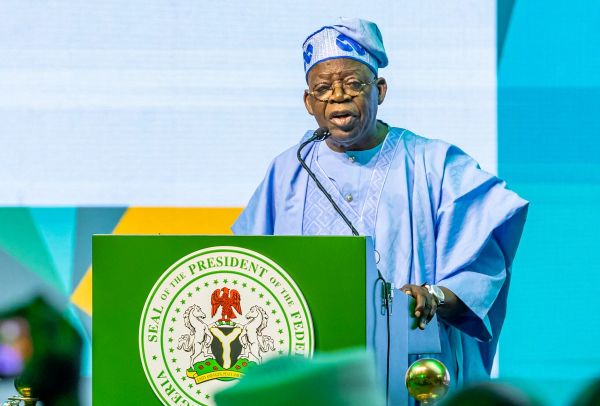
President Bola Ahmed Tinubu has directed a comprehensive reform of Nigerian football following a series of disappointing performances and failures by the country’s national teams to qualify for major regional, continental and global competitions.
The directive came amid a major leadership crisis at the Nigeria Football Federation (NFF), following the resignation of NFF President Ibrahim Gusau, General Secretary Mohammed Sanusi and members of the federation’s Executive Committee on Thursday.
According to a statement issued by the Special Adviser to the President on Information and Strategy, Bayo Onanuga, Tinubu said the reform was necessary to address longstanding structural weaknesses in the administration and development of Nigerian football.
The President directed the Chairman of the National Sports Commission to work with the NFF Secretariat and relevant stakeholders to maintain continuity in essential football administration while facilitating a broad and consultative reform process.
Tinubu said the exercise must focus on strengthening governance, administration, stakeholder representation, development pathways, domestic competitions and accountability across the football sector.
The President’s intervention followed growing concerns over Nigeria’s declining fortunes in international football. The Super Eagles failed to qualify for the 2026 FIFA World Cup, while the Super Falcons also missed out on the 2027 FIFA Women’s World Cup after losing to South Africa in the qualification playoffs.
The failure by the Super Falcons was particularly significant as Nigeria had participated in every edition of the Women’s World Cup since the tournament began in 1991.
The NFF leadership crisis has further intensified scrutiny of the federation’s administration, with stakeholders calling for fundamental changes to the way football is governed and developed in the country.
Tinubu said the reform would provide an opportunity to reposition Nigerian football, improve its administration and create stronger structures for the sustainable development of the sport.
He also directed that the process should be inclusive, involving relevant football stakeholders in finding solutions to the challenges confronting the game.
The President’s directive is expected to shape the next phase of football administration in Nigeria as stakeholders begin consultations on reforms aimed at restoring the country’s competitiveness on the international stage.
