


Environmental engineering experts have called on Nigeria to shift from the traditional “take-make-dispose” model to a circular economy to combat climate change, reduce waste, and create jobs.
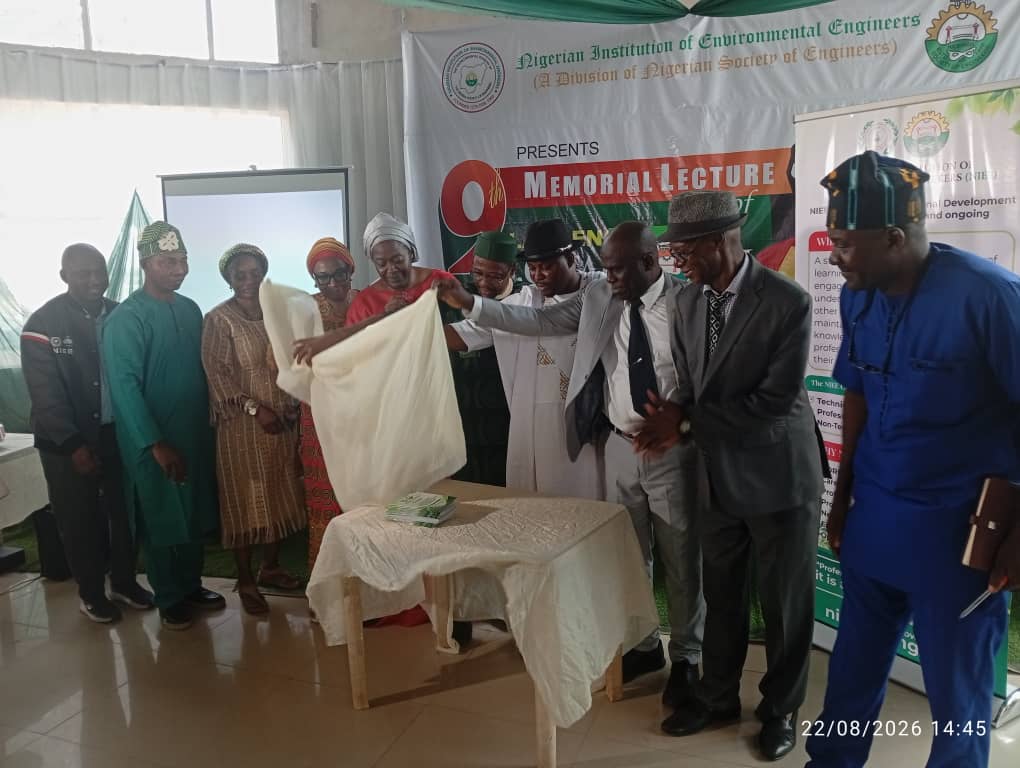
The call was made at the 9th memorial public lecture of the late Samuel Fadahunsi, organized by the Nigerian Institution of Environmental Engineers (NIEE) on Sunday in Benin City.
The theme of the lecture was “Engineering Climate Resilience and Circular Economy Solutions for Sustainable Development in Nigeria,” which brought together environmental engineers, academics, and stakeholders.
In his lecture, guest speaker Prof. Jacob Ehiorobo emphasized the need for significant investment in waste recycling facilities, including factories.
He stated that Nigeria could unlock substantial economic opportunities by treating waste as a resource.
Research projects Nigeria’s waste recycling market to reach N100 billion by 2030, potentially creating over 250,000 jobs within that period.
Ehiorobo noted that Nigeria generates over 32 million tonnes of solid waste annually, with food waste and plastics comprising a large portion.
He explained that a circular economy promotes reuse and recycling rather than disposal, while climate action involves reducing greenhouse gas emissions and tackling global warming.
Adopting circular economy principles, he said, could boost economic resilience by fostering industries and jobs in recycling, repair, remanufacturing, and sustainable agriculture.
“Circular economy principles can also spur innovation and the development of technologies that extend product and material lifespans,” he added.
He highlighted that investing in sustainable building materials and energy-efficient technologies could reduce Nigeria’s dependence on imports and support local production and innovation.
Digital platforms linking consumers with repair and resale services present additional opportunities for promoting sustainable consumption and circular economy solutions.
“The circular economy will address key challenges like resource depletion, waste management, and economic resilience, unlike the linear take-make-dispose model,” he said.
He stressed the need for Nigeria to establish strong policies and institutional support to fully benefit from the circular economy.
He called for policies that incentivize recycling, waste management, and sustainable resource use, along with partnerships among international organizations, the private sector, and local governments.
“To develop an effective circular economy and climate action for sustainable development, Nigeria must foster collaboration among agencies involved in climate mitigation and disaster risk reduction,” he said.
In his keynote address, Prof. Emmanuel Akpaja of the University of Benin’s Department of Plant Biology and Biotechnology highlighted mushrooms as a potential source of health and economic benefits.
His speech was titled, “Valorisation of Mushrooms in Environmental Engineering: Advancing Circular Economy, Climate Action, and Sustainable Development in Nigeria.”
NSE President Mr. Alimasuya Rabiu commended the organizers for maintaining the annual memorial lecture. He was represented by Mr. Chukudi Akpoto, pioneer Chairman of the NSE Oredo Local Government Branch.
The NIEE National Chairman, Mr. Caius Umekesiobi, described Fadahunsi as a visionary who believed engineering should serve humanity and protect the environment.
Umekesiobi called the theme timely, noting that the circular economy offers a pathway to turn waste into wealth, reduce pollution, extend product use, and restore natural systems.
On behalf of the Fadahunsi family, Dr. Folake Olumogba thanked NIEE for continuing the memorial lecture in their father’s honor.
The event aimed to honor Samuel Fadahunsi’s memory while promoting discussion on environmental engineering, climate resilience, and sustainable development.
