


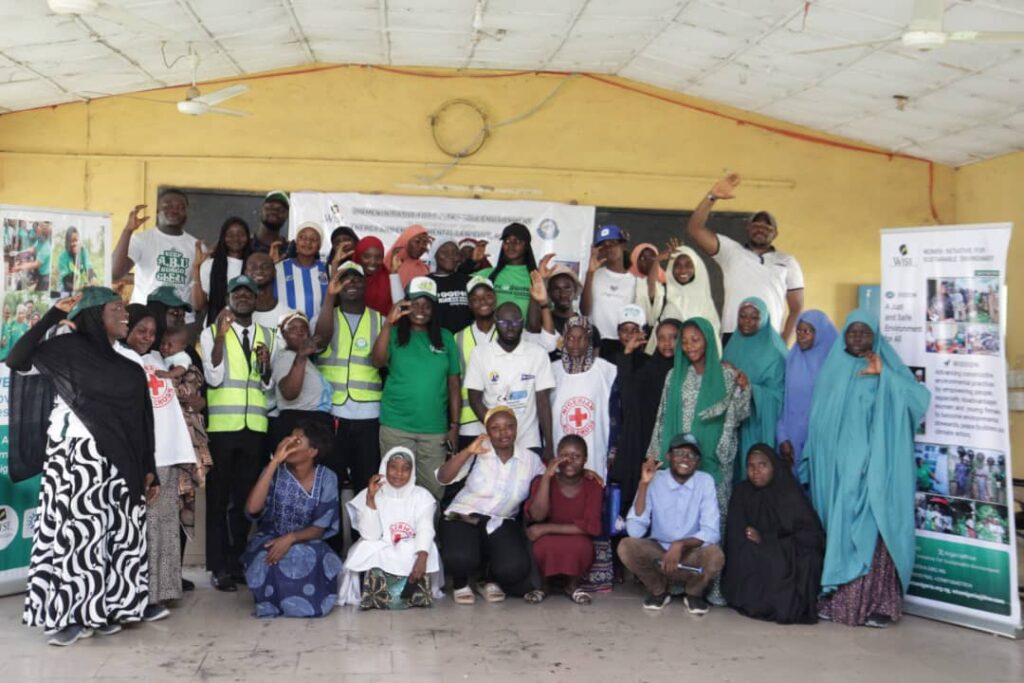
An NGO, Women Initiative for Sustainable Environment (WISE), has urged youths to transform climate concerns into practical solutions capable of improving livelihoods and protecting the environment.
Mrs Olanike Olugboji-Daramola, Executive Director of WISE, made the call on Saturday in Zaria during the ECOCARE Initiative 2026 awareness workshop and briquette production training.
The programme was organised by WISE in partnership with the Energy and Environmental Law Club of Ahmadu Bello University (ABU), Zaria.
Olugboji-Daramola said young people should overcome climate anxiety by developing solutions to environmental challenges rather than remaining focused on the problems confronting society.
She described climate change as a serious threat that was already ravaging communities, destroying livelihoods and affecting lives across the country.
According to her, the programme was designed to create awareness, provide knowledge and equip participants with practical skills to respond to climate and environmental challenges.
She said the initiative brought together youths and women from communities around Zaria to acquire knowledge that could help them become environmental stewards and contribute to climate action.
“We have come today to enlighten them, equip them with knowledge and information, and then move on to training that will equip them with skills,” she said.
The WISE executive director said the initiative also introduced participants to energy transition, particularly clean cooking, as part of efforts to address deforestation and global warming.
She explained that forests served as carbon sinks, stressing that continued destruction of forests through dependence on firewood contributed to the warming of the planet.
Olugboji-Daramola urged young people to embrace cleaner cooking methods, saying simple changes in everyday practices could contribute significantly to environmental protection.
She said improved cookstoves could reduce household spending on cooking fuel by between 30 and 50 per cent, and in some cases by as much as 80 per cent.
According to her, savings from cleaner cooking could be redirected toward food, clothing, education and other household needs, making the intervention beneficial to entire families.
She therefore rejected the perception that clean cooking initiatives were exclusively for women, stressing that the benefits extended to men, children and households generally.
“When a woman cooks in the home, everyone eats, everyone benefits,” she said, adding that environmental sustainability required collective responsibility.
Olugboji-Daramola also encouraged young men to participate actively in environmental initiatives, saying women’s empowerment should be viewed as a partnership between men and women.
She said the organisation’s programmes were inclusive, noting that men who acquired knowledge through the initiative could extend it to other men and communities.
The executive director said sustainability would require participants to take ownership of the knowledge and skills acquired, while developing practical solutions that could attract financing.
She said young people could explore energy-efficient cookstoves, cleaner fuels and innovative financing models to expand climate solutions within their communities.
Olugboji-Daramola restated WISE’s commitment to supporting participants beyond the training and helping them replicate the initiative across different communities.
Earlier, Hasheer Hamzat, Chairman of the Energy and Environmental Law Club, said the ECOCARE Initiative emerged from a shared commitment to practical environmental sustainability.
Hamzat said the partnership combined WISE’s environmental and community-development experience with the club’s expertise in environmental law, advocacy, education and student engagement.
He said the collaboration was aimed at promoting environmental responsibility, sustainability education, practical skills and community participation.
According to him, environmental protection requires both knowledge of the law and practical solutions that communities can adopt in their everyday lives.
Hamzat said briquette production demonstrated how environmental law could move beyond classrooms into practical action addressing waste management, pollution, deforestation and climate change.
He explained that briquettes could convert certain waste or biomass materials into alternative fuel sources, potentially reducing dependence on firewood and other traditional fuels.
He said the training therefore demonstrated the connection between environmental regulation, sustainable development, climate action and community-level solutions.
Hamzat added that the Energy and Environmental Law Club would sustain the initiative through continued environmental education, advocacy and awareness activities within the university and surrounding communities.
He said WISE was providing the technical expertise for the briquette-production component, while the club was contributing student engagement and environmental advocacy.
