


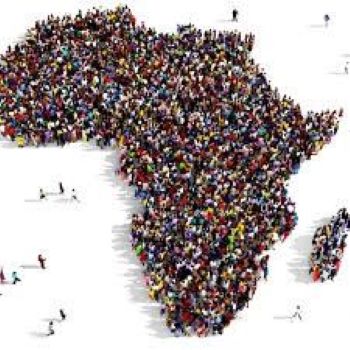
Face of Liberty International, a nonprofit group in Nigeria, has called on young Africans to take greater responsibility for solving developmental problems bedevilling their nations instead of depending solely on governments and political institutions.
The organisation’s Executive Director, Leonard Ogunweide, made the call on Saturday during the virtual graduation ceremony of the first cohort of its 2026 Free Market Fellowship, held in Lagos State.
The 10-week programme was designed to inculcate leadership and civic education training in the next generation of leaders, featuring participants from several African countries.
The fellows also examined ideas such as human dignity, personal agency, markets, livelihoods, entrepreneurship, government, public policy and communication.
Speaking at the ceremony, Mr Ogunweide said Africa’s development would require citizens who could transform ideas, skills, knowledge and available resources into productive value.
He argued that the continent’s large youth population and abundance of natural resources would not automatically translate into prosperity without individual freedom, effective institutions, entrepreneurship and responsible leadership.
“Potential alone is never enough,” he said. “A large youth population does not automatically create progress. Leadership is a decision to take responsibility for making something better.”
He further stated that prosperity could emerge only when people operated within an environment that enabled them to build businesses, exercise property rights and take responsibility for improving their lives.
The programme also challenged the assumption that governments should provide every solution to the problems confronting citizens.
Ogunweide said governments had important responsibilities but were limited in their capacity to manage every aspect of social and economic life, saying graduates needed to recognise the role they could play in advancing development within their communities.
“It is easy to complain about what is wrong. It is harder to organise people around a solution. It is easy to criticise institutions, but it is difficult to build better institutions,” he added.
In Burundi, Christella Bishaza developed a project supporting single mothers through mobile-money entrepreneurship. Ms Bishaza said many of the women wanted to work but lacked the capital, confidence and information required to begin.
She eventually supported them with small amounts of capital to operate as mobile-money agents, enabling the women to earn commissions by facilitating financial transactions while gradually returning the initial capital provided to them.
Bishaza said the intervention was intended to help women who had previously depended on others gain a measure of financial stability.
Another participant, Rashid Baba, a Ghanaian special educator, focused his capstone project on inclusive education and the challenges faced by children with special educational needs.
Baba said the fellowship strengthened his confidence to communicate with education authorities and organisations working in the disability and education sectors.
