


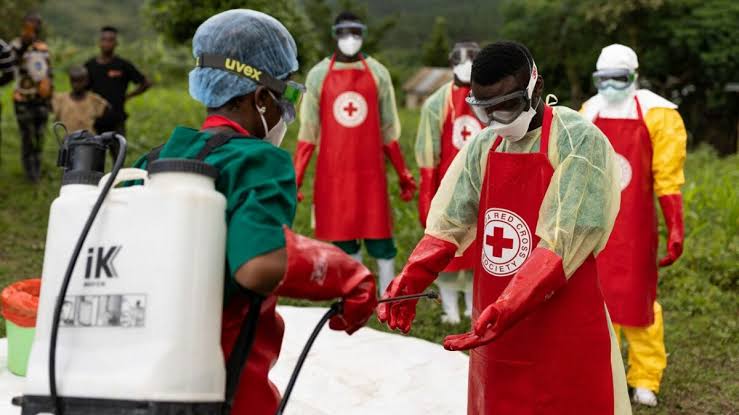
The National Orientation Agency (NOA) has urged Nigerians to remain vigilant and comply with public health advisories as African health authorities intensify efforts to contain the Bundibugyo Ebola Virus Disease outbreak.
Mrs Ijeoma Ulasi, Deputy Director and Health and Social Care Desk Officer of NOA in Enugu State, made the call during a sensitisation programme on the disease in Enugu on Thursday.
Although Nigeria remains on high alert, no confirmed case of the disease has been recorded in the country.
Ulasi noted that Nigeria’s extensive international travel, porous borders, and busy airports put the country at risk of importing the deadly virus.
She explained that Bundibugyo Ebola Virus Disease is a severe viral illness caused by the Bundibugyo strain of the Ebola virus, which poses significant public health risks.
According to her, the disease spreads through direct contact with the blood, body fluids, or contaminated materials of infected persons, as well as infected wild animals.
She identified fruit bats, monkeys, and chimpanzees as animals capable of transmitting the virus to humans.
“The World Health Organization declared the current outbreak a Public Health Emergency of International Concern in May, following rising cases and deaths reported in the Democratic Republic of Congo and Uganda,” she said.
Ulasi said the disease has an incubation period of between two and 21 days, with symptoms including fever, fatigue, headache, muscle pain, sore throat, and vomiting.
Other symptoms include diarrhoea, abdominal pain, skin rash, unexplained bleeding, and shock. She emphasised the importance of seeking immediate medical attention when such signs appear.
The deputy director noted that there is currently no approved vaccine or specific treatment for the Bundibugyo strain, making prevention the most effective control measure.
Nigerians experiencing these symptoms, especially after travelling to affected countries or coming into contact with suspected cases, have been advised to seek immediate medical attention.
To strengthen preparedness, the Nigeria Centre for Disease Control and Prevention has activated its National Emergency Operations Centre, enhanced nationwide surveillance, and upgraded emergency response measures.
Ulasi said Enugu State is among locations considered at higher risk due to its strategic travel and commercial links, particularly through the Akanu Ibiam International Airport.
She emphasised that sustained vigilance and collective action remain crucial to preventing the introduction and spread of Bundibugyo Ebola Virus Disease in Nigeria.
The agency urged Nigerians to maintain good personal hygiene, avoid contact with sick or dead animals, promptly report suspected cases, and comply with health advisories issued by authorities.
