


The Kaduna State Government has reaffirmed its commitment to tackling malnutrition through stronger coordination and improved implementation of nutrition interventions across the 23 Local Government Areas (LGAs).
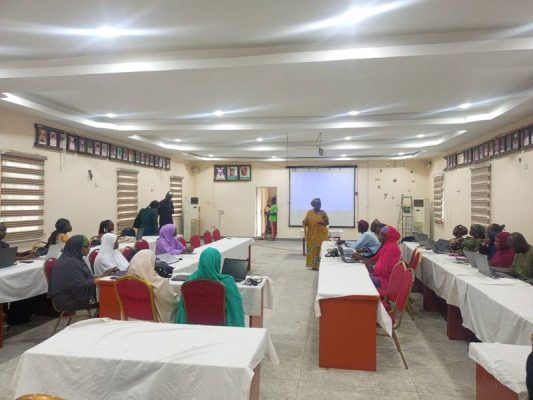
The commitment was reiterated on Thursday in Zaria during a two-day quarterly coordination and review meeting of the State Committee on Food and Nutrition (SCFN) with nutrition focal persons from the 23 LGAs.
The meeting was organised by the Kaduna State Planning and Budget Commission (PBC), with support from UNICEF, to review first and second quarter activities and address implementation challenges.
Chairman of the SCFN, Mr. Mukhtar Abdullahi, said the gathering demonstrated the state’s commitment to improving nutrition outcomes.
Abdullahi, who also serves as Permanent Secretary of the PBC, appreciated UNICEF and other development partners for strengthening nutrition coordination and service delivery in Kaduna.
He commended nutrition focal persons for sustaining multisectoral collaboration and implementing interventions aimed at improving maternal, infant and young child nutrition.
According to him, the state is strengthening local government food and nutrition programmes through improved budget allocations and collaboration among relevant sectors.
He said the meeting would review progress, identify implementation gaps, share lessons learned, and develop practical strategies to improve nutrition outcomes across the state.
Earlier, the Monitoring and Evaluation Officer for Nutrition at the Kaduna State Primary Healthcare Board, Mr. Jibril Isah, said Kaduna had sustained strong political commitment towards reducing malnutrition through coordinated implementation of the Multi-Sectoral Food and Nutrition Plan.
Isah said the review would assess nutrition activities implemented during the quarter, identify challenges, and agree on workable strategies to improve performance across all 23 LGAs.
He noted that undernutrition remained a major contributor to child mortality, accounting for over 55 per cent of diarrhoea deaths, 57 per cent of malaria deaths, and 45 per cent of pneumonia deaths.
According to him, Vitamin A supplementation can reduce under-five mortality by up to 34 per cent while protecting children against measles, malaria, diarrhoea, and pneumonia.
He added that routine deworming, nutrition screening, and promotion of exclusive and complementary breastfeeding remained critical interventions for improving child survival.
Isah disclosed that Kaduna recorded 82 per cent Vitamin A supplementation coverage among children aged six to 59 months during the June 2026 Maternal, Newborn and Child Health Week.
He said the state also achieved 81 per cent Vitamin A coverage among children aged six to 11 months and 83 per cent among children aged 12 to 59 months.
He added that Mid-Upper Arm Circumference screening reached 79 per cent statewide, while deworming coverage stood at 36 per cent during the exercise.
Isah said PENTA3 immunisation coverage stood at 51 per cent, while Sulphadoxine-Pyrimethamine uptake among pregnant women reached 39 per cent statewide.
He noted that the performance review would help identify poorly performing areas and guide targeted interventions to improve nutrition and maternal health services.
The Acting Director of the Development Aid Coordination Department at Kaduna PBC, Mrs. Priscilla Dariya, urged participants to develop practical recommendations that would strengthen nutrition coordination across the state.
The Director of Nutrition at the Kaduna State Primary Healthcare Board, Mrs. Ramatu Haruna, stressed the need for quality data, effective implementation, and sustained commitment by nutrition focal persons.
Haruna was represented by Mr. Christopher Moses, Deputy Programme Officer, Micronutrient Deficiency Control Unit, Kaduna State Primary Healthcare Board.
In a goodwill message, the Coordinator of the Accelerating Nutrition Results in Nigeria Project (ANRiN 2.0) in Kaduna, Dr. Zainab Muhammad-Idris, urged participants to openly discuss implementation challenges.
Muhammad-Idris, represented by Musa Abubakar, Monitoring and Evaluation Specialist for ANRiN 2.0, said the meeting should produce a reliable document to guide government, development partners, and non-governmental organisations in implementing feasible nutrition interventions.
Also speaking, the Coordinator of Civil Society Scaling-Up Nutrition in Nigeria (CS-SUNN) in Kaduna, Mrs. Celestina Ayim, represented by Funmilayo Adeoye, reaffirmed the organisation’s commitment to supporting government efforts to improve nutrition outcomes across the state.
