


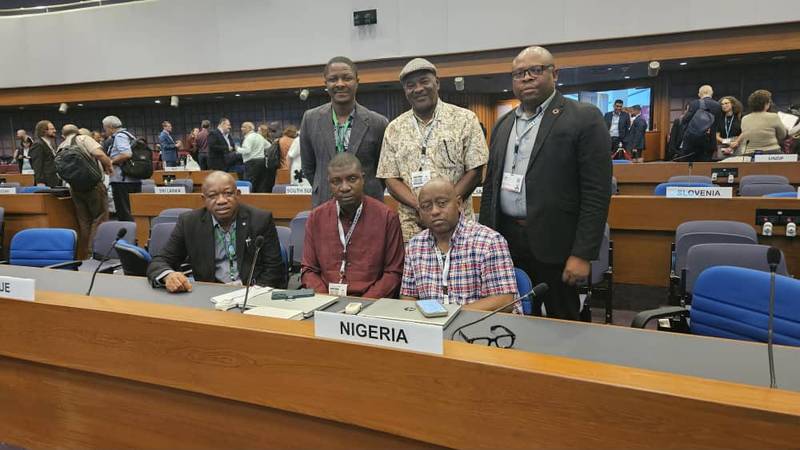
Sustainable Research and Action for Environmental Development (SRADeV Nigeria) has urged for increased funding and stronger political commitment to implement the Kigali Amendment to the Montreal Protocol.
The organization made this appeal at the 48th Open-ended Working Group meeting in Bangkok, Thailand, ahead of the amendment’s 10th anniversary later this year.
The call is contained in a statement signed by SRADeV Executive Director, Dr. Leslie Adogame, and made available to reporters on Wednesday.
SRADeV noted that the meeting provided governments an opportunity to review the Montreal Protocol’s achievements and address implementation challenges faced by developing countries.
It emphasized that the anniversary should renew global commitment to climate action through accelerated implementation of existing obligations.
The organization urged Parties to replenish the Multilateral Fund and strengthen institutional support, especially for Article 5 countries like Nigeria, which are experiencing rising cooling demands.
It quoted Mr. Idris Abdullahi, Director and National Ozone Officer at the Federal Ministry of Environment, as stressing the importance of adequately funding the Multilateral Fund.
Abdullahi stated that sustained financial support is vital for developing countries to meet their Montreal Protocol obligations while also delivering climate and ozone layer protection benefits.
SRADeV described the Montreal Protocol as one of the world’s most successful environmental agreements since its adoption in 1987 and entry into force in 1989.
It highlighted that the 2016 Kigali Amendment expanded the treaty to target hydrofluorocarbons (HFCs), potent greenhouse gases that contribute significantly to global warming.
According to SRADeV, economic uncertainty, energy market volatility, fiscal constraints, and worsening climate impacts are complicating implementation efforts for Article 5 countries.
Many developing nations are completing hydrochlorofluorocarbons (HCFCs) phase-out and preparing for the HFC phase-down within three years.
SRADeV recognized Nigeria as one of Africa’s leading countries implementing the Kigali Amendment through regulatory reforms, capacity building, and market transformation initiatives.
The Federal Ministry of Environment coordinates these efforts with support from international partners.
The organization stated that Nigeria’s progress reflects its commitment to climate action and ozone protection.
Adogame emphasized that predictable financing and international cooperation are critical to reducing emissions, enhancing energy efficiency, and transforming cooling markets.
He added that adequate funding would strengthen institutions, modernize refrigeration servicing, and promote sustainable cooling solutions.
Adogame noted that the Bangkok meeting’s outcomes would influence Nigeria’s implementation of its Kigali Amendment obligations.
Nigeria is strengthening HFC licensing and quota systems, promoting climate-friendly refrigerants, and expanding technician training.
The country is also improving refrigerant recovery, recycling, energy efficiency, and integrating sustainable cooling into national climate policies.
Mr. Jeremiah Ato, Policy and Technical Manager of SRADeV, stated that Nigeria’s commitment is demonstrated through policy reforms and institutional actions.
He stressed that stronger ambition must be matched with sufficient resources to sustain progress.
SRADeV expressed concern over the continued importation of obsolete and energy-inefficient refrigeration and air-conditioning equipment into developing countries, which undermines Kigali Amendment goals by prolonging the use of high-GWP refrigerants.
The organization called for increased collaboration to combat illegal trade, improve customs intelligence, and strengthen regulatory frameworks.
It also urged the African Group of Negotiators to maintain a unified position during Bangkok negotiations to protect Africa’s interests and promote climate-friendly cooling transitions.
