


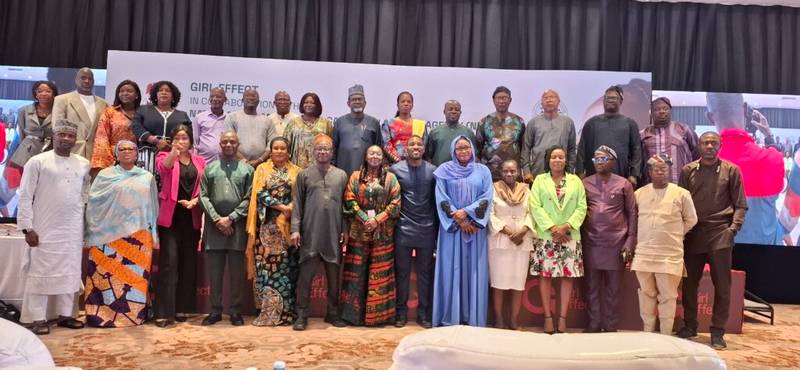
Girl Effect Nigeria, an NGO, says it has successfully mobilised more than 18 million Nigerians and facilitated the vaccination of 26,000 adolescent girls against the Human Papillomavirus (HPV) across five states.
The Country Director of Girl Effect Nigeria, Mrs Boladale Akin-Kolapo, disclosed this on Thursday in Abuja at the national close-out and dissemination meeting of the “OYA” campaign.
The OYA campaign is an adolescent health and advocacy initiative led by Girl Effect Nigeria. It aims to protect girls aged nine to 14 from cervical cancer and address adolescent malnutrition by driving uptake of the HPV vaccine through community mobilisation and health education.
Akin-Kolapo said the feat was achieved in partnership with Gavi, the Vaccine Alliance, and the Federal Government. She noted that the five-year project, implemented in Kaduna, Delta, Ekiti, Ondo, and Oyo states, focused on driving demand and shifting social norms.
“It also aims at increasing uptake of the life-saving HPV vaccine to protect girls from cervical cancer,” she said.
She explained that the initiative leveraged an ecosystem approach, uniting schools, traditional institutions, health facilities, and digital platforms to build community trust.
“Vaccines do not save lives sitting in cold-chain facilities; they save lives when people trust them, parents understand them, and communities embrace them.
“Through our collective efforts, we reached more than 4.1 million people via digital platforms and approximately 18 million through radio programming. We also equipped over 315 teachers and healthcare workers, conducted more than 7,800 community engagement sessions, and successfully vaccinated 26,000 girls,” she said.
Speaking on the strategy, Akin-Kolapo said the real challenge in public health lies in overcoming cultural and behavioural barriers, rather than just logistics.
She described the campaign as a universally recognised Nigerian call to action, urging communities to move forward and seize the opportunity to protect their children.
As the donor-funded initiative winds down, the country director warned against complacency, stating that the next critical phase is transitioning from a temporary project into routine immunisation systems.
She called on federal, state, and local governments to institutionalise Social and Behaviour Change Communication (SBCC) within their budgets and healthcare systems.
“The challenge is no longer whether communities have heard about the HPV vaccine. The challenge is whether demand remains strong year after year, and whether misinformation is continuously addressed.
“The future success of HPV vaccination in Nigeria will not ultimately be determined by donor investments. It will be determined by the extent to which governments at federal, state, and local levels continue to champion, resource, and institutionalise these efforts,” Akin-Kolapo said.
She reaffirmed Girl Effect’s continued commitment to partnering with the National Primary Health Care Development Agency (NPHCDA), Gavi, the Vaccine Alliance, and state ministries to improve adolescent health and reduce child marriage while advancing sexual and reproductive health outcomes nationwide.
The country director urged the federal and state governments to shift from “project thinking” to “systems thinking” by institutionalising demand generation within routine healthcare structures to sustain the gains.
The Director of Disease Control and Immunisation at NPHCDA, Dr Garba Rufai, said the country achieved unprecedented milestones despite fierce anti-vaccine social media campaigns.
Rufai cautioned against total reliance on donor-funded projects and challenged state governments to ensure seamless knowledge transfer and capacity building to maintain high immunisation coverage.
“The business of immunisation is about persistence. Our measure of success will be what happens months after this close-out. We must ensure that nothing falls through the cracks as we transition,” Rufai said.
In a goodwill message, Dr Aruwa Oteri, Senior Programme Officer for the country immunisation programme at the Bill & Melinda Gates Foundation, commended Girl Effect’s focus on SBCC to break cultural barriers.
Oteri re-echoed the foundation’s commitment to prioritising the health of young women, noting that protecting them from adolescence empowers them to drive broader societal development.
Similarly, a representative of the World Health Organization (WHO), Dr Chisom Emeka, lauded the youth-centred and digital approaches used during the campaign. She said WHO remains fully committed to supporting Nigeria in strengthening routine immunisation and ensuring no adolescent girl is left behind.
Speaking on behalf of the implementing states, the Oyo State Commissioner for Health, Dr Oluwaserimi Ajetunmobi, commended the project’s gender-responsive approach and evidence-based communication strategy. She said the insights from the OYA campaign would guide future healthcare policies and investments in adolescent health across the state.
