


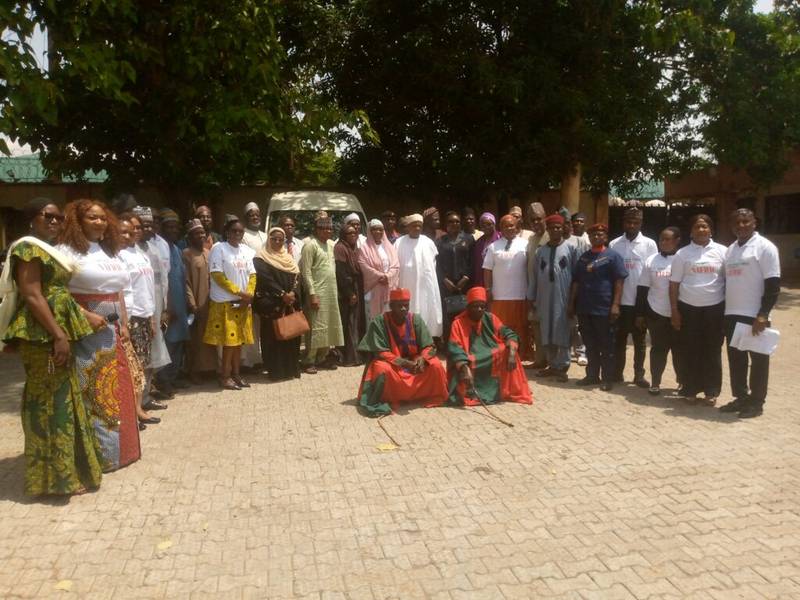
The National Agency for Food and Drug Administration and Control (NAFDAC) held a sensitization workshop in Karu, Federal Capital Territory, to promote patient safety and responsible medicine use among residents. Reports indicate that the workshop targeted community leaders and Faith-Based Organizations (FBOs), who are expected to extend awareness campaigns to households, churches, mosques, and community groups.
Speaking at the event, NAFDAC Director of Pharmacovigilance Services, Dr. Uchenna Elemuwa, said the workshop aimed to promote rational medicine use and strengthen patient safety across Nigeria’s healthcare system and communities.
Represented by Mrs. Hauwa Makama, Deputy Director of Food and Drug Information, Elemuwa described the workshop as timely and essential for improving healthcare delivery and safeguarding public health nationwide.
He emphasized that rational medicine use is a cornerstone of effective healthcare systems globally, noting that medicines save lives, reduce suffering, prevent complications, and significantly improve quality of life.
Elemuwa warned that medicines could become dangerous when misused, overused, underused, or improperly prescribed, leading to serious health risks and avoidable consequences for patients.
“The World Health Organization (WHO) defines Rational Use of Medicines as when patients receive medications appropriate to their clinical needs, in doses that meet their individual requirements.
“The medications should be taken for an adequate period and at the lowest cost to patients and their communities.
“Unfortunately, irrational use of medicines has become a major global public health challenge. It manifests in several ways, including self-medication without professional guidance,” he said.
“Other issues include abuse and misuse of antibiotics, polypharmacy or excessive use of multiple medicines, incorrect dosing, and non-adherence to prescribed treatments.
“Also, the use of counterfeit and substandard medicines, drug sharing among family and friends, and patronage of unapproved drug vendors.”
“These practices contribute significantly to treatment failure, adverse drug reactions, prolonged illness, hospitalization, increased healthcare costs, disability, and avoidable deaths,” he added.
He highlighted that one of the most serious consequences of irrational medicine use today is Antimicrobial Resistance (AMR).
“The misuse and overuse of antibiotics have accelerated the emergence of resistant microorganisms, making infections previously treatable with common antibiotics harder and more expensive to manage,” he warned.
Elemuwa cautioned that antimicrobial resistance threatens decades of medical progress and stressed that urgent action is needed. He urged Nigerians to exercise caution when taking medicines and always seek professional medical guidance.
He explained that pharmacovigilance is the science of detecting, assessing, understanding, and preventing adverse effects or other medicine-related problems affecting patients.
“Pharmacovigilance helps ensure medicines remain safe and effective after approval and market release. No medicine is completely free from side effects,” he noted.
He recommended ongoing training for healthcare workers on rational prescribing and medicine safety, expanding public awareness campaigns against self-medication and antibiotic misuse, encouraging adverse drug reaction reporting, and integrating digital tools into pharmacovigilance systems.
He also called for stronger collaboration among regulatory agencies, healthcare institutions, professional bodies, academia, and civil society, along with increased enforcement against counterfeit and substandard medicines.
Mrs. Hafsat Gwaran, Director of Disease Control at the FCT Primary Health Care Board, urged participants to report adverse drug reactions, emphasizing that public input is vital for protecting health.
“When we notice reactions to a particular drug, we must report them; your reports help prevent further issues,” Gwaran said.
Salamatu Orakwe of the Pharmacy Society of Nigeria (PSN), FCT branch, praised NAFDAC for organizing the workshop, noting that many deaths result from adverse drug reactions.
She affirmed that patient safety remains a priority for the PSN FCT Council and pledged ongoing support for initiatives promoting medicine safety and public health awareness.
On behalf of the community, Mr. Joseph Danfulani-Nareti, the Sakamuyi of Karu, commended NAFDAC for the program, describing it as highly beneficial.
He added that many people are unaware of the dangers of improper medicine use and said participants gained valuable knowledge from the sensitization exercise
