


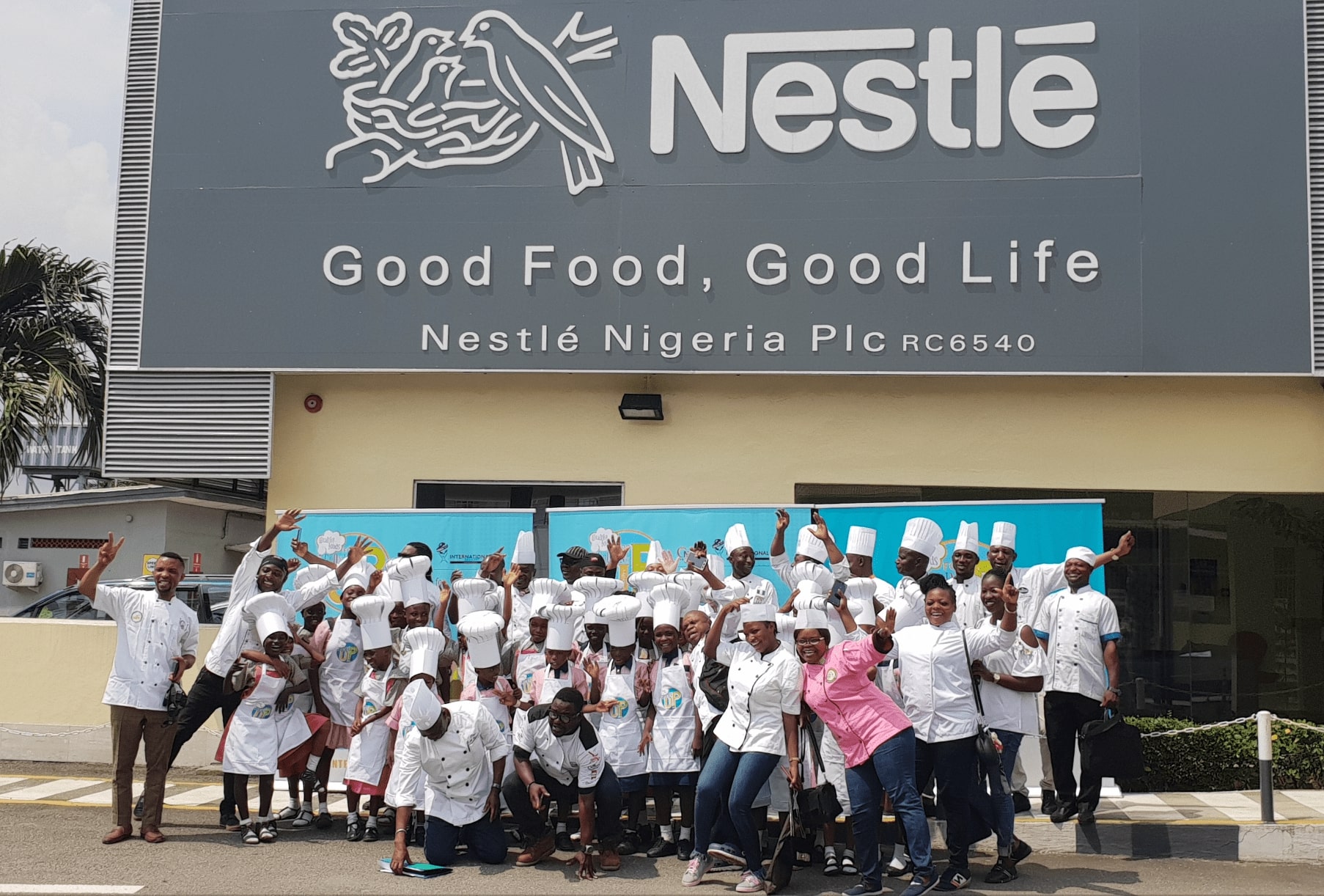
Nestlé Nigeria states that increasing local sourcing of agricultural raw materials and utilizing food processing technologies can strengthen nutrition, support farmers, and deepen value addition in the country’s food industry.
The company also clarified that its Maggi seasoning cubes are produced from locally sourced and fermented soya beans, dispelling public misconceptions that the product is made from chemicals.
The clarification was made during a media tour of Nestlé Nigeria’s Agbara factory in Lagos on Wednesday.
Culinary Plant Manager Mr. Oluwatobi Sami explained that the seasoning cubes are derived mainly from soya beans sourced from Northern Nigeria and processed using controlled fermentation technology.
He said the process replicates traditional African fermentation methods used in condiments like iru, dawadawa, and ogiri.
“What people often call chemicals are actually ingredients and flavors derived from fermented soya beans,” he stated.
Sami described the process: cleaning, softening, and fermenting the soya beans under controlled conditions, followed by flavor extraction, drying, blending, and compression into cubes.
He emphasized that the manufacturing process is automated to ensure safety, consistency, and quality.
Minimal human contact reduces contamination risks while maintaining high standards.
He traced the product’s origins to the 1880s, when Swiss entrepreneur Julius Maggi sought solutions to nutritional challenges caused by changing lifestyles during the Industrial Revolution.
“Maggi was created to reduce cooking time, provide essential nutrients, and make meal preparation easier for families. It was born out of the need to solve a problem and make nutrition affordable, quick, and easy,” he said.
Category Development Manager Ifeoluwa Seyi-Obembe added that Maggi is fortified with zinc and iodine to address nutritional gaps.
She reaffirmed Nestlé Nigeria’s commitment to food safety, quality assurance, and the use of locally sourced raw materials.
Factory Manager Mr. Talla Fall revealed that the Agbara plant employs about 3,000 people directly, split evenly between Nestlé staff and external workers.
He noted that over 1,000 indirect workers are engaged in logistics and distribution, including drivers and transporters, further boosting employment and the wider economy.
Fall emphasized that the factory’s operations support thousands of jobs and promote value creation across the supply chain.
He also highlighted the company’s dedication to local sourcing and value addition in Nigeria.
