


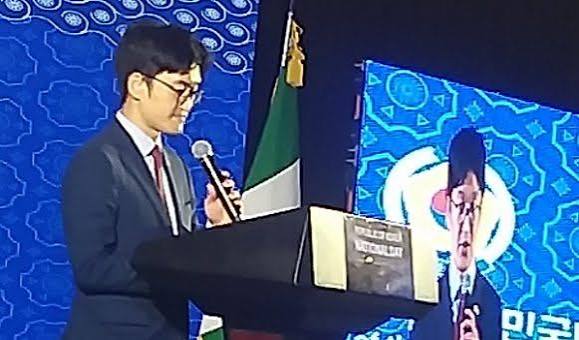
The Minister of Foreign Affairs, Amb. Bianca Odumegwu-Ojukwu, has reaffirmed Nigeria’s commitment to partnering with the Republic of Korea to strengthen Korea-Africa solidarity and address shared global challenges.
Odumegwu-Ojukwu made this statement during a meeting with Mr. Cho Tae-yul, Korea’s Minister of Foreign Affairs, on the sidelines of the Foreign Ministers’ Meeting in Seoul.
This was detailed in a statement issued on Tuesday by Kimiebi Ebienfa, spokesperson for the Ministry of Foreign Affairs, and made available to journalists in Abuja.
The meeting, themed “Joint Responses to Global Challenges: Korea-Africa Solidarity,” brought together foreign ministers and senior officials.
READ ALSO: China overtakes Japan, Germany to become world’s largest car exporter
The minister emphasized that solidarity for Nigeria extends beyond rhetoric to burden-sharing, co-investment, and standing together during both good and difficult times.
“For Nigeria, solidarity is not a slogan; it is burden-sharing, co-investment in solutions, and standing together not only when it is convenient but also in challenging times,” she said.
Odumegwu-Ojukwu highlighted that Nigeria seeks genuine partnership, not charity, capable of fostering sustainable development, economic transformation, and mutual benefits.
“Nigeria does not come seeking charity. We seek partnership. Korea’s transformation from a war-torn nation to the world’s 10th largest economy in a generation is an inspiration for Africa. It shows that with vision, discipline, and the right partnerships, transformation is achievable. Africa today is where Korea was 60 years ago—young, determined, and ready to leap.”
She described current global challenges as complex, interconnected, and transnational, noting that no country can tackle them alone.
She pointed out that issues like climate change, pandemics, food insecurity, and conflicts demonstrate the increasing interdependence of nations and the importance of stronger international cooperation.
“Climate change knows no borders; pandemics require no visas; food insecurity in the Sahel affects grain prices in Seoul. Conflict in one region disrupts supply chains elsewhere. This is an age of shared vulnerabilities and shared responsibility,” she stated.
Odumegwu-Ojukwu also called for Africa’s voice to be better represented in key global institutions, including the UN Security Council, IMF, and World Bank.
She praised Korea’s consistent support for Africa’s representation and urged concrete action during upcoming negotiations on international governance reforms.
A more representative global system, she argued, would be more legitimate, effective, and capable of addressing 21st-century challenges.
“Let this meeting be remembered as the moment Korea and Africa chose to confront global challenges not in isolation but in solidarity. Not hierarchy but partnership. Not for headlines but for humanity. Nigeria is ready to walk this road with you. Let’s go far, together,” she concluded.
