


Aisha* has just arrived at Jahun General Hospital in Jigawa State in northern Nigeria, in deep pain, not only emotional pain after losing a child during childbirth in Yobe, a neighbouring state, but also physical pain from an injury caused by complications during delivery.
On the eastern side of the African continent, Hodan* arrives at Bay Regional Hospital in Baidoa, southwestern Somalia. She was married off as a teenager in a village on the rural outskirts of Bur Hakaba. Her first delivery was prolonged and complicated; the baby was delivered with forceps but did not survive. Soon after, Hodan lost control of her bladder. She has lived with the condition, one she felt was too shameful to speak about, in her community for eight years.
These two women, though from different countries, suffer from the same condition: obstetric fistula, which develops when prolonged, obstructed labour without timely access to emergency obstetric care damages the soft tissues between the birth canal and the bladder or rectum, creating a permanent opening through which urine or stool leaks continuously. According to UNFPA, in 90 per cent of cases, the baby is stillborn.
ALSO READ MSF report highlights worsening malnutrition, disease outbreaks in Nigeria
The risk is highest where women marry and give birth young, where childhood malnutrition is widespread, where female genital mutilation is common, and where health systems cannot guarantee an emergency caesarean section in time. In Nigeria and Somalia, these factors overlap. So do insecurity, displacement and long distances that many women must travel to reach a functioning health facility.
Beyond physical injury, which can cause chronic pain, recurring infections, and an increased risk of kidney damage, women living with fistula often face stigma, exclusion from work and community life, and, in many cases, divorce.
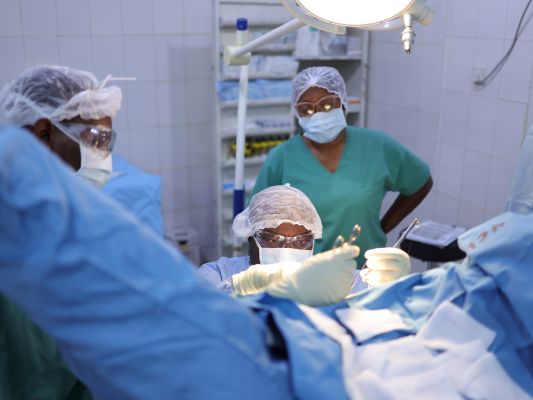
At Jahun General Hospital and Bay Regional Hospital in Baidoa, southwestern Somalia, teams from Médecins Sans Frontières (MSF) and the respective state Ministry of Health provide reconstructive surgery, psychological support, and rehabilitation to women living with obstetric fistula. The Baidoa unit, supported by Somalia’s Ministry of Health, opened in 2025.
The 55-bed fistula ward at the Jahun General Hospital is, by design, more than a surgical facility. Care is free. Women stay between two and three months. Each patient may need one or more reconstructive surgeries, supported by physiotherapy, mental health care and nutrition. Since the project opened in 2008, the teams have performed more than 6,000 fistula surgeries in Jahun. In 2025, 295 women were admitted, and 224 had reconstructive surgery. From January to March 2026, 64 more women had already been admitted to the facility, with 48 already receiving surgical care.
“Most of the women who reach us have already given birth somewhere else or tried to, often at home, and often after several days of labour,” says Dr Raphael Kananga, MSF medical coordinator in Nigeria. “By the time they arrive at our hospital, they have already sustained an injury, often with additional infections and complications. Surgical repair is possible, but this should have been prevented from happening in the first place.”
Aisha has already had two surgeries and is preparing for a third. “At first, I thought I would never be cured,” she says. “Then I came here and saw other women with the same condition. I realised I was not alone.”
In southwestern Somalia, the fistula unit at Bay Regional Hospital offers free surgical repair, pre- and post-operative care, counselling and nutrition support. Since opening, 38 women have been treated. Across the country, several thousand more women are estimated to need this care but are unable to access it. “Many of the women who reach us have lived with this condition for years before they even knew what it was, or that anything could be done about it. Fistula care is not only about surgery. It is about listening, counselling, and helping women rebuild their confidence,” says Frida Athanassiadis, MSF medical coordinator in Somalia
Hodan came to the MSF hospital from a village. She had lived with the condition for eight years before a relative told her about the new service in Baidoa. “For a long time, I did not know there was a name for what was wrong with me. I did not know there was treatment,” she says.
In both countries, demand consistently exceeds capacity. Jahun is the only facility with the capacity to provide vesicovaginal fistula reconstructive surgical services in Jigawa State. In Somalia, the fistula unit at Bay Regional Hospital in Baidoa is the only facility in the Southwest State and one of the few facilities in the country able to offer specialised repair. The limited number of services, combined with insecurity, displacement, poverty and long travel distances, means this care remains beyond reach for most women who need it.
Fistula is completely preventable. What stops fistula from occurring in the first place is clear: antenatal care that identifies risks early, trained midwives within reach of the women they serve, a functional referral pathway, and access to emergency caesarean section before prolonged labour causes tissue damage.
There is an urgent need for sustained investment in maternal and newborn care in both Somalia and Nigeria: antenatal services, skilled birth attendance, timely emergency obstetric care, and specialised repair for the women whose injuries are already there.
