

• Home
  • Agric
  • Sci & Tech
  • Health
  • Environment
  • Hausa News
  • More
    • Business/Banking & Finance
    • POLITICS
    • Entertainments & Sports
    • International
    • Investigation
    • Law & Human Rights
    • Africa
    • ACCOUNTABILITY/CORRUPTION
    • Hassan Gimba
    • Column
    • Prof. Jibrin Ibrahim
    • Prof. M.K. Othman
    • Defense/Security
    • Education
    • Energy/Electricity
    • Entertainment/Arts & Sports
    • Society and Lifestyle
    • Food & Agriculture
    • Health & Healthy Living
    • International News
    • Interviews
    • Investigation/Fact-Check
    • LAW & HUMAN RIGHTS
    • Oil & Gas/Mineral Resources
    • PRESS FREEDOM/JOURNALISM/PR
    • General News
    • Presidency
  • About Us
    • Contact Us
    • Board Of Advisory
    • Privacy Policy
    • Ethics Policy
    • Teamwork And Collaboration Policy
    • Fact-Checking Policy
    • Advertising
  • Media OutReach Newswire
    • Wire News
  • The Stories
Facebook Twitter Instagram
Trending
  • Health workers present Okpebholo with decade award
  • EPHPAN president seeks agency to boost disease prevention
  • Edo identifies 129 erosion sites for urgent action
  • Dangote eyes Ghana for 500,000-tonne cocoa processing deal
  • Sokoto to restore electricity to 4 LGAs with ₦5.5bn
  • FUTA: 256 earn first-class honours at 37th convocation
  • UBTH trains staff to prevent food contamination
  • Rural women learn climate-smart farming in Nasarawa
Facebook Twitter Instagram YouTube
AsheNewsAsheNews
  • Home
  • Agric

    Dangote eyes Ghana for 500,000-tonne cocoa processing deal

    November 13, 2026

    Rural women learn climate-smart farming in Nasarawa

    November 13, 2026

    Kebbi farmers endorse Idris for 2027 re-election

    November 13, 2026

    CBN moves to strengthen credit guarantees, boost private-sector agricultural financing

    November 12, 2026

    Lagos reaffirms food security push

    November 12, 2026
  • Sci & Tech

    Nigeria plans satellite facility in Epe

    November 12, 2026

    3MTT seeks partners to train Nigerians in digital skills

    November 12, 2026

    Expert urges Nigeria to build sovereign AI platform

    November 11, 2026

    NATCOMS flags cybersecurity risks in SPARK loan service

    November 11, 2026

    NITDA unveils 2026 Nigeria tech outlook report

    November 11, 2026
  • Health

    Health workers present Okpebholo with decade award

    November 13, 2026

    EPHPAN president seeks agency to boost disease prevention

    November 13, 2026

    UBTH trains staff to prevent food contamination

    November 13, 2026

    Residents face rising heat as states intensify meningitis prevention

    November 13, 2026

    WHO warns of gaps in TB diagnosis, treatment

    November 13, 2026
  • Environment

    Edo identifies 129 erosion sites for urgent action

    November 13, 2026

    Residents push for stronger environmental health checks

    November 13, 2026

    COP31: Why governments must confront systems exploiting women and Earth, by Melania Chiponda

    November 11, 2026

    FUTA Don urges sustained advocacy against deforestation, technology to assess termite risks

    November 11, 2026

    Igando dumpsite reopening set to ease Lagos waste crisis

    November 11, 2026
  • Hausa News

    Foundation unveils public sector reform playbook

    November 12, 2026

    Tinubu asks Reps to approve N10.79tn external borrowing for 2026 budget

    November 11, 2026

    UNA signs MoU to launch air Bissau in Guinea-Bissau

    June 15, 2026

    Otti plans 250-room 5-star hotel in Umuahia

    April 11, 2026

    Anti-quackery task force seals 4 fake hospitals in Rivers

    August 29, 2025
  • More
    1. Business/Banking & Finance
    2. POLITICS
    3. Entertainments & Sports
    4. International
    5. Investigation
    6. Law & Human Rights
    7. Africa
    8. ACCOUNTABILITY/CORRUPTION
    9. Hassan Gimba
    10. Column
    11. Prof. Jibrin Ibrahim
    12. Prof. M.K. Othman
    13. Defense/Security
    14. Education
    15. Energy/Electricity
    16. Entertainment/Arts & Sports
    17. Society and Lifestyle
    18. Food & Agriculture
    19. Health & Healthy Living
    20. International News
    21. Interviews
    22. Investigation/Fact-Check
    23. LAW & HUMAN RIGHTS
    24. Oil & Gas/Mineral Resources
    25. PRESS FREEDOM/JOURNALISM/PR
    26. General News
    27. Presidency
    Featured
    Recent

    Health workers present Okpebholo with decade award

    November 13, 2026

    EPHPAN president seeks agency to boost disease prevention

    November 13, 2026

    Edo identifies 129 erosion sites for urgent action

    November 13, 2026
  • About Us
    1. Contact Us
    2. Board Of Advisory
    3. Privacy Policy
    4. Ethics Policy
    5. Teamwork And Collaboration Policy
    6. Fact-Checking Policy
    7. Advertising
    Featured
    Recent

    Health workers present Okpebholo with decade award

    November 13, 2026

    EPHPAN president seeks agency to boost disease prevention

    November 13, 2026

    Edo identifies 129 erosion sites for urgent action

    November 13, 2026
  • Media OutReach Newswire
    • Wire News
  • The Stories
AsheNewsAsheNews
Home»Oil & Gas/Mineral Resources»Namibia leads Africa’s mining surge with 800 licence bids
Oil & Gas/Mineral Resources

Namibia leads Africa’s mining surge with 800 licence bids

NewsdeskBy NewsdeskMarch 18, 2026Updated:March 18, 2026No Comments5 Mins Read
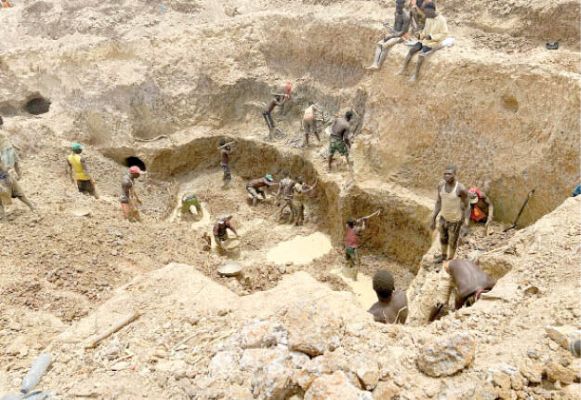
mining-site
Share
Facebook Twitter LinkedIn Pinterest Email

Namibia’s receipt of more than 800 new exploration licence applications is more than a mining statistic—it is a signal of a shifting geopolitical landscape, where Africa is rapidly emerging as a central battleground for control over the minerals powering the global economy.

Across the continent, a new resource contest is taking shape. Governments are accelerating exploration, reforming licensing systems and courting foreign capital, not only to boost revenues but to secure strategic leverage in a world increasingly defined by access to critical minerals, as explored in Africa’s evolving critical minerals strategy.

 Key data snapshot

800+ new exploration licence applications — Namibia

600+ environmental approvals pending

358 new prospecting rights — South Africa (2025)

$20bn+ mining investment — Ghana (2 years)

3m tonnes copper target — Zambia by 2031

$20bn Simandou iron ore project — Guinea

4x projected rise in critical minerals demand by 2040

‘Namibia becomes a strategic frontier’

Namibia’s mining expansion reflects a deliberate pivot from a traditional extractive model towards a more strategic positioning within global supply chains.

Mining Commissioner Isabella Chirchir’s push to digitise licensing and clear a backlog of more than 600 environmental applications is not merely administrative reform—it is a signal to investors that Namibia intends to compete in a fast-moving, capital-intensive sector.

With 588 active prospecting licences already in place, the country is now seeking to extend its reach beyond uranium and diamonds into minerals essential for energy transition technologies.

This shift places Namibia among a new class of African states attempting to redefine their role—not just as resource holders, but as strategic partners in global industrial systems, a transition also highlighted in Namibia’s growing appeal to mining investors.

‘Africa’s resource moment returns—on new terms’

The surge in exploration across Africa echoes earlier commodity booms, but the context has changed fundamentally.

Unlike previous cycles driven largely by raw commodity exports, today’s momentum is anchored in the global race for decarbonisation. Minerals such as copper, cobalt, lithium and iron ore are no longer just economic assets—they are geopolitical instruments.

Organisers of African Mining Week note that countries across the continent are pushing greenfield exploration to unlock new reserves. The objective is not only growth, but positioning—ensuring that Africa is not sidelined in the restructuring of global supply chains.

This evolving dynamic reflects a broader shift across Africa’s mining sector, as governments compete to attract investment and position themselves within global supply chains.

‘Regional powers scale up ambitions’

South Africa, long the continent’s mining anchor, is recalibrating its strategy to retain relevance in a changing global market.

The award of 358 new prospecting rights and 32 mining rights in 2025, alongside R2bn (about $108m) in support for small-scale miners, signals a renewed push to unlock both established and underdeveloped reserves.

What this means: South Africa is repositioning to defend global dominance in platinum group metals while expanding into future-facing minerals.

In West Africa, Ghana is pursuing a parallel strategy. Already Africa’s top gold producer, it is expanding into bauxite, manganese, iron ore, cobalt and nickel, backed by more than $20bn in recent investment inflows.

Trend signal: Multi-mineral strategies are replacing single-commodity dependence across Africa.

‘Strategic projects redefine supply chains’

Elsewhere on the continent, large-scale projects are taking on global significance.

Zambia’s ambition to reach 3m tonnes of copper production annually by 2031 positions it as a critical supplier in the electrification of transport and energy systems worldwide, a strategy outlined in Zambia’s copper expansion roadmap.

Meanwhile, Guinea’s $20bn Simandou project—widely regarded as the world’s largest untapped iron ore deposit—has the potential to reshape global steel markets and alter long-standing supply dynamics, as explored in the Simandou iron ore development.

Big picture: These projects are not isolated—they are strategic assets shaping global supply chains.

Why investors are moving now

Clean energy transition accelerating demand, Supply chain diversification away from single regions, Record gold prices boosting exploration appetite, Policy reforms improving investor confidence, Untapped reserves offering high upside potential

‘A new scramble—this time more complex’

The intensifying global demand for critical minerals, projected to quadruple by 2040, has triggered what many analysts describe as a new scramble for Africa.

But unlike the extractive rushes of the past, this phase is more complex and more contested.

Multiple actors—including Western economies, China, Gulf states and emerging powers—are competing not just for access, but for influence over infrastructure, processing and value addition.

For African governments, this presents both opportunity and risk.

The opportunity lies in leveraging competition to secure better terms, attract technology transfer and expand domestic value chains.

The risk, however, is that without coherent policy frameworks, the continent could once again find itself exporting raw materials while higher-value processing occurs elsewhere—a concern raised in Africa’s resource nationalism debate.

‘Policy, power and the road ahead’

The critical question is whether Africa can convert its current exploration momentum into lasting structural advantage.

Encouragingly, there are signs of policy evolution. Licensing reforms in Namibia, investment incentives in South Africa and diversification strategies in Ghana all point to a more assertive approach.

Yet challenges remain. Regulatory bottlenecks, infrastructure deficits and governance concerns continue to shape investor perceptions and project timelines.

African Mining Week in Cape Town this October is expected to serve as a key platform for aligning these ambitions with practical strategies. https://africabriefing.com/ghana-mahama-africa-resource-sovereignty.

Africa’s mining resurgence is no longer just about extraction—it is about power.

As the global economy reorganises around clean energy and industrial resilience, the continent’s vast mineral wealth is becoming a central pillar of geopolitical competition.

The coming decade will determine whether Africa can translate this advantage into sustained economic transformation—or whether it will once again sit at the margins of value creation in a system built on its own resources.

Culled from africabriefing.com

Namibia
Share. Facebook Twitter Pinterest LinkedIn WhatsApp Reddit Tumblr Email
Newsdesk
  • Website

Related Posts

NNPC: Gas network available, not responsible for current power generation decline

November 8, 2026

CBN appoints 8 agents to monitor Nigeria’s crude oil, gas exports [FULL LIST]

October 31, 2026

Dangote Refinery’s fuel exports surpass domestic supply at 54.63m litres daily

October 30, 2026

Leave A Reply Cancel Reply

Health workers present Okpebholo with decade award

November 13, 2026

EPHPAN president seeks agency to boost disease prevention

November 13, 2026

Edo identifies 129 erosion sites for urgent action

November 13, 2026

Dangote eyes Ghana for 500,000-tonne cocoa processing deal

November 13, 2026
About Us
About Us

ASHENEWS (AsheNewsDaily.com), published by PenPlus Online Media Publishers, is an independent online newspaper. We report development news, especially on Agriculture, Science, Health and Environment as they affect the under-reported rural and urban poor.

We also conduct investigations, especially in the areas of ASHE, as well as other general interests, including corruption, human rights, illicit financial flows, and politics.

Contact Info:
  • 1st floor, Dogon Daji House, No. 5, Maiduguri Road, Sokoto
  • +234(0)7031140009
  • ashenewsdaily@gmail.com
Facebook Twitter Instagram Pinterest
© 2026 All Rights Reserved. ASHENEWS Daily Designed & Managed By DeedsTech

Type above and press Enter to search. Press Esc to cancel.