


By Lizzy Carr
A cross-section of expectant mothers in Bauchi have openly embraced Multiple Micronutrient Supplements (MMS) during pregnancy, citing improvements in their health and pregnancy outcomes.
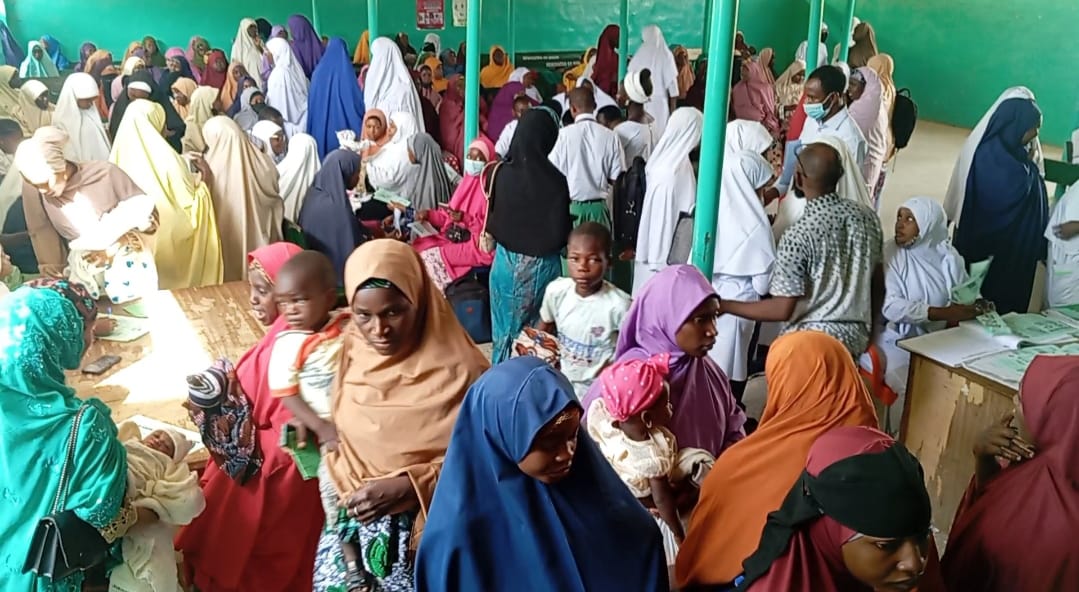
The mothers shared their experiences during an engagement with our correspondent at Urban Maternity Primary Health Care Center, Kofan Ran, Bauchi.
The recent engagement on MMS was born out of a three-day capacity-building training organized by CS-SUNN on strengthening the media’s role in anemia prevention in Nigeria.
The women explained that the supplement helped them maintain strength throughout pregnancy and reduced common complications.
Sadiya Garba, a mother of six, recounted her experience while following the service provider’s directives.
“During my pregnancy, I was given a bottle of MMS, which I took daily.
“I did not experience fatigue or dizziness—conditions I faced in previous pregnancies—so I was not worried about delivery.
“As you can see, both my baby and I are doing fine.
“The healthcare providers also educated us about the supplement, including its benefits in preventing anemia, other pregnancy-related complications, and promoting the birth of healthy babies,” she noted.
Mrs Jamila Adamu, an expectant mother, said MMS was easy to take.
“It has no smell like other pills that can cause nausea in pregnant women. I want the government to make MMS available to all pregnant women so they can safely go through pregnancy and childbirth.
“I also encourage other pregnant women to attend antenatal care (ANC) so they can receive MMS,” she added.
Another nursing mother, Mrs Maryam Sani, described MMS as one of the best interventions to save the lives of mothers and their babies in the state.
The Executive Chairman of the Bauchi State Primary Health Care Board, Dr Rilwanu Mohammed, noted that the state has budgeted N500 million in the 2026 budget as a matching grant under the UNICEF Child Nutrition Fund (CNF).
“The state will release the grant in two installments, with N300 million for the first tranche of procurement.
“We recognise the importance of MMS in preventing anemia, which is why the government allocated N100 million in 2024 and increased it to N300 million in 2025,” Dr Mohammed said.
He added that the state has also procured 4,800 cartons of Ready-to-Use Therapeutic Food (RUTF) and 1.5 million doses of SQLS to manage severe acute malnutrition among children under five.
However, a check at some health facilities in Bauchi indicates there has been a stock-out of MMS, raising concern among beneficiaries.
In a related development, Ms Dabis Mwalike, Bauchi State Coordinator for Civil Society Scaling Up Nutrition in Nigeria (CS-SUNN), said the organization is advocating for access to MMS for all pregnant women in the state.
“CS-SUNN is pleased that many women of reproductive age in Bauchi now understand the importance of MMS and have accepted it.
“What remains is for the state to sustain its supply,” she said.
Responding to the stock-out issue, Ms Hauwa Yohanna Adamu, Officer in Charge of Urban Maternity PHC, explained that the shortage was due to the high influx of pregnant women.
“The stock-out began in January. Pregnant women on their first booking were not given MMS because it was unavailable.
“The PHC is in the urban centre and handles many clients. We run ANC five days a week, seeing a minimum of 70 pregnant women a day, which explains the shortage,” she said.
She added that women on follow-up visits still receive MMS, as each bottle contains 100–180 pills—enough for 3–6 months.
“For now, we give first-time visitors folic acid, fasolate, and health talks on nutritious foods to build the immune system of the mother and the wellbeing of the baby.”
The officer expressed concern over the potential increase in anemia cases across the state.
“At Urban Maternity, out of every 100 pregnant women who visit for ANC, 30 are diagnosed with anemia.
“This is worrying as anemia can lead to pregnancy complications and low birth weight in babies,” she said.
