

• Home
  • Agric
  • Sci & Tech
  • Health
  • Environment
  • Hausa News
  • More
    • Business/Banking & Finance
    • Politics/Elections
    • Entertainments & Sports
    • International
    • Investigation
    • Law & Human Rights
    • Africa
    • ACCOUNTABILITY/CORRUPTION
    • Hassan Gimba
    • Column
    • Prof. Jibrin Ibrahim
    • Prof. M.K. Othman
    • Defense/Security
    • Education
    • Energy/Electricity
    • Entertainment/Arts & Sports
    • Society and Lifestyle
    • Food & Agriculture
    • Health & Healthy Living
    • International News
    • Interviews
    • Investigation/Fact-Check
    • Judiciary/Legislature/Law & Human Rights
    • Oil & Gas/Mineral Resources
    • Press Freedom/Media/PR/Journalism
    • General News
    • Presidency
  • About Us
    • Contact Us
    • Board Of Advisory
    • Privacy Policy
    • Ethics Policy
    • Teamwork And Collaboration Policy
    • Fact-Checking Policy
    • Advertising
  • Media OutReach Newswire
    • Wire News
  • The Stories
Facebook Twitter Instagram
Trending
  • Abia govt approves new climate change policy, prioritises disability inclusion
  • World Hijab Day: Group seek review of NYSC uniforms
  • Libya deports undocumented Nigerian migrants
  • My husband asks for sex 8 times every night, woman tells court
  • Anambra seeks LG chairmen’s support for measles–rubella vaccination campaign
  • Librarians’ Council lauds Northwest varsity for establishing well-equipped library, e-library
  • LAWMA arrests cart pushers for illegal dumping on Lagos–Badagry expressway
  • Kaduna eliminates Trachoma as public health threat
Facebook Twitter Instagram YouTube
AsheNewsAsheNews
  • Home
  • Agric

    How Corteva Agriscience is boosting South Africa’s farming system

    January 31, 2026

    AI-driven project targets climate resilient crops for farmers in Africa

    January 31, 2026

    FG empowers 40 cooperatives with farm inputs in Yobe

    January 30, 2026

    Katsina to host 3,750 housing units, aquaculture project financed by COSMOS

    January 30, 2026

    ActionAid empowers 12,000 FCT farmers with agroecology skills

    January 30, 2026
  • Sci & Tech

    Expert urges federal govt to tackle multiple taxation in telecoms sector

    January 31, 2026

    Airtel Africa mobile money transactions top $210bn as subscribers hit 52m

    January 31, 2026

    Nigeria, KOICA partner to drive digital transformation in public service

    January 30, 2026

    NDPC leads Abuja roadshow to promote data protection awareness

    January 30, 2026

    NOTAP backs Nigerian developers to $1m sales

    January 29, 2026
  • Health

    Anambra seeks LG chairmen’s support for measles–rubella vaccination campaign

    January 31, 2026

    Kaduna eliminates Trachoma as public health threat

    January 31, 2026

    Kogi records milestone in fight against NTDs, halts treatment for Lymphatic filariasis

    January 31, 2026

    Bauchi introduces nutrition supplement to tackle child undernutrition

    January 31, 2026

    Bus crash En route to Bayelsa deputy gov burial leaves 2 dead

    January 30, 2026
  • Environment

    Abia govt approves new climate change policy, prioritises disability inclusion

    January 31, 2026

    LAWMA arrests cart pushers for illegal dumping on Lagos–Badagry expressway

    January 31, 2026

    YASIF, IBM train 15,000 Nigerian youths for green, digital economy

    January 31, 2026

    Kukah urges religious leaders to speak out against environmental exploitation

    January 31, 2026

    LASEMA holds retreat to honor responders, boost emergency preparedness

    January 31, 2026
  • Hausa News

    Anti-quackery task force seals 4 fake hospitals in Rivers

    August 29, 2025

    [BIDIYO] Yadda na lashe gasa ta duniya a fannin Ingilishi – Rukayya ‘yar shekara 17

    August 6, 2025

    A Saka Baki, A Sasanta Saɓani Tsakanin ‘Yanjarida Da Liman, Daga Muhammad Sajo

    May 21, 2025

    Dan majalisa ya raba kayan miliyoyi a Funtuwa da Dandume

    March 18, 2025

    [VIDIYO] Fassarar mafalki akan aikin Hajji

    January 6, 2025
  • More
    1. Business/Banking & Finance
    2. Politics/Elections
    3. Entertainments & Sports
    4. International
    5. Investigation
    6. Law & Human Rights
    7. Africa
    8. ACCOUNTABILITY/CORRUPTION
    9. Hassan Gimba
    10. Column
    11. Prof. Jibrin Ibrahim
    12. Prof. M.K. Othman
    13. Defense/Security
    14. Education
    15. Energy/Electricity
    16. Entertainment/Arts & Sports
    17. Society and Lifestyle
    18. Food & Agriculture
    19. Health & Healthy Living
    20. International News
    21. Interviews
    22. Investigation/Fact-Check
    23. Judiciary/Legislature/Law & Human Rights
    24. Oil & Gas/Mineral Resources
    25. Press Freedom/Media/PR/Journalism
    26. General News
    27. Presidency
    Featured
    Recent

    Abia govt approves new climate change policy, prioritises disability inclusion

    January 31, 2026

    World Hijab Day: Group seek review of NYSC uniforms

    January 31, 2026

    Libya deports undocumented Nigerian migrants

    January 31, 2026
  • About Us
    1. Contact Us
    2. Board Of Advisory
    3. Privacy Policy
    4. Ethics Policy
    5. Teamwork And Collaboration Policy
    6. Fact-Checking Policy
    7. Advertising
    Featured
    Recent

    Abia govt approves new climate change policy, prioritises disability inclusion

    January 31, 2026

    World Hijab Day: Group seek review of NYSC uniforms

    January 31, 2026

    Libya deports undocumented Nigerian migrants

    January 31, 2026
  • Media OutReach Newswire
    • Wire News
  • The Stories
AsheNewsAsheNews
Home»Food & Agriculture»World Bank: Cassava, rice, maize, wheat supply 45% of Africa’s calories
Food & Agriculture

World Bank: Cassava, rice, maize, wheat supply 45% of Africa’s calories

Abdallah el-KurebeBy Abdallah el-KurebeJanuary 19, 2026Updated:January 19, 2026No Comments4 Mins Read
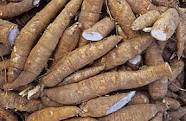
Cassava
Share
Facebook Twitter LinkedIn Pinterest Email

Cassava, rice, maize, and wheat account for 45 per cent of the calories consumed across Africa, highlighting the continent’s heavy reliance on just a few staple foods.

This finding is contained in a World Bank report titled “Food at a Crossroads: The Nexus Between Transport, Logistics, and Food Security in Africa.”

The report warns that such dependence leaves Africa vulnerable to supply disruptions, rising food prices, and climate-related shocks.

According to the World Bank, while these four staples dominate Africa’s diet, a large portion is imported from Europe, South Asia, and other regions.

Africa imports over 30 million tonnes of maize, more than 35 million tonnes of rice, and around 60 million tonnes of wheat every year.

“Just four key commodities account for 45 per cent of caloric intake across Africa — cassava, rice, maize, and wheat.

“A large portion of these commodities is imported from Europe, South Asia, and elsewhere, making transport a pivotal component in helping to address the challenges of food insecurity in Africa,” the report read in part.

After arriving on the continent, these staples face delays due to inadequate port infrastructure, inefficient logistics, and long inland journeys.

On average, food travels about 4,000 kilometres over 23 days in Africa — four times longer than in Europe — increasing the risk of spoilage, losses, and delayed delivery to households.

Seaports handle 14 per cent of Africa’s food imports, rising to 22 per cent for landlocked countries and 37 per cent for the lowest-income nations. However, many ports suffer from outdated systems, low capacity, and poor infrastructure, creating critical choke points in the food supply chain.

After clearance, imported staples must navigate weak road networks, congested borders, and poor rural connectivity. These transport challenges drive up costs, reduce food availability, and make staples less affordable for consumers.

The World Bank report noted that investments in port infrastructure, railways, and roads, along with streamlined logistics and simplified border procedures, could reduce delays, improve reliability, and support intra-African trade.

Even after transport, inadequate storage infrastructure exacerbates Africa’s food insecurity. The report noted that 20 per cent of cereals, 25 per cent of rice and maize, and up to 40 per cent of fruits and vegetables are lost before reaching consumers.

Losses of cassava, maize, rice, and wheat grew from 22.5 million tonnes in 2010 to 33.8 million tonnes in 2022 — equivalent to nearly 30 per cent of annual imports.

The report emphasised that investing in modern storage facilities, improving logistics, and applying proper handling techniques could significantly reduce these losses, ensuring more food reaches households safely and consistently.

On the Nigerian front, the country faces a looming food insecurity challenge. The United Nations Food and Agriculture Organization (FAO) projected that about 34.7 million Nigerians could experience severe food shortages during the 2026 lean season, from June to August.

The agency said the risk would persist if timely interventions were not implemented. Rising production costs, conflicts in key farming regions, economic shocks, and limited access to markets and credit were driving the threat.

A recent Nairametrics survey of farmers in the North-Central and North-West regions found that Nigeria faces a food crisis in 2026.

Farmers reported that soaring costs for fertiliser, fuel, and labour, combined with insecurity and limited government support, were making farming increasingly unprofitable.

Many had reduced cultivation or were considering abandoning their farms altogether. The survey also highlighted that the collapse of earlier support schemes, such as the Anchor Borrowers’ Programme, and poor rural infrastructure had further discouraged production.

Targeted support, including subsidised inputs, improved access to credit, mechanisation programmes, and enhanced rural security, is critical to avert severe food shortages in 2026.

Cassava Maize Rice Wheat World Bank
Share. Facebook Twitter Pinterest LinkedIn WhatsApp Reddit Tumblr Email
Abdallah el-Kurebe
  • Website
  • Facebook
  • Twitter
  • LinkedIn

Related Posts

How Corteva Agriscience is boosting South Africa’s farming system

January 31, 2026

AI-driven project targets climate resilient crops for farmers in Africa

January 31, 2026

FG empowers 40 cooperatives with farm inputs in Yobe

January 30, 2026

Leave A Reply Cancel Reply

Abia govt approves new climate change policy, prioritises disability inclusion

January 31, 2026

World Hijab Day: Group seek review of NYSC uniforms

January 31, 2026

Libya deports undocumented Nigerian migrants

January 31, 2026

My husband asks for sex 8 times every night, woman tells court

January 31, 2026
About Us
About Us

ASHENEWS (AsheNewsDaily.com), published by PenPlus Online Media Publishers, is an independent online newspaper. We report development news, especially on Agriculture, Science, Health and Environment as they affect the under-reported rural and urban poor.

We also conduct investigations, especially in the areas of ASHE, as well as other general interests, including corruption, human rights, illicit financial flows, and politics.

Contact Info:
  • 1st floor, Dogon Daji House, No. 5, Maiduguri Road, Sokoto
  • +234(0)7031140009
  • ashenewsdaily@gmail.com
Facebook Twitter Instagram Pinterest
© 2026 All Rights Reserved. ASHENEWS Daily Designed & Managed By DeedsTech

Type above and press Enter to search. Press Esc to cancel.