


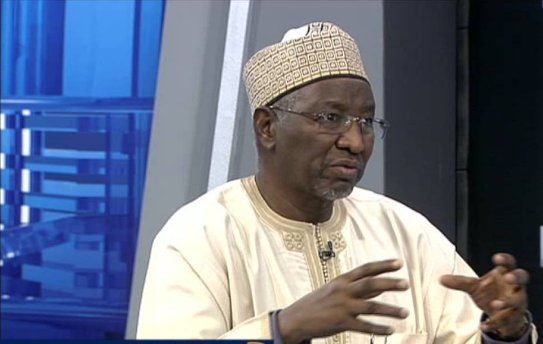
Nigeria’s political crisis, according to political activist and scholar, Dr. Usman Bugaje, is rooted in the absence of visionary thinking, as the country is dominated by influential individuals who lack transformative ideas capable of driving national development.
Bugaje made the assertion in Abuja while speaking at a public lecture organised to mark the 60th birthday of former Speaker of the House of Representatives and ex-Governor of Sokoto State, Senator Aminu Waziri Tambuwal. He said Nigeria’s leadership problem is not the shortage of powerful personalities, but the failure of the ruling elite to articulate and pursue a clear national vision.
According to him, Nigeria is replete with so-called “big men” who command influence and resources but are unable to offer bold, coherent ideas that can unite the country and address its deep-seated challenges. He noted that political parties in the country have largely abandoned ideology, reducing politics to a contest of personalities rather than ideas.
Bugaje argued that nations that have successfully transformed their economies and societies did so by rallying around compelling national ideas. He cited countries such as Japan, South Korea and Singapore as examples where leadership was driven by vision, discipline and long-term planning, rather than personal ambition.
He lamented that Nigeria’s political elite have failed to define what the country stands for or where it intends to go, resulting in weak governance outcomes, persistent insecurity, widespread poverty and social dislocation. He stressed that without a unifying idea, leadership recruitment remains flawed and governance continues to be reactive rather than strategic.
The political commentator called for a fundamental rethink of Nigeria’s political culture, urging leaders to prioritise ideas, values and national interest over ethnic sentiment, patronage and short-term political gains. He maintained that genuine progress would only be possible when leadership is anchored on integrity, competence and a clear sense of purpose.
Bugaje also commended Senator Tambuwal for his consistency in public service and his commitment to democratic principles, describing the former Speaker as one of the few political leaders who understands the importance of institutions and constitutionalism in national development.
The lecture was part of activities marking Tambuwal’s 60th birthday and attracted political leaders, academics, civil society actors and members of the public. Beyond celebrating the former governor, the event provided a platform for critical reflection on Nigeria’s leadership trajectory and the urgent need for ideas-driven governance.
