

• Home
  • Agric
  • Sci & Tech
  • Health
  • Environment
  • Hausa News
  • More
    • Business/Banking & Finance
    • POLITICS
    • Entertainments & Sports
    • International
    • Investigation
    • Law & Human Rights
    • Africa
    • ACCOUNTABILITY/CORRUPTION
    • Hassan Gimba
    • Column
    • Prof. Jibrin Ibrahim
    • Prof. M.K. Othman
    • Defense/Security
    • Education
    • Energy/Electricity
    • Entertainment/Arts & Sports
    • Society and Lifestyle
    • Food & Agriculture
    • Health & Healthy Living
    • International News
    • Interviews
    • Investigation/Fact-Check
    • LAW & HUMAN RIGHTS
    • Oil & Gas/Mineral Resources
    • PRESS FREEDOM/JOURNALISM/PR
    • General News
    • Presidency
  • About Us
    • Contact Us
    • Board Of Advisory
    • Privacy Policy
    • Ethics Policy
    • Teamwork And Collaboration Policy
    • Fact-Checking Policy
    • Advertising
  • Media OutReach Newswire
    • Wire News
  • The Stories
Facebook Twitter Instagram
Trending
  • Nigeria fully digitized 38 MDAs, says civil service head
  • NCS urges better use of community sports facilities in Apapa
  • Nigeria launches N50m fund for cancer patients
  • Nigeria’s current account surplus jumps 256% to $4.98bn in Q1 2026
  • IWMI, IFPRI link Kano farmers to solar irrigation support
  • NCS urges border officers to prioritize safety
  • Keke riders protest police harassment in Warri
  • NEDC boosts healthcare in Adamawa
Facebook Twitter Instagram YouTube
AsheNewsAsheNews
  • Home
  • Agric

    IWMI, IFPRI link Kano farmers to solar irrigation support

    June 17, 2026

    Dangote expects over $4bn annual forex earnings from fertiliser exports

    June 16, 2026

    AFAN Kano calls for fertilizer subsidy to boost agriculture

    June 16, 2026

    Food security expert urges youth involvement in agriculture

    June 16, 2026

    Jigawa farmers hope for bumper harvest

    June 15, 2026
  • Sci & Tech

    Nigeria fully digitized 38 MDAs, says civil service head

    June 17, 2026

    Anambra trains 480 in tech skills

    June 17, 2026

    Ericsson reports rapid growth in global 5G subscriptions

    June 16, 2026

    Musk predicts SpaceX could generate $1trn revenue by 2030

    June 15, 2026

    NCDMB trains 160 youths in AI, data analytics

    June 12, 2026
  • Health

    Nigeria launches N50m fund for cancer patients

    June 17, 2026

    NEDC boosts healthcare in Adamawa

    June 17, 2026

    Niger intensifies Ebola screening for returning pilgrims from Saudi Arabia

    June 17, 2026

    Two centuries of healing: How Sokoto’s legacy powered UDUTH’s breakthrough kidney transplant

    June 17, 2026

    Bauchi gov commends F4H for saving lives

    June 17, 2026
  • Environment

    GlobalFact summit brings 500 fact-checkers from 80 countries to Lithuania

    June 17, 2026

    All injured passengers discharged after train accident

    June 16, 2026

    SWEEP calls for waste management reforms in Lagos

    June 16, 2026

    Chairman pledges continued crackdowns on criminal hideouts

    June 16, 2026

    ACR calls for national honor for plastic bottle house pioneer

    June 15, 2026
  • Hausa News

    UNA signs MoU to launch air Bissau in Guinea-Bissau

    June 15, 2026

    Otti plans 250-room 5-star hotel in Umuahia

    April 11, 2026

    Anti-quackery task force seals 4 fake hospitals in Rivers

    August 29, 2025

    [BIDIYO] Yadda na lashe gasa ta duniya a fannin Ingilishi – Rukayya ‘yar shekara 17

    August 6, 2025

    A Saka Baki, A Sasanta Saɓani Tsakanin ‘Yanjarida Da Liman, Daga Muhammad Sajo

    May 21, 2025
  • More
    1. Business/Banking & Finance
    2. POLITICS
    3. Entertainments & Sports
    4. International
    5. Investigation
    6. Law & Human Rights
    7. Africa
    8. ACCOUNTABILITY/CORRUPTION
    9. Hassan Gimba
    10. Column
    11. Prof. Jibrin Ibrahim
    12. Prof. M.K. Othman
    13. Defense/Security
    14. Education
    15. Energy/Electricity
    16. Entertainment/Arts & Sports
    17. Society and Lifestyle
    18. Food & Agriculture
    19. Health & Healthy Living
    20. International News
    21. Interviews
    22. Investigation/Fact-Check
    23. LAW & HUMAN RIGHTS
    24. Oil & Gas/Mineral Resources
    25. PRESS FREEDOM/JOURNALISM/PR
    26. General News
    27. Presidency
    Featured
    Recent

    Nigeria fully digitized 38 MDAs, says civil service head

    June 17, 2026

    NCS urges better use of community sports facilities in Apapa

    June 17, 2026

    Nigeria launches N50m fund for cancer patients

    June 17, 2026
  • About Us
    1. Contact Us
    2. Board Of Advisory
    3. Privacy Policy
    4. Ethics Policy
    5. Teamwork And Collaboration Policy
    6. Fact-Checking Policy
    7. Advertising
    Featured
    Recent

    Nigeria fully digitized 38 MDAs, says civil service head

    June 17, 2026

    NCS urges better use of community sports facilities in Apapa

    June 17, 2026

    Nigeria launches N50m fund for cancer patients

    June 17, 2026
  • Media OutReach Newswire
    • Wire News
  • The Stories
AsheNewsAsheNews
Home»Food & Agriculture»South Africa places biosecurity at the centre of G20 agricultural agenda
Food & Agriculture

South Africa places biosecurity at the centre of G20 agricultural agenda

NewsdeskBy NewsdeskNovember 22, 2025Updated:November 22, 2025No Comments5 Mins Read
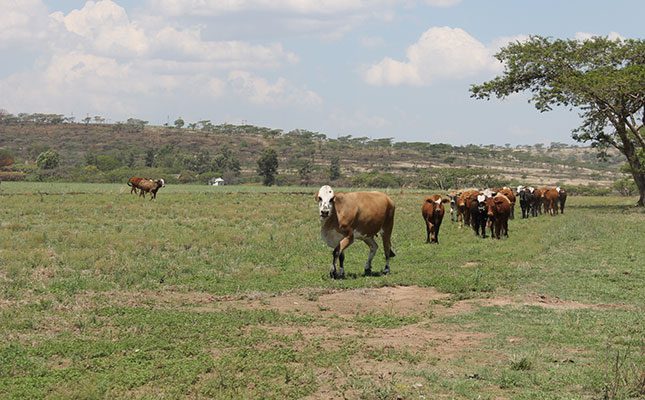
As diseases like foot-and-mouth disease continue to challenge livestock farming, stronger biosecurity and better surveillance remain essential for protecting herds across South Africa.
Share
Facebook Twitter LinkedIn Pinterest Email

From foot-and-mouth disease (FMD) and highly pathogenic avian influenza (HPAI) to crop pests, the country has made it clear that African producers cannot carry the burden of disease outbreaks alone.

For farmers, the outcomes of the G20 Leaders’ Summit will not solve their challenges overnight. However, they will shift the global playing field in ways that matter for day-to-day farming, export prospects, and future disease preparedness.

Importantly, South Africa’s G20 presidency has positioned the continent as a global leader in pushing for stronger, better-funded, more coordinated biosecurity systems.

Why biosecurity became the G20’s top agricultural priority

South Africa has faced a series of devastating disease outbreaks in recent years, including FMD, HPAI, lumpy skin disease, and African swine fever. Each outbreak costs the country millions in lost trade and causes massive disruptions and financial losses for livestock and poultry farmers.

During the G20, the case was made that:

  • Climate change is accelerating the spread of pests and diseases;
  • Africa’s surveillance systems are uneven and underfunded;
  • Outbreaks undermine food security and rural livelihoods; and
  • No country can manage disease threats alone.

These arguments seemingly landed, and for the first time, the G20 endorsed a global biosecurity co-operation agenda led by an African nation.

What the G20 Agriculture Working Group agreed to, and why it matters

  1. A regional cross-border disease surveillance network: This includes satellite-supported monitoring and pathogen genomics, which are tools that can detect diseases earlier and more accurately. For producers, this translates into:
  • Faster outbreak warnings;
  • Better tracking of disease movement; and
  • Fewer surprises that shut down livestock movement or sales.
  1. Standardised rapid-response protocols: The G20 backed the development of harmonised emergency playbooks for FMD, HPAI, and emerging zoonoses.

This should, over time, mean:

  • Fewer delays in government action;
  • More predictable decision-making during outbreaks; and
  • Clearer farm-level guidance when movement controls kick in.
  1. Quicker, more transparent disease reporting

Producers often complain that they receive outbreak information long after the disease has spread. The G20 endorsed a commitment to globally interoperable data systems that make reporting faster and more transparent.

This will help farmers make properly informed decisions sooner, including movement planning and vaccination strategies.

  1. Investment in diagnostic laboratories

South Africa strongly pushed for this. The G20 agreed that Africa needs:

  • More diagnostic labs;
  • Upgraded equipment;
  • Mobile testing units; and
  • Quicker sample turnaround.

This is one of the most direct wins for farmers. Slow lab feedback has often exacerbated outbreaks; thus improved capacity will shorten containment times and reduce the scale of losses.

How Australia fits into South Africa’s biosecurity push

Australia has one of the strongest biosecurity systems in the world, and during the G20, South Africa deepened its agricultural relationship with the former. During bilateral engagements, South African officials highlighted three areas where Australian experience could immediately strengthen our own systems:

  1. Strong public–private co-operation: In Australia, industry bodies, government, and researchers collectively set priorities and fund disease-prevention work. Farmers have a direct say in what the system focuses on.
  2. Co-funded research and biosecurity budgets: Australian farmers pay commodity levies, and government matches every dollar of industry funding. This model creates stable financial support for biosecurity research and disease surveillance.
  3. Highly coordinated national–state response systems: Outbreaks are managed through clear protocols shared between all levels of government, which is something South Africa still battles with during FMD and HPAI outbreaks. Our livestock industry could benefit significantly from a similar approach.

What the G20 biosecurity decisions mean for farmers right now

The benefits will roll out gradually, but several improvements are on the horizon:

  • Faster outbreak detection: better surveillance and quicker lab results mean farmers get earlier warnings and clearer guidance.
  • More predictable export conditions: harmonised sanitary and phytosanitary measures will reduce the risk of sudden market closures, especially for beef, wool, dairy, and poultry exporters.
  • Improved communication during disease outbreaks: the G20 push for better data-sharing, which should result in more timely information reaching producers.
  • Greater investment in veterinary services: with G20 support behind Africa’s biosecurity systems, funding for vets, laboratories, and border controls is more likely to be realised.
  • Stronger justification for upgrading South Africa’s own systems: government can now align domestic biosecurity reforms with global priorities, giving weight to planned upgrades under the Agriculture and Agro-processing Master Plan.

For South Africa to turn these global commitments into real change, the next steps for the country need to be:

  1. Finalising a national biosecurity compact covering disease surveillance, rapid response, and cross-border coordination.
  2. Upgrading laboratories and provincial veterinary capacity, especially in high-risk livestock zones.
  3. Improving on-farm preparedness with clearer biosecurity guidelines and proper extensive training for producers.
  4. Strengthening border inspection and movement-control systems.
  5. Building a public-private research funding model similar to the Australian levy-matching system.

These are all achievable, but will only be effective with consistent goal-orientated implementation.

The bottom line

South Africa’s G20 presidency has achieved one of the most important global shifts for agriculture in years: it elevated biosecurity from a local challenge to an international priority. For producers, this means the world is finally recognising what they experience every day – an increasing risk of disease and intensifying climate pressures – and that better cooperation is essential.

With the right follow-through, the G20 summit outcomes could mark the beginning of a safer, more predictable, and more export-competitive era for South African agriculture.

Biosecurity is no longer a side issue; it’s a core pillar of profitability, resilience, and the future of food production.

biosecurity From foot-and-mouth disease South Africa
Share. Facebook Twitter Pinterest LinkedIn WhatsApp Reddit Tumblr Email
Newsdesk
  • Website

Related Posts

IWMI, IFPRI link Kano farmers to solar irrigation support

June 17, 2026

Dangote expects over $4bn annual forex earnings from fertiliser exports

June 16, 2026

AFAN Kano calls for fertilizer subsidy to boost agriculture

June 16, 2026

Leave A Reply Cancel Reply

Nigeria fully digitized 38 MDAs, says civil service head

June 17, 2026

NCS urges better use of community sports facilities in Apapa

June 17, 2026

Nigeria launches N50m fund for cancer patients

June 17, 2026

Nigeria’s current account surplus jumps 256% to $4.98bn in Q1 2026

June 17, 2026
About Us
About Us

ASHENEWS (AsheNewsDaily.com), published by PenPlus Online Media Publishers, is an independent online newspaper. We report development news, especially on Agriculture, Science, Health and Environment as they affect the under-reported rural and urban poor.

We also conduct investigations, especially in the areas of ASHE, as well as other general interests, including corruption, human rights, illicit financial flows, and politics.

Contact Info:
  • 1st floor, Dogon Daji House, No. 5, Maiduguri Road, Sokoto
  • +234(0)7031140009
  • ashenewsdaily@gmail.com
Facebook Twitter Instagram Pinterest
© 2026 All Rights Reserved. ASHENEWS Daily Designed & Managed By DeedsTech

Type above and press Enter to search. Press Esc to cancel.