

• Home
  • Agric
  • Sci & Tech
  • Health
  • Environment
  • Hausa News
  • More
    • Business/Banking & Finance
    • POLITICS
    • Entertainments & Sports
    • International
    • Investigation
    • Law & Human Rights
    • Africa
    • ACCOUNTABILITY/CORRUPTION
    • Hassan Gimba
    • Column
    • Prof. Jibrin Ibrahim
    • Prof. M.K. Othman
    • Defense/Security
    • Education
    • Energy/Electricity
    • Entertainment/Arts & Sports
    • Society and Lifestyle
    • Food & Agriculture
    • Health & Healthy Living
    • International News
    • Interviews
    • Investigation/Fact-Check
    • LAW & HUMAN RIGHTS
    • Oil & Gas/Mineral Resources
    • PRESS FREEDOM/JOURNALISM/PR
    • General News
    • Presidency
  • About Us
    • Contact Us
    • Board Of Advisory
    • Privacy Policy
    • Ethics Policy
    • Teamwork And Collaboration Policy
    • Fact-Checking Policy
    • Advertising
  • Media OutReach Newswire
    • Wire News
  • The Stories
Facebook Twitter Instagram
Trending
  • Perplexity AI locks in 2028 IPO date, won’t wait for Anthropic or OpenAI to market
  • Key drivers for water utility improvement highlighted at Abuja workshop
  • Kenyan police clash with protesters over U.S. Ebola quarantine center
  • SUNU health Nigeria to launch mobile app for easier healthcare access
  • Shell Nigeria gas highlights gas expansion for industrial growth
  • WHO chief urges Uganda to keep borders open amid Ebola outbreak
  • Primary deadlines: Why we’re appealing court ruling – INEC
  • Warri–Itakpe train derails, kills infant, 3 others in Delta
Facebook Twitter Instagram YouTube
AsheNewsAsheNews
  • Home
  • Agric

    AANI, DGF launch support program for women, youths in Kaduna

    June 8, 2026

    FAO highlights data’s role in ensuring food safety

    June 8, 2026

    N-HYPPADEC distributes power tillers to Kaduna farmers

    June 6, 2026

    Niger Assembly approves $14.4m loan to finance Niger Foods

    June 3, 2026

    Expert: Nigerian food products face export challenges

    June 3, 2026
  • Sci & Tech

    Perplexity AI locks in 2028 IPO date, won’t wait for Anthropic or OpenAI to market

    June 9, 2026

    Q4 2025: TikTok removes over 4m videos in Nigeria

    June 9, 2026

    NCC appoints princess Emiko as interim DBI chair

    June 9, 2026

    Okedeyi calls for more investment in climate physics

    June 8, 2026

    NCC supports girls in ICT with industry excursion for 185 students

    June 8, 2026
  • Health

    SUNU health Nigeria to launch mobile app for easier healthcare access

    June 9, 2026

    WHO chief urges Uganda to keep borders open amid Ebola outbreak

    June 9, 2026

    NAFDAC starts pharmacovigilance assessment in Kwara

    June 9, 2026

    Malaria campaign launches for children under 5 in FCT

    June 8, 2026

    Expert warns of rabies risk from unvaccinated stray dogs

    June 8, 2026
  • Environment

    Key drivers for water utility improvement highlighted at Abuja workshop

    June 9, 2026

    Warri–Itakpe train derails, kills infant, 3 others in Delta

    June 9, 2026

    LASTMA rescues victim in hit, run on Lekki-Epe expressway

    June 8, 2026

    Fire destroys Iyanu plastic store in Osogbo, property worth millions lost

    June 8, 2026

    Edo fire service controls market blaze

    June 8, 2026
  • Hausa News

    Otti plans 250-room 5-star hotel in Umuahia

    April 11, 2026

    Anti-quackery task force seals 4 fake hospitals in Rivers

    August 29, 2025

    [BIDIYO] Yadda na lashe gasa ta duniya a fannin Ingilishi – Rukayya ‘yar shekara 17

    August 6, 2025

    A Saka Baki, A Sasanta Saɓani Tsakanin ‘Yanjarida Da Liman, Daga Muhammad Sajo

    May 21, 2025

    Dan majalisa ya raba kayan miliyoyi a Funtuwa da Dandume

    March 18, 2025
  • More
    1. Business/Banking & Finance
    2. POLITICS
    3. Entertainments & Sports
    4. International
    5. Investigation
    6. Law & Human Rights
    7. Africa
    8. ACCOUNTABILITY/CORRUPTION
    9. Hassan Gimba
    10. Column
    11. Prof. Jibrin Ibrahim
    12. Prof. M.K. Othman
    13. Defense/Security
    14. Education
    15. Energy/Electricity
    16. Entertainment/Arts & Sports
    17. Society and Lifestyle
    18. Food & Agriculture
    19. Health & Healthy Living
    20. International News
    21. Interviews
    22. Investigation/Fact-Check
    23. LAW & HUMAN RIGHTS
    24. Oil & Gas/Mineral Resources
    25. PRESS FREEDOM/JOURNALISM/PR
    26. General News
    27. Presidency
    Featured
    Recent

    Perplexity AI locks in 2028 IPO date, won’t wait for Anthropic or OpenAI to market

    June 9, 2026

    Key drivers for water utility improvement highlighted at Abuja workshop

    June 9, 2026

    Kenyan police clash with protesters over U.S. Ebola quarantine center

    June 9, 2026
  • About Us
    1. Contact Us
    2. Board Of Advisory
    3. Privacy Policy
    4. Ethics Policy
    5. Teamwork And Collaboration Policy
    6. Fact-Checking Policy
    7. Advertising
    Featured
    Recent

    Perplexity AI locks in 2028 IPO date, won’t wait for Anthropic or OpenAI to market

    June 9, 2026

    Key drivers for water utility improvement highlighted at Abuja workshop

    June 9, 2026

    Kenyan police clash with protesters over U.S. Ebola quarantine center

    June 9, 2026
  • Media OutReach Newswire
    • Wire News
  • The Stories
AsheNewsAsheNews
Home»Health & Healthy Living»Ethics in child reporting: Lessons from Kano state
Health & Healthy Living

Ethics in child reporting: Lessons from Kano state

EditorBy EditorSeptember 2, 2025Updated:September 2, 2025No Comments4 Mins Read
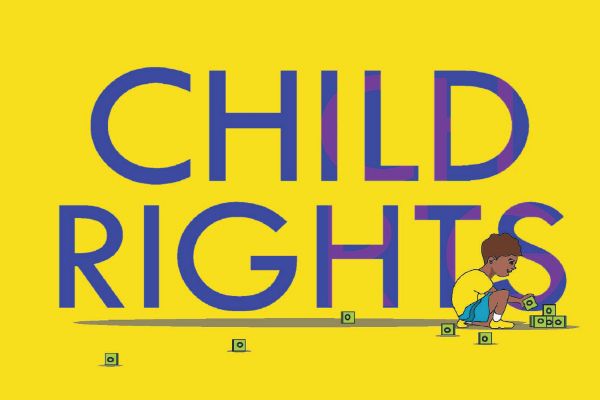
The National Child Rights Implementation Committee (NCRIC) has called for a review of the Child Rights Act (CRA) to meet the current realities in Nigeria.
Share
Facebook Twitter LinkedIn Pinterest Email

When I arrived at the Tahir Guest Palace in Kano State on August 31st, I knew the next two days would be about child rights. But I did not anticipate just how much the training, organized by the Child Rights Information Bureau (CRIB) in collaboration with UNICEF, would reshape my understanding of journalism itself.

For two days, I joined fellow journalists from across Nigeria at the Tahir Guest Palace in Kano for a dialogue that challenged us to rethink the way we report on children. Organized by the Child Rights Information Bureau (CRIB) of the Federal Ministry of Information and National Orientation in collaboration with UNICEF, the training went beyond theory — it confronted us with the real consequences of our work.

The sessions were practical and engaging. They forced us to confront the hidden harm our profession can cause when stories about children are told carelessly.

One illustration that stuck with me was the case of the identified survivor. Imagine a young girl who has survived abduction and gender-based violence. She is traumatized and terrified. Yet, in search of a “powerful” headline, her name, photograph, and village are published. In an instant, she is permanently stigmatized. Her community whispers, her future marriage prospects dim, and her dignity is shattered. The very story meant to expose her suffering ends up re-victimizing her.
The tone was set during the keynote address by Mr. Rahama Rihood Mohammed Farah, Chief of the UNICEF Field Office in Kano state. He reminded us that careless reporting can wound children a second time, even more deeply than the original abuse. He highlighted some of the dangers: the identification of survivors, the use of graphic or sensationalist reporting, and the exploitative interview. Each, he warned, can stigmatize, traumatize, and exploit vulnerable children, and must be avoided if journalism is to protect rather than harm.

That keynote provided the foundation for sessions that were professionally and adequately handled by veteran journalists and media experts. Chief lecturer, mass communication department at Nigeria institute of Journalism Dr. Jide Johnson lectured on child psychology in sensitive stories and ethical interviewing, stressing that empathy must guide every encounter with child survivors. Mr. Lekan Sote, a seasoned journalist, unpacked language and framing — urging us to highlight resilience and positive narratives rather than portray children merely as victims. Nansel Nimyel a former staff of NTA took us deeper into the challenges of broadcast and digital media, discussing TV, radio, and social platforms where speed often competes with sensitivity.

Equally memorable was the role of Susan Akila of UNICEF, whose professional insights were both practical and inspiring. Her contributions reinforced the idea that journalism must always serve the best interest of the child. I still recall her conviction that stories about children can be told powerfully without causing harm a principle that will remain evergreen in my memory.

The group discussions were equally superb, giving participants the space to share personal experiences, question old habits, and exchange ideas on how best to protect children in reportage. It was a beautiful interaction that reminded me that journalism is not just about telling stories — it is about building communities of practice where ethics guide every pen, camera, and microphone.

For me, another lasting reminder came from Samuel Kaalu, UNICEF Communication Specialist, who told us that responsible reporting is advocacy in itself — it shapes public perception and can drive policy change. His words underscored the central lesson of the programme: ethical storytelling is not about restraint but about using journalism to protect children and amplify their rights.

For me, the greatest impact of the Kano dialogue was the call to action it placed on our shoulders:

To fact-check relentlessly, even under deadline pressure.

To make the best interest of the child a non-negotiable principle.

To balance stories with multiple perspectives.

To hold ourselves and our colleagues accountable in the newsroom.
As the sessions ended, I left convinced that the story of Northwest Nigeria — and indeed our nation — should not only be about hardship. It should also be about resilience, hope, and the strength of communities. And that story can only be told when we protect those who cannot protect themselves: the nation’s treasures — children.

By Usman Mohammed Binji

Child Rights UNICEF
Share. Facebook Twitter Pinterest LinkedIn WhatsApp Reddit Tumblr Email
Editor
  • Website

Related Posts

SUNU health Nigeria to launch mobile app for easier healthcare access

June 9, 2026

WHO chief urges Uganda to keep borders open amid Ebola outbreak

June 9, 2026

NAFDAC starts pharmacovigilance assessment in Kwara

June 9, 2026

Leave A Reply Cancel Reply

Perplexity AI locks in 2028 IPO date, won’t wait for Anthropic or OpenAI to market

June 9, 2026

Key drivers for water utility improvement highlighted at Abuja workshop

June 9, 2026

Kenyan police clash with protesters over U.S. Ebola quarantine center

June 9, 2026

SUNU health Nigeria to launch mobile app for easier healthcare access

June 9, 2026
About Us
About Us

ASHENEWS (AsheNewsDaily.com), published by PenPlus Online Media Publishers, is an independent online newspaper. We report development news, especially on Agriculture, Science, Health and Environment as they affect the under-reported rural and urban poor.

We also conduct investigations, especially in the areas of ASHE, as well as other general interests, including corruption, human rights, illicit financial flows, and politics.

Contact Info:
  • 1st floor, Dogon Daji House, No. 5, Maiduguri Road, Sokoto
  • +234(0)7031140009
  • ashenewsdaily@gmail.com
Facebook Twitter Instagram Pinterest
© 2026 All Rights Reserved. ASHENEWS Daily Designed & Managed By DeedsTech

Type above and press Enter to search. Press Esc to cancel.