

• Home
  • Agric
  • Sci & Tech
  • Health
  • Environment
  • Hausa News
  • More
    • Business/Banking & Finance
    • Politics/Elections
    • Entertainments & Sports
    • International
    • Investigation
    • Law & Human Rights
    • Africa
    • ACCOUNTABILITY/CORRUPTION
    • Hassan Gimba
    • Column
    • Prof. Jibrin Ibrahim
    • Prof. M.K. Othman
    • Defense/Security
    • Education
    • Energy/Electricity
    • Entertainment/Arts & Sports
    • Society and Lifestyle
    • Food & Agriculture
    • Health & Healthy Living
    • International News
    • Interviews
    • Investigation/Fact-Check
    • Judiciary/Legislature/Law & Human Rights
    • Oil & Gas/Mineral Resources
    • Press Freedom/Media/PR/Journalism
    • General News
    • Presidency
  • About Us
    • Contact Us
    • Board Of Advisory
    • Privacy Policy
    • Ethics Policy
    • Teamwork And Collaboration Policy
    • Fact-Checking Policy
    • Advertising
  • Media OutReach Newswire
    • Wire News
  • The Stories
Facebook Twitter Instagram
Trending
  • Onireti appointed Oyo DG of City Boy Movement
  • Diagnostic accuracy in Nigerian health facilities drops
  • Over 1,100 artisans empowered in Etsako constituency
  • N-HYPPADEC moves to ease Dukku water shortage
  • APWEN Lagos urges women engineers to prioritise health
  • [VIEWPOINT] Why Nigerian banks are losing the race against real-time crime, By Adedayo Aluko 
  • Soludo urges Anambra residents to prioritise healthy daily habits 
  • PTDF screens 173 candidates in South-East for overseas scholarships
Facebook Twitter Instagram YouTube
AsheNewsAsheNews
  • Home
  • Agric

    ABU’s NAPRI targets 25,000 chicks in 2026 production cycle

    April 7, 2026

    Capital inflows: Nigeria’s agriculture attracts $167.25m in 2025

    April 6, 2026

    IFC commits $20m to SONOCO group to boost poultry sector and food security

    April 6, 2026

    Nigeria suspends onion exports to Ghana

    April 6, 2026

    Agege residents benefit from food discount

    April 5, 2026
  • Sci & Tech

    APWEN Lagos urges women engineers to prioritise health

    April 8, 2026

    UNDP launches AI UniPod at UNILAG

    April 7, 2026

    ABU’s NAPRI targets 25,000 chicks in 2026 production cycle

    April 7, 2026

    Why AI health chatbots should not make you your own doctor

    April 6, 2026

    Nutanix partners with rapidFort to strengthen kubernetes platform security

    April 5, 2026
  • Health

    Diagnostic accuracy in Nigerian health facilities drops

    April 8, 2026

    Soludo urges Anambra residents to prioritise healthy daily habits 

    April 7, 2026

    Kogi revamps 150 PHCs across LGAs

    April 7, 2026

    Mahama leads 18-member health reform push to France

    April 7, 2026

    Plateau boosts healthcare with science-based policies

    April 7, 2026
  • Environment

    Over 1,100 artisans empowered in Etsako constituency

    April 8, 2026

    N-HYPPADEC moves to ease Dukku water shortage

    April 8, 2026

    NiMet forecasts 3-day sunshine, cloudiness across Nigeria

    April 7, 2026

    British, Oxford experts explore NRC railway heritage collaboration

    April 6, 2026

    LASEMA responds to 2 Lagos fires

    April 5, 2026
  • Hausa News

    Anti-quackery task force seals 4 fake hospitals in Rivers

    August 29, 2025

    [BIDIYO] Yadda na lashe gasa ta duniya a fannin Ingilishi – Rukayya ‘yar shekara 17

    August 6, 2025

    A Saka Baki, A Sasanta Saɓani Tsakanin ‘Yanjarida Da Liman, Daga Muhammad Sajo

    May 21, 2025

    Dan majalisa ya raba kayan miliyoyi a Funtuwa da Dandume

    March 18, 2025

    [VIDIYO] Fassarar mafalki akan aikin Hajji

    January 6, 2025
  • More
    1. Business/Banking & Finance
    2. Politics/Elections
    3. Entertainments & Sports
    4. International
    5. Investigation
    6. Law & Human Rights
    7. Africa
    8. ACCOUNTABILITY/CORRUPTION
    9. Hassan Gimba
    10. Column
    11. Prof. Jibrin Ibrahim
    12. Prof. M.K. Othman
    13. Defense/Security
    14. Education
    15. Energy/Electricity
    16. Entertainment/Arts & Sports
    17. Society and Lifestyle
    18. Food & Agriculture
    19. Health & Healthy Living
    20. International News
    21. Interviews
    22. Investigation/Fact-Check
    23. Judiciary/Legislature/Law & Human Rights
    24. Oil & Gas/Mineral Resources
    25. Press Freedom/Media/PR/Journalism
    26. General News
    27. Presidency
    Featured
    Recent

    Onireti appointed Oyo DG of City Boy Movement

    April 8, 2026

    Diagnostic accuracy in Nigerian health facilities drops

    April 8, 2026

    Over 1,100 artisans empowered in Etsako constituency

    April 8, 2026
  • About Us
    1. Contact Us
    2. Board Of Advisory
    3. Privacy Policy
    4. Ethics Policy
    5. Teamwork And Collaboration Policy
    6. Fact-Checking Policy
    7. Advertising
    Featured
    Recent

    Onireti appointed Oyo DG of City Boy Movement

    April 8, 2026

    Diagnostic accuracy in Nigerian health facilities drops

    April 8, 2026

    Over 1,100 artisans empowered in Etsako constituency

    April 8, 2026
  • Media OutReach Newswire
    • Wire News
  • The Stories
AsheNewsAsheNews
Home»Health & Healthy Living»[EXPLAINER] What is bilateral tubal ligation (BTL)?
Health & Healthy Living

[EXPLAINER] What is bilateral tubal ligation (BTL)?

Abdallah el-KurebeBy Abdallah el-KurebeMarch 29, 2025Updated:March 29, 2025No Comments4 Mins Read
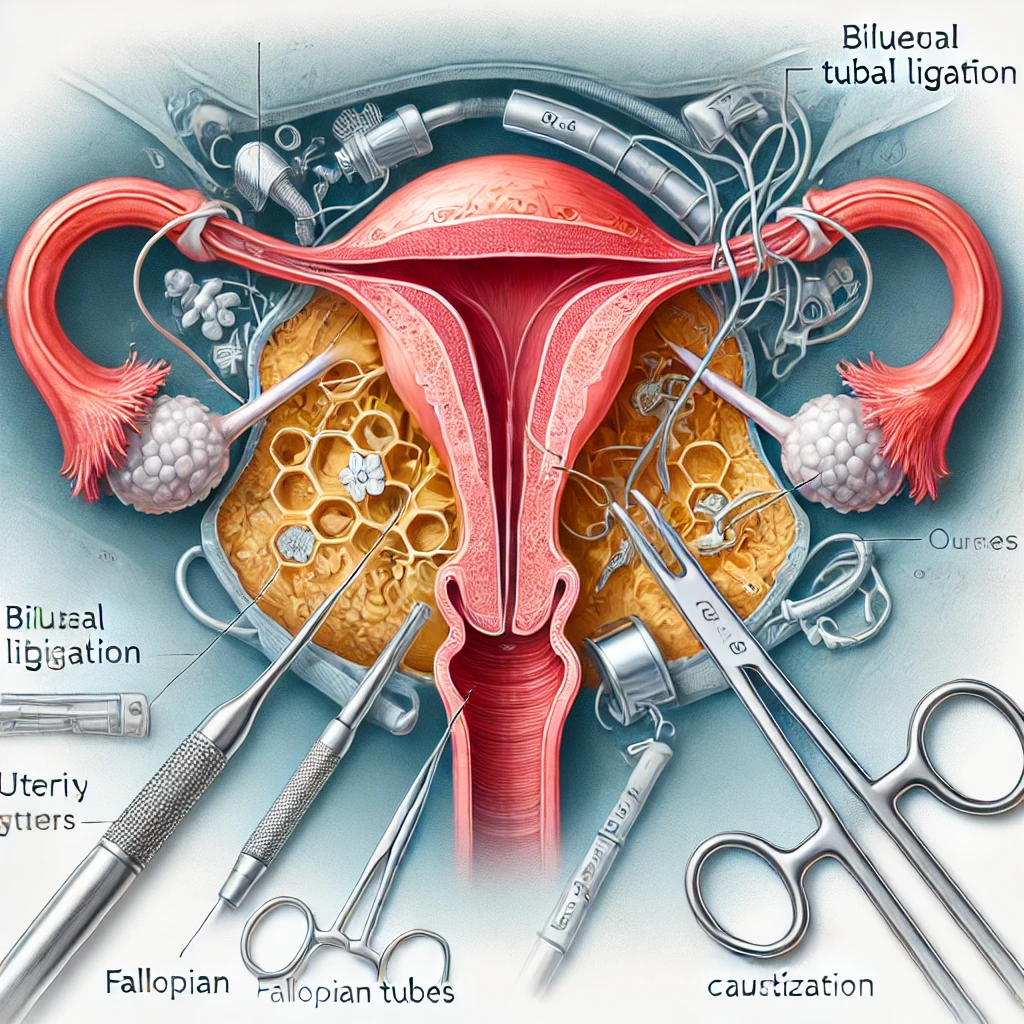
A medical illustration of Bilateral Tubal Ligation (BTL), depicting a surgical procedure where a doctor clamps, cuts, or seals a woman's fallopian tub
Share
Facebook Twitter LinkedIn Pinterest Email

Bilateral tubal ligation (BTL) is a surgical procedure used for permanent female sterilization. During the procedure, both fallopian tubes are cut, tied, or blocked to prevent eggs from traveling from the ovaries to the uterus, thereby preventing pregnancy. It is considered a highly effective form of contraception.

Factors that lead to the decision to undergo BTL

Bilateral tubal ligation (BTL) is a surgical procedure in which both fallopian tubes are blocked, cut, or sealed to prevent pregnancy. It is a form of permanent female sterilization. Several factors can lead to the decision to undergo BTL, including:

  1. Family planning:
    • Women who have completed their desired family size may opt for BTL as a permanent contraceptive method.
  2. Medical conditions:
    • Certain health conditions where pregnancy could endanger the mother’s life, such as severe heart disease, kidney disease, or uncontrolled diabetes, may warrant sterilization.
  3. Genetic concerns:
    • If there is a risk of passing on genetic disorders to offspring, BTL may be considered to prevent future pregnancies.
  4. Ectopic pregnancy:
    • Women with a history of ectopic pregnancies (pregnancies occurring outside the uterus, usually in the fallopian tubes) may undergo BTL to prevent recurrence.
  5. Pelvic inflammatory disease (PID):
    • Severe or recurrent PID can damage the fallopian tubes, making sterilization a necessary option in some cases.
  6. Endometriosis or chronic pelvic pain:
    • Women suffering from endometriosis or chronic pelvic pain may have their tubes removed as part of a broader treatment plan.
  7. Postpartum sterilization:
    • Some women choose to undergo BTL immediately after delivery, particularly following a cesarean section.
  8. Personal or socioeconomic factors:
    • Personal choice, economic hardship, or social factors may lead women to consider permanent contraception.
  9. Contraceptive failure or incompatibility:
    • If other forms of contraception are ineffective or not suitable, BTL may be a preferred option.
  10. Coercion or lack of informed consent:
  • In some cases, especially in vulnerable populations, women may undergo BTL without proper consent, which is unethical and illegal in many countries.

Healthcare providers need to ensure that women receive proper counseling before undergoing BTL, as it is generally irreversible.

How it works:

  • Purpose: BTL is a surgical procedure designed to prevent pregnancy by blocking the fallopian tubes, which are the tubes that carry eggs from the ovaries to the uterus. 
  • Procedure: During the surgery, the fallopian tubes are either cut, blocked, or sealed off to prevent sperm from meeting an egg. 
  • Effectiveness: BTL is a highly effective method of birth control with a very low failure rate. 
  • Permanence: BTL is considered a permanent method of contraception, and while reversal surgeries are possible, they are not always successful. 
  • Alternatives: If a woman later desires to have children after a BTL, options like in vitro fertilization (IVF) can be considered. 

Considerations:

  • Before undergoing BTL, it’s crucial to be certain about not wanting any more children, as BTL is a permanent procedure. 
  • Risks: As with any surgery, BTL carries some risks, including infection, bleeding, and anaesthesia-related complications. 

Reversibility of bilateral tubal ligation

While BTL is meant to be permanent, it can sometimes be reversed through a procedure called tubal ligation reversal (tubal reanastomosis). During the reversal, the surgeon attempts to reconnect the fallopian tubes, allowing the possibility of natural conception. However, the success of the reversal depends on several factors, including:

  • Type of Tubal Ligation: Some methods are easier to reverse than others. For example, clips or rings are more reversible than those involving cauterization (burning) or complete removal of the tubes.
  • Age and Overall Health: Younger women generally have a higher success rate.
  • Remaining Tube Length: A longer tube increases the chances of a successful reversal.
  • Fertility Factors: Other reproductive health factors, like egg quality and partner’s sperm health, also play a role.

Success rates for reversal vary from 40% to 80%, with higher success for women under 35. Alternatively, in vitro fertilization (IVF) is often recommended if reversal is not viable.

bilateral tubal ligation (BTL) Family planning
Share. Facebook Twitter Pinterest LinkedIn WhatsApp Reddit Tumblr Email
Abdallah el-Kurebe
  • Website
  • Facebook
  • Twitter
  • LinkedIn

Related Posts

Diagnostic accuracy in Nigerian health facilities drops

April 8, 2026

Soludo urges Anambra residents to prioritise healthy daily habits 

April 7, 2026

Kogi revamps 150 PHCs across LGAs

April 7, 2026

Leave A Reply Cancel Reply

Onireti appointed Oyo DG of City Boy Movement

April 8, 2026

Diagnostic accuracy in Nigerian health facilities drops

April 8, 2026

Over 1,100 artisans empowered in Etsako constituency

April 8, 2026

N-HYPPADEC moves to ease Dukku water shortage

April 8, 2026
About Us
About Us

ASHENEWS (AsheNewsDaily.com), published by PenPlus Online Media Publishers, is an independent online newspaper. We report development news, especially on Agriculture, Science, Health and Environment as they affect the under-reported rural and urban poor.

We also conduct investigations, especially in the areas of ASHE, as well as other general interests, including corruption, human rights, illicit financial flows, and politics.

Contact Info:
  • 1st floor, Dogon Daji House, No. 5, Maiduguri Road, Sokoto
  • +234(0)7031140009
  • ashenewsdaily@gmail.com
Facebook Twitter Instagram Pinterest
© 2026 All Rights Reserved. ASHENEWS Daily Designed & Managed By DeedsTech

Type above and press Enter to search. Press Esc to cancel.