

• Home
  • Agric
  • Sci & Tech
  • Health
  • Environment
  • Hausa News
  • More
    • Business/Banking & Finance
    • Politics/Elections
    • Entertainments & Sports
    • International
    • Investigation
    • Law & Human Rights
    • Africa
    • ACCOUNTABILITY/CORRUPTION
    • Hassan Gimba
    • Column
    • Prof. Jibrin Ibrahim
    • Prof. M.K. Othman
    • Defense/Security
    • Education
    • Energy/Electricity
    • Entertainment/Arts & Sports
    • Society and Lifestyle
    • Food & Agriculture
    • Health & Healthy Living
    • International News
    • Interviews
    • Investigation/Fact-Check
    • Judiciary/Legislature/Law & Human Rights
    • Oil & Gas/Mineral Resources
    • Press Freedom/Media/PR/Journalism
    • General News
    • Presidency
  • About Us
    • Contact Us
    • Board Of Advisory
    • Privacy Policy
    • Ethics Policy
    • Teamwork And Collaboration Policy
    • Fact-Checking Policy
    • Advertising
  • Media OutReach Newswire
    • Wire News
  • The Stories
Facebook Twitter Instagram
Trending
  • Onireti appointed Oyo DG of City Boy Movement
  • Diagnostic accuracy in Nigerian health facilities drops
  • Over 1,100 artisans empowered in Etsako constituency
  • N-HYPPADEC moves to ease Dukku water shortage
  • APWEN Lagos urges women engineers to prioritise health
  • [VIEWPOINT] Why Nigerian banks are losing the race against real-time crime, By Adedayo Aluko 
  • Soludo urges Anambra residents to prioritise healthy daily habits 
  • PTDF screens 173 candidates in South-East for overseas scholarships
Facebook Twitter Instagram YouTube
AsheNewsAsheNews
  • Home
  • Agric

    ABU’s NAPRI targets 25,000 chicks in 2026 production cycle

    April 7, 2026

    Capital inflows: Nigeria’s agriculture attracts $167.25m in 2025

    April 6, 2026

    IFC commits $20m to SONOCO group to boost poultry sector and food security

    April 6, 2026

    Nigeria suspends onion exports to Ghana

    April 6, 2026

    Agege residents benefit from food discount

    April 5, 2026
  • Sci & Tech

    APWEN Lagos urges women engineers to prioritise health

    April 8, 2026

    UNDP launches AI UniPod at UNILAG

    April 7, 2026

    ABU’s NAPRI targets 25,000 chicks in 2026 production cycle

    April 7, 2026

    Why AI health chatbots should not make you your own doctor

    April 6, 2026

    Nutanix partners with rapidFort to strengthen kubernetes platform security

    April 5, 2026
  • Health

    Diagnostic accuracy in Nigerian health facilities drops

    April 8, 2026

    Soludo urges Anambra residents to prioritise healthy daily habits 

    April 7, 2026

    Kogi revamps 150 PHCs across LGAs

    April 7, 2026

    Mahama leads 18-member health reform push to France

    April 7, 2026

    Plateau boosts healthcare with science-based policies

    April 7, 2026
  • Environment

    Over 1,100 artisans empowered in Etsako constituency

    April 8, 2026

    N-HYPPADEC moves to ease Dukku water shortage

    April 8, 2026

    NiMet forecasts 3-day sunshine, cloudiness across Nigeria

    April 7, 2026

    British, Oxford experts explore NRC railway heritage collaboration

    April 6, 2026

    LASEMA responds to 2 Lagos fires

    April 5, 2026
  • Hausa News

    Anti-quackery task force seals 4 fake hospitals in Rivers

    August 29, 2025

    [BIDIYO] Yadda na lashe gasa ta duniya a fannin Ingilishi – Rukayya ‘yar shekara 17

    August 6, 2025

    A Saka Baki, A Sasanta Saɓani Tsakanin ‘Yanjarida Da Liman, Daga Muhammad Sajo

    May 21, 2025

    Dan majalisa ya raba kayan miliyoyi a Funtuwa da Dandume

    March 18, 2025

    [VIDIYO] Fassarar mafalki akan aikin Hajji

    January 6, 2025
  • More
    1. Business/Banking & Finance
    2. Politics/Elections
    3. Entertainments & Sports
    4. International
    5. Investigation
    6. Law & Human Rights
    7. Africa
    8. ACCOUNTABILITY/CORRUPTION
    9. Hassan Gimba
    10. Column
    11. Prof. Jibrin Ibrahim
    12. Prof. M.K. Othman
    13. Defense/Security
    14. Education
    15. Energy/Electricity
    16. Entertainment/Arts & Sports
    17. Society and Lifestyle
    18. Food & Agriculture
    19. Health & Healthy Living
    20. International News
    21. Interviews
    22. Investigation/Fact-Check
    23. Judiciary/Legislature/Law & Human Rights
    24. Oil & Gas/Mineral Resources
    25. Press Freedom/Media/PR/Journalism
    26. General News
    27. Presidency
    Featured
    Recent

    Onireti appointed Oyo DG of City Boy Movement

    April 8, 2026

    Diagnostic accuracy in Nigerian health facilities drops

    April 8, 2026

    Over 1,100 artisans empowered in Etsako constituency

    April 8, 2026
  • About Us
    1. Contact Us
    2. Board Of Advisory
    3. Privacy Policy
    4. Ethics Policy
    5. Teamwork And Collaboration Policy
    6. Fact-Checking Policy
    7. Advertising
    Featured
    Recent

    Onireti appointed Oyo DG of City Boy Movement

    April 8, 2026

    Diagnostic accuracy in Nigerian health facilities drops

    April 8, 2026

    Over 1,100 artisans empowered in Etsako constituency

    April 8, 2026
  • Media OutReach Newswire
    • Wire News
  • The Stories
AsheNewsAsheNews
Home»Viewpoint»Why Kwankwaso was singled out in a US bill, By Farooq Kperogi
Viewpoint

Why Kwankwaso was singled out in a US bill, By Farooq Kperogi

EditorBy EditorFebruary 12, 2026Updated:February 12, 2026No Comments5 Mins Read
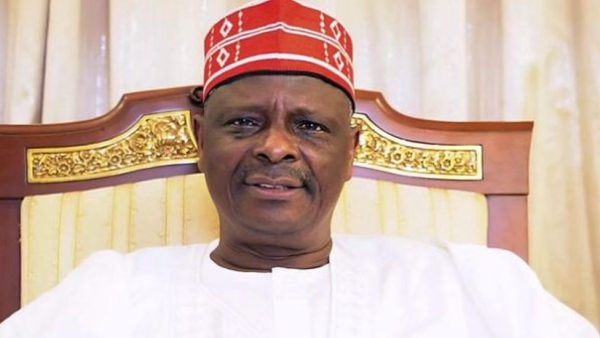
Rabiu-Musa-Kwankwaso
Rabiu-Musa-Kwankwaso, NNPP National Leader
Share
Facebook Twitter LinkedIn Pinterest Email

I was initially surprised, shocked even, that of all northern Nigerian Muslim politicians, Rabiu Musa Kwankwaso was the one Republican congressmen singled out for a possible visa ban and asset freeze in their “Nigeria Religious Freedom and Accountability Act of 2026” bill. Daily Trust’s explainer, which I will return to shortly, clarified the logic for me.

Anyone with even the faintest familiarity with Kwankwaso’s trajectory and disposition knows that he is not, by any stretch of the imagination, a religious fanatic.

As Kano’s governor, he was famously (and for Sharia advocates, infamously) unenthusiastic about the introduction of Sharia in 2000. I know because I covered the intrigues that culminated in its declaration that year, as this screenshot testifies.

ALSO READ US lawmakers push sanctions bill targeting Kwankwaso, Miyetti Allah

My June 30, 2000, Weekly Trust report, co-written with the paper’s then Kano correspondent Sulaiman Aliyu and titled “Sharia: Triumph of Kano Masses,” showed that Kwankwaso resisted declaring Sharia for months and was at odds with both everyday people and the Muslim clerical establishment over the matter.

Unlike in several other Muslim northern states, Kano’s Sharia bill was a private bill. Neither Kwankwaso nor state legislators sponsored it. This exposed him to such intense pressure and danger that he temporarily stopped attending public functions. His deputy, Abdullahi Ganduje, often represented him.

On some occasions, public anger directed at Kwankwaso spilt over to Ganduje, including an incident in which he was stoned during a Maulud celebration while standing in for his principal.

In my June 30 to July 6, 2000, report I summarized Kwankwaso’s predicament in these words: “The governor was trapped in a delicate cul-de-sac. And his escape route was the launching of Sharia on the 21st of June 2000.”

During the formal launch of Sharia in Kano, which I covered as Weekly Trust’s Assistant News Editor, Kwankwaso stated, “Only the state government has the right to punish offenders. We should avoid taking the law into our hands. We should not intimidate those who are not Muslims.” That is not the rhetoric of a religious extremist.

After being compelled to declare Sharia against his preferences, his implementation of it was widely perceived as lukewarm. He remained in persistent tension with segments of the ulama. This was the single most important reason why he lost reelection in 2003 to Ibrahim Shekarau, the candidate of the Kano clerical establishment.

Interestingly, Kwankwaso’s reluctance both to declare Sharia initially and to pursue an aggressive implementation afterwards fed one of the more bizarre rumors about his identity. Certain individuals circulated the demonstrably false claim that he was an Igbo man whose surname was supposedly a corruption of “Okonkwo and Sons.”

Reuben Abati raised this during an Arise TV interview in early 2023, a moment I analyzed in my February 9, 2023, article titled “Kwankwaso’s Superhuman Restraint During Arise TV Interview.”

As Dr Hussaini Abdu observed during our last month’s Diaspora Dialogues podcast, “Wike, Kwankwaso and Godfatherism in the Fourth Republic,” Kwankwaso’s continuing uneasy relationship with influential clerical actors partly explains his cultivation of populist support among ordinary Kano residents.

By any reasonable political or sociological measure, Kwankwaso is an improbable candidate for accusations of religious extremism.

Why, then, did Riley Moore and his colleagues single him out? The explanation is straightforward. Kwankwaso was the only nationally prominent Nigerian politician who openly criticized the United States’ designation of Nigeria as a Country of Particular Concern.

In a public statement, he argued that the designation was unhelpful, reduced a complex problem to simplistic binaries, risked exacerbating interreligious tensions, and that cooperation would be more constructive than confrontation.

Moore reacted sharply on Twitter (now X), writing: “Governor, do you care to comment on your own complicity in the death of Christians? You instituted Sharia law. You signed the law that makes so-called blasphemy punishable by death.”

Kwankwaso ignored the provocation. Even if he had chosen to respond, it is unclear how a social media exchange could have accommodated the historical and political complexities surrounding Sharia’s adoption in Kano.

The episode illustrates a familiar dynamic in contemporary politics. Public criticism of U.S. policy by foreign political actors can generate personalized responses, especially when filtered through ideological and religious advocacy frameworks. Kwankwaso’s inclusion in the bill appears less rooted in his actual record than in his dissent from a particular U.S. policy posture and his refusal to engage in a performative online dispute.

It is also important to note that the bill remains at the introduction stage in the House of Representatives. Several procedural hurdles stand between introduction and passage into law. The measure must pass committee scrutiny, secure House approval, clear the Senate, survive any reconciliation process, and receive presidential assent.

A review of Congress.gov indicates that most Nigeria-specific standalone bills do not advance beyond the introduced or referred stages.

Meanwhile, this seems to me like a rhetorical and political gift to Kwankwaso, whom I once dismissed as a “local champion” at the expense of inviting the raw rage of his supporters. He has struggled for years to gain political traction outside Kano.

This is probably the gift he has been waiting for to become the unofficial Sardauna of Hausaphone Muslim Arewa, like Muhammadu Buhari was.

Rabiu Kwankwaso Sanctions US Congress
Share. Facebook Twitter Pinterest LinkedIn WhatsApp Reddit Tumblr Email
Editor
  • Website

Related Posts

[VIEWPOINT] Why Ondo North deserves better candidate, By Ayedogbon Ayodele

April 7, 2026

The essential Gbenga Daniel: A titan of two worlds, By Adegbenro Adebanjo

April 6, 2026

The VAT paradox in Nigeria: Why economic vibrancy does not always translate to revenue – Chiwuike Uba, Ph.D.

March 16, 2026

Leave A Reply Cancel Reply

Onireti appointed Oyo DG of City Boy Movement

April 8, 2026

Diagnostic accuracy in Nigerian health facilities drops

April 8, 2026

Over 1,100 artisans empowered in Etsako constituency

April 8, 2026

N-HYPPADEC moves to ease Dukku water shortage

April 8, 2026
About Us
About Us

ASHENEWS (AsheNewsDaily.com), published by PenPlus Online Media Publishers, is an independent online newspaper. We report development news, especially on Agriculture, Science, Health and Environment as they affect the under-reported rural and urban poor.

We also conduct investigations, especially in the areas of ASHE, as well as other general interests, including corruption, human rights, illicit financial flows, and politics.

Contact Info:
  • 1st floor, Dogon Daji House, No. 5, Maiduguri Road, Sokoto
  • +234(0)7031140009
  • ashenewsdaily@gmail.com
Facebook Twitter Instagram Pinterest
© 2026 All Rights Reserved. ASHENEWS Daily Designed & Managed By DeedsTech

Type above and press Enter to search. Press Esc to cancel.