


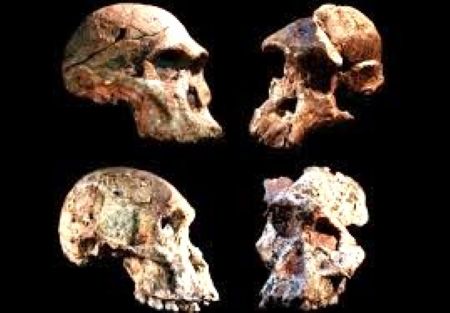
Researchers have uncovered 2.6-million-year-old hominin remains in Ethiopia’s Afar region, marking the first confirmed discovery of the genus Paranthropus in that part of the country.
Fana Media Corporation (FMC), a partner of TV BRICS, reported that the fossil was excavated at the Mille–Logya site, a key paleoanthropological location in Afar. Experts say the find fills a long-standing gap in the region’s fossil record and provides new insight into the evolutionary history of early humans.
Ethiopia, widely regarded as the “Land of Origins,” has produced hominin fossils and stone tools dating back nearly six million years, offering one of the most comprehensive records of human ancestry in the world. While remains from Ardipithecus, Australopithecus and Homo have previously been identified in Afar, Paranthropus fossils had been notably absent until now.
Deputy Director-General of the Ethiopian Heritage Authority, Elias Shikur, described the discovery as a major milestone, saying it reinforces Ethiopia’s status as the “Cradle of Humankind.” He noted that the find highlights the value of collaboration between Ethiopian and international scientists and further elevates the country’s global standing in the study of human origins.
Shikur added that recent fossil discoveries are likely to attract increased international attention, strengthening Ethiopia’s profile in scientific research, cultural tourism and global partnerships.
“The Afar region is emerging as a leading centre for paleoanthropological research, with clear evidence that multiple early human species once thrived here,” he said.
The Ethiopian Heritage Authority reaffirmed its commitment to supporting young researchers, deepening partnerships with international institutions and providing institutional backing for ongoing research initiatives.
