


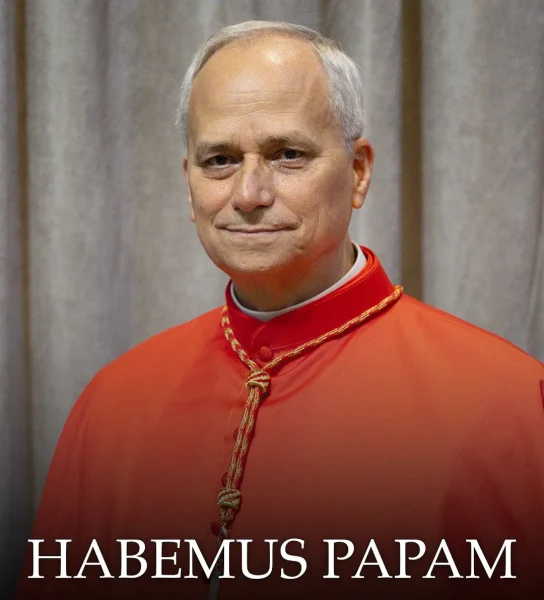
Pope Leo XIV has warned against the growing tendency to rely on artificial intelligence and algorithms for decisions that require human judgment and conscience.
The Pope issued the warning on Wednesday during his weekly general audience at St Peter’s Square in the Vatican, where he addressed thousands of worshippers.
He acknowledged that technological advances, mass media, social networks and artificial intelligence have created new opportunities by reducing barriers and distances between people.
However, he cautioned that the increasing use of technology could make human relationships less personal and more virtual, while encouraging people to hand over decisions that should remain within the realm of human conscience to algorithms.
According to him, maintaining meaningful, personal relationships is an important contribution the Christian community seeks to make in an increasingly digital society.
The Pope’s comments come amid growing global concerns about the risks posed by rapidly advancing AI systems, including recent security incidents and the emergence of models capable of improving their performance with limited human intervention.
The debate has also expanded to questions around how effectively the AI industry can regulate itself as the technology becomes more powerful and widespread.
In May, Pope Leo XIV used his first major document, Magnifica Humanitas (Magnificent Humanity), to call for measures to prevent artificial intelligence from becoming a force that dominates human beings.
The Vatican has subsequently intensified its advocacy for international governance of AI based on human dignity, including discussions involving nuclear technology, culture and artistic creation.
The Pope’s latest intervention places human responsibility and ethical judgment at the centre of the debate over how societies should adopt and govern increasingly capable AI technologies.
