


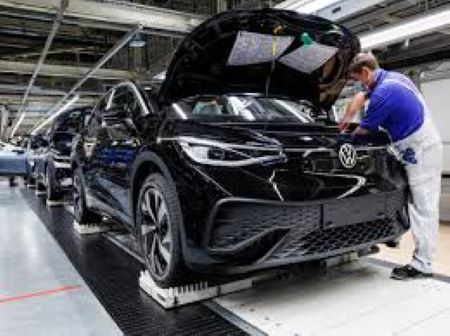
As part of the “First Nigeria” Policy under President Bola Tinubu’s administration, the Nigerian government has selected 12 universities to pioneer the production of electric vehicles (EVs) in the country.
The Director-General of the National Automotive Design and Development Council (NADDC), Mr. Oluwemimo Osanipin, disclosed this during a stakeholders’ engagement in Uyo, Akwa Ibom State. The session was held with members of the Association of Motor Dealers of Nigeria (AMDON) and the Nigeria Automotive Manufacturers Association (NAMA), under the theme “Import of Used Cars and Dealership Regulation in Nigeria.”
According to Mr. Osanipin, the selected universities—two from each of the six geopolitical zones—will serve as hubs for EV development, backed by funding from the Bank of Industry and other key financial institutions.
“We are working with twelve universities on a programme to design and develop what we call the University Shuttle Bus, which will be 100% electric,” he said. “The vehicle will be designed in Nigeria with most parts sourced locally.”
The initiative is part of a broader strategy to develop Nigeria’s capacity in components and parts manufacturing, laying the groundwork for fully homegrown electric vehicles. Mr. Osanipin emphasized that no automaker in the world produces all vehicle components in-house, noting that Nigeria is focusing on areas where it holds a comparative advantage, such as plastic parts derived from petroleum by-products.
He added that the federal government has already begun installing EV charging stations in the selected universities, with ten campuses set to be equipped in the initial rollout phase.
“Our goal is to build foundational infrastructure to support electric mobility and component manufacturing,” he said. “By increasing local parts production, we’re not only supporting vehicle assembly but also addressing the after-sales service market, which currently serves over 18 million vehicles on Nigerian roads.”
The move, Mr. Osanipin said, marks a significant step towards realizing the First Nigeria Policy’s vision of achieving 100% locally manufactured electric vehicles.
