


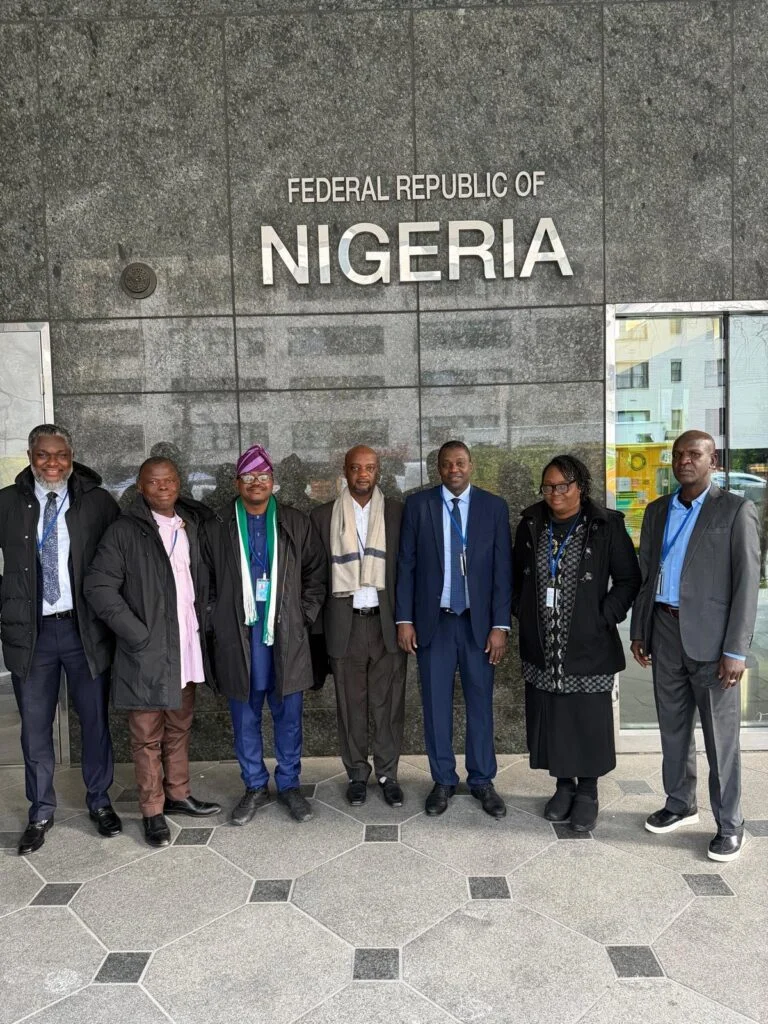
Nigeria has unveiled a comprehensive strategy to localize its commitments under the World Summit on the Information Society (WSIS+20).
Kashifu Inuwa, Director-General of the National Information Technology Development Agency (NITDA), announced the strategy in New York at the WSIS+20 General Assembly.
A statement issued on Thursday in Abuja by Mrs Hadiza Umar, Director of Corporate Affairs and External Relations, quoted him as highlighting efforts to broaden access to information and communication technologies (ICTs).
The announcement was made on the sidelines of the Nigerian high-level event themed “Re-Imagining Digital Cooperation for Sustainable Development: From WSIS+20 Vision to Local Action.”
WSIS+20 marks the 20th anniversary of the original WSIS, which led to a high-level United Nations General Assembly meeting. The Assembly reviews digital progress, identifies challenges, and explores future cooperation for inclusive digital transformation, building on the Geneva Plan of Action (2003).
Represented by Dr Dimie Wariowei, Director of Corporate Planning and Strategy at NITDA, Inuwa said the strategy would accelerate inclusive digital development and strengthen Nigeria’s leadership in global digital cooperation.
“Nigeria’s approach aligns with the four core activity areas identified under the ongoing WSIS+20 review process. The framework will translate global digital commitments into measurable national outcomes, supporting inclusive growth and sustainable digital development,” he said.
He added that digital infrastructure is the foundation for effective localization, noting challenges in extending connectivity to underserved and remote communities, as well as issues of affordability and digital literacy.
According to Inuwa, the Federal Government is leveraging Public-Private Partnership (PPP) models to expand the country’s digital infrastructure.
He further said that Nigeria, in collaboration with the World Bank, is implementing a fibre-optic project covering about 90,000 kilometers nationwide.
The NITDA boss also stated that the current National Broadband Plan is nearing completion, with plans to renew it for the next five years to boost broadband penetration and drive economic growth.
Inuwa said Nigeria remains active in the Internet Governance Forum (IGF) and continues to promote multi-stakeholder engagement involving government, the private sector, civil society, and the technical community.
Earlier, Ms Jennifer Chung, Co-Convener of the Informal Multi-Stakeholder Sounding Board (IMSB), commended Nigeria for its inclusive, multi-stakeholder approach and commitment to implementing WSIS+20 outcomes.
Chung emphasized the importance of localized WSIS follow-up mechanisms, including the IGF and youth-led platforms, to track progress toward the 2030 Agenda and the African Union Agenda 2063.
