


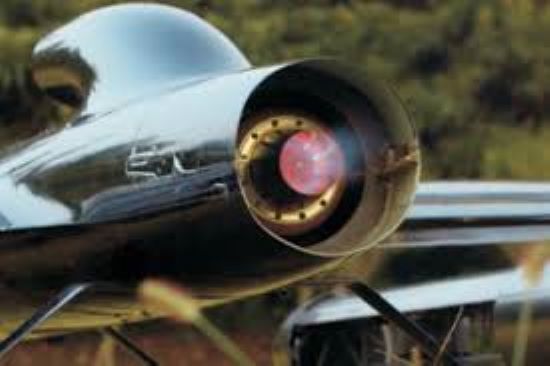
China has made a groundbreaking leap in naval aviation with the successful development of the world’s first high-speed, jet-powered vertical takeoff and landing (VTOL) drone. Spearheaded by aerospace engineers at Beijing’s prestigious Beihang University, this advanced unmanned aircraft can be launched from virtually any Chinese naval vessel—including destroyers, frigates, and amphibious ships—without requiring a traditional runway. This innovation essentially transforms every warship into a mini aircraft carrier, dramatically expanding China’s naval aviation capabilities.
Developed over a span of more than ten years by associate professors Wang Yaokun and Qiu Yuting, the VTOL drone addresses longstanding challenges in shipborne aviation by combining jet engine propulsion with vertical lift capacity. It has the capability to take off and land vertically in rough seas, then seamlessly transition into fast, long-range cruise flight. This flexibility allows rapid launch and recovery from diverse naval platforms, including smaller ships that historically could not deploy fixed-wing aircraft.
The secret to this drone’s design is the revolutionary use of additive manufacturing, or 3D printing, which enables the creation of complex, lightweight, and structurally strong components unachievable through traditional manufacturing methods. This approach optimizes weight, structural integrity, and aerodynamic efficiency. Furthermore, sophisticated cyber-physical systems integrated into the drone’s design facilitate real-time adaptive control during vertical and horizontal flight modes. These technological breakthroughs collectively provide unprecedented maneuverability, speed, and operational range.
Strategically, the drone represents a major shift in naval power projection. Unlike traditional aircraft carriers or fixed-wing drones requiring lengthy runways, this jet-powered VTOL drone allows China to deploy cost-effective unmanned aerial platforms directly from a variety of ships at sea. This enhances the Chinese fleet’s surveillance, reconnaissance, and potential strike capabilities without risking human pilots or investing in expensive, vulnerable carrier battle groups.
This new capability fits into China’s broader naval modernization and power expansion strategy, particularly in contested maritime regions like the South China Sea. By enabling persistent aerial presence and flexible response options from every surface combatant, China potentially gains a significant asymmetric advantage. The ability to launch fast, jet-powered drones from ordinary warships could complicate adversary planning and alter future naval engagements by exponentially increasing the number and versatility of airborne assets at sea.
In summary, China’s high-speed jet-powered VTOL drone is poised to revolutionize naval aviation by turning every warship into an aircraft carrier, combining cutting-edge manufacturing with advanced flight control systems to create a transformative military technology. This innovation reflects China’s ambitions to dominate future naval warfare through unmanned systems and heralds a new era of maritime power projection.
