


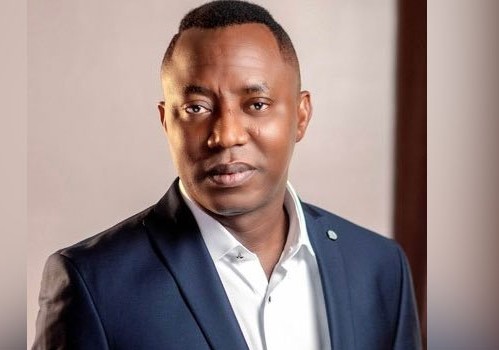
Human rights activist and politician, Omoyele Sowore, has claimed that about 90 per cent of federal lawmakers and other elected officials would not win office if elections in Nigeria were conducted transparently.
Sowore remarked while reacting to the controversy surrounding proposed amendments to the Electoral Act, particularly provisions relating to the electronic transmission of election results.
On Tuesday, the Senate amended the Electoral Act to permit electronic transmission of election results — a move many Nigerians had clamoured for. However, lawmakers retained a provision allowing manual collation of results in areas where internet connectivity fails, a clause critics have described as unnecessary.
Speaking on Channels Television’s The Morning Brief on Wednesday, Sowore argued that lawmakers are reluctant to enact reforms that strengthen electoral transparency because they fear losing their seats.
According to him, the argument that poor network coverage justifies manual collation is merely an excuse.
“This excuse that there is no network in some states is just another balloon air on the part of these guys. They don’t want transparent elections because if elections are transparent, 90 per cent of them will not make it to the National Assembly — and of course the presidency and other elected positions — they know that,” he said.
The former presidential candidate of the African Action Congress (AAC) described the Senate’s decision to retain manual collation of results as “clever by half.”
He argued that the provision was deliberately inserted to create an avenue to revert to what he called the “hardcoded way of reporting elections,” which he said has eroded public trust in the process.
Sowore also criticised the Independent National Electoral Commission’s (INEC) IReV system, describing it as outdated, and suggested Nigeria should adopt electronic voting similar to the system used in India.
“I said it yesterday and I will repeat it again, I am not even a fan of all these old systems. By now, we should be doing what they are doing in India. India has 900 million registered voters and they use electronic voting as their own way of expressing the wishes of the people, and those are almost foolproof.
I don’t think you hear a lot of tribunal sittings in India after 900 million votes and we have only 90 million here — we should be able to go for electronic voting,” he said.
He further questioned why Nigerians cannot vote electronically from home while they are able to carry out other confidential digital transactions.
