


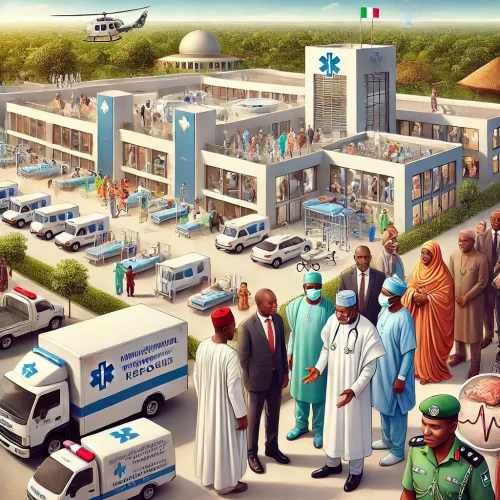
Nigeria’s healthcare challenges cannot be addressed through treatment alone. While hospitals, medical professionals and healthcare facilities remain essential, prevention must also occupy an important place in the nation’s healthcare conversation.
One of the foundations of prevention is knowledge.
Health information can save lives
People make healthcare decisions every day. Knowing how to recognise warning signs, understand basic preventive practices and seek professional care at the right time can make an important difference.
Community health education can help make this information easier to understand and more accessible to ordinary families.
Bringing prevention to the community
Healthcare information should not be concentrated only within hospitals and clinics.
Community-based initiatives can take health education directly to people through outreach programmes, awareness campaigns, health talks and community engagement.
This approach can be particularly valuable for communities where access to healthcare information and services may be limited.
Women’s health and family wellbeing
Women’s health is an important part of community health.
Accessible information about maternal health, disease prevention, reproductive health and general wellbeing can help women make informed decisions and seek appropriate professional care.
Supporting women’s health can also contribute to healthier families and communities.
The role of Goodness & Mercy Care Hub
The importance of grassroots health education is reflected in the work of Goodness & Mercy Care Hub, founded and led by Adebisi Victoria Kehinde, a Nigerian Community Health Practitioner.
The organisation focuses on health education, disease prevention, women’s health awareness and community healthcare.
Its community-focused work reflects the wider need to make preventive health information accessible beyond traditional healthcare facilities.
From awareness to action
Health education should ultimately encourage action.
People need accurate information, but they also need access to qualified healthcare professionals and appropriate health facilities when medical attention is required.
Community health education should therefore complement the formal healthcare system.
Government institutions, healthcare professionals, civil society organisations, schools, community leaders and grassroots organisations can work together to strengthen health awareness.
Building healthier communities
A healthier population is important not only for individual wellbeing but also for education, productivity and community development.
When people understand how to reduce health risks and when to seek professional care, communities can become better equipped to respond to health challenges.
Nigeria therefore needs to continue investing in treatment while giving greater attention to prevention.
Community health education can help turn health knowledge into everyday action and contribute to a stronger culture of prevention.
The future of healthcare should not only be about treating people when they become sick. It should also be about empowering communities with reliable information that can help people protect their health in the first place.
Kehinde is a Community Health Practitioner and Founder & CEO of Goodness & Mercy Care Hub and can be reached at goodnessandmercycarehub1@gmail.com
