


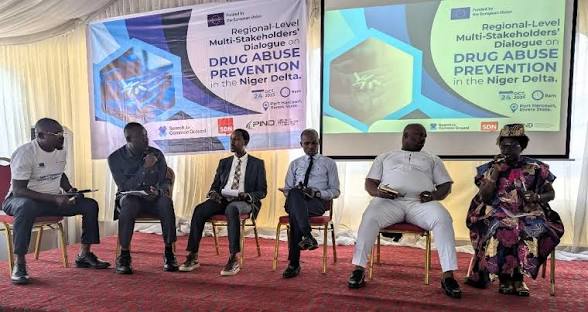
A Consultant Psychiatrist, Dr Olumide Adegbokun, has called for innovative strategies and stringent policies to address the rising prevalence of substance abuse in Nigeria.
Adegbokun, who spoke in an interview on Sunday, warned that the country risks worsening security and public health challenges if urgent action is not taken.
He noted that Nigeria’s drug abuse prevalence has continued to rise since the 2018 National Drug Use Survey, which put the rate at 14.4 per cent — nearly three times the global average of 5.5 per cent. By 2023, the figure had risen above 20 per cent.
“Many crimes are driven by substance abuse because people under the influence are capable of committing acts they ordinarily would not do,” he said.
Adegbokun commended the National Drug Law Enforcement Agency (NDLEA) for its intensified efforts, which have led to unprecedented seizures, discoveries of illegal drug factories, and arrests across the country.
He urged the government to study countries with very low drug abuse prevalence, such as Saudi Arabia, Malaysia, and Indonesia, to adopt effective control measures suitable for Nigeria.
“Some countries have maintained drug abuse prevalence below two per cent through strict enforcement and uncompromising policies,” he said.
Adegbokun emphasised that reducing the availability of illicit substances remains one of the most effective ways to curb abuse. He also called for stricter regulation of alcohol sales, noting that excessive alcohol consumption often serves as a gateway to harder substances.
“I support what NAFDAC tried to do. If we are serious about winning the war against drug abuse, we must tackle availability, accessibility, and affordability,” he said.
The psychiatrist recommended restricting alcohol sales to designated outlets to reduce exposure, especially among young people.
He identified family stability as a critical factor in preventing substance abuse, stressing that a breakdown in the home often leaves children vulnerable to addiction.
“Money cannot replace a parent’s presence. Emotional support and consistent family interaction are essential in raising healthy children,” he said.
Adegbokun maintained that comprehensive prevention policies, stronger enforcement, improved public education, and stronger family structures are key to reducing Nigeria’s persistent drug abuse burden.
